Watch The Sound of Insects: Record of a Mummy (2009) Online Free
Loading Cinehub...
The incredible story of how the mummified corpse of a 40-year-old man was discovered by a hunter in one of the most remote parts of the country. The dead man's detailed notes reveal that he actually committed suicide through self-imposed starvation only the summer before. Liechti's film is a stunning rapprochement of a fictional text, which itself is based upon a true event: a cinematic manifesto for life, challenged by the main character's radical renunciation of life itself.
Cast
Peter Mettler, Alexander Tschernek
More Like This
Les Héros du tour
2021
Bear-Like
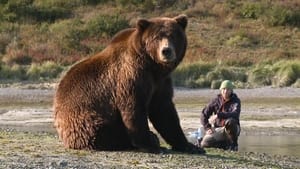
At the far end of the Alaskan peninsula, for filmmaker Roman Droux a childhood dream comes true. He discovers together with the bear researcher David Bittner the universe of wild grizzlies. The two adventurists face bears at smelling-distance, experience the struggle for survival of a bear family and witness dramatic fighting scenes. Driven by a desire to explore the unknown the film tells a personal story of wilderness, framed in breathtaking pictures of unique creatures.
2019
I Am Mariam Binladen
2019
Iraqi Odyssey
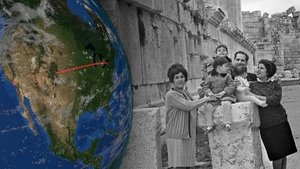
Tracing the emigrations of his family over more than half a century, this riveting documentary epic from acclaimed expatriate Iraqi filmmaker Samir pays moving homage to the frustrated democratic dreams of a people successively plagued by the horrors of dictatorship, war and foreign occupation of Iraq.
2014
Journey to the Safest Place on Earth
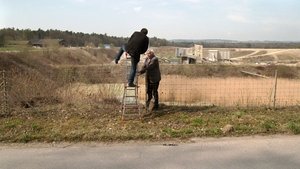
Over 350,000 tons of highly radioactive waste and spent fuel rods are in temporary storage on site at nuclear power complexes and at intermediate storage sites all over the world. More than 10,000 additional tons join them every year. It is the most dangerous waste man has ever produced. Waste that requires storage in a safe final repository for hundreds of thousands of years. Out of reach of humanity and other living creatures. The question is, where? Together with Swiss-British nuclear physicist Charles McCombie, who has been searching for a safe final storage site for highly radioactive nuclear waste for thirty-five years, director Edgar Hagen investigates the limitations and contradictions involved in this project of global significance. Supporters and opponents of nuclear energy struggle for solutions whilst dogmatic worldviews are assailed by doubt
2013

Vibrato
2012
Jean-Jacques Rousseau, tout dire
2012
Special Flight
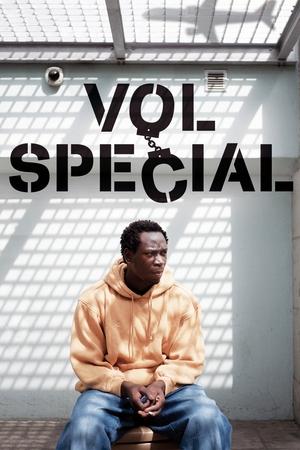
Switzerland still carries out special flights, where passengers, dressed in diapers and helmets, are chained to their seats for 40 hours at worst. They are accompanied by police officers and immigration officials. The passengers are flown to their native countries, where they haven't set foot in in up to twenty years, and where their lives might be in danger. Children, wives and work are left behind in Switzerland. Near Geneva, in Frambois prison, live 25 illegal immigrants waiting for deportation. They are offered an opportunity to say goodbye to their families and return to their native countries on a regular flight, escorted by plain-clothes police officers. If they refuse this offer, the special flight is arranged fast and unexpectedly. The stories behind the locked cells are truly heartbreaking.
2011

Toumast - Entre Guitare et Kalashnikov
In 1996, Kalashnikovs were publicly burnt in Timbuktu. At the time, the "Flame of Peace" symbolized the end of the Touareg rebellion, which had been suppressed in bloody massacres. That year, the rebels laid down their arms. That year, with the government having made promises, the families who had fled abroad left Mauritania, Algeria and Burkina Faso to return home. In the fight for rights and survival waged by this people, who for centuries had found their freedom in one of the world's most inhospitable regions, the Sahara, culture and arms have been in direct competition ever since.
2010
Un petit coin de paradis
2008
Le crépuscule des Celtes
2008
Greina
2006
Josh's Trees
2005
Monte Grande: What is Life?
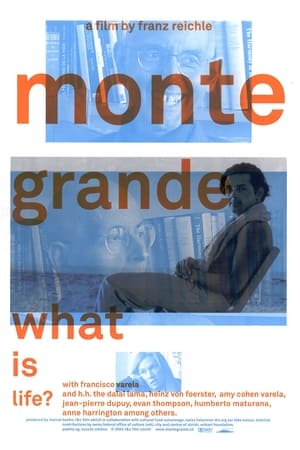
Documentary account of a man’s life in the face of imminent death – Francisco Varela's story told affectionately and gently, touchingly and astutely. Varela spent his life building bridges: between Western science and Eastern wisdom, neurobiology and philosophy, abstract theory and practical life. This film seeks to deconstructs the prevailing division between science and art.
2005
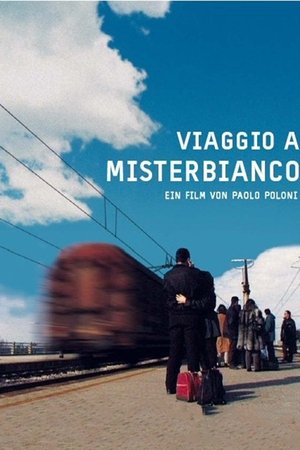
Viaggio a Misterbianco
2003
Juntos, un retour en Argentine
2001

Made in India
1999

The Knowledge of Healing
A documentary film about Tibetan traditional medicine.
1997
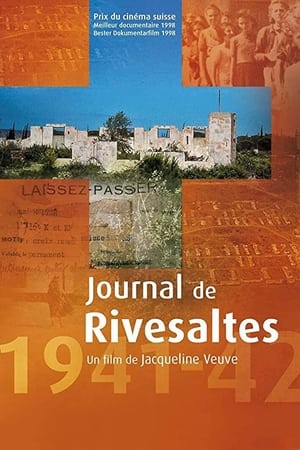
Journal de Rivesaltes 1941-42
From August to October 1942, over 2250 Jews were deported from the internment camp of Rivesaltes to Auschwitz by way of Drancy. Among them were 110 children. Friedel Bohny-Reiter, a nurse with the Swiss Aid to Children, worked in this camp in the South of France. Like many others in the formerly unoccupied zone, it was run by the French. Once a military camp, it had been converted in 1941 into a transit camp regrouping Jewish, Gypsy and Spanish people living in the area or who had fled to the free zone as refugees. Thanks to the young nurse from Basel, many children were probably saved from certain death. The film follows the nurse on a visit to that still intact site as well as through the pages of the journal she wrote in those dark days, published by Editions Zoë, Geneva in 1993.
1997
Picture of Light
A documentary of an expedition to Churchill, Manitoba to film the Northern Lights.
1994