Watch Special Flight (2011) Online Free
Switzerland still carries out special flights, where passengers, dressed in diapers and helmets, are chained to their seats for 40 hours at worst. They are accompanied by police officers and immigration officials. The passengers are flown to their native countries, where they haven't set foot in in up to twenty years, and where their lives might be in danger. Children, wives and work are left behind in Switzerland. Near Geneva, in Frambois prison, live 25 illegal immigrants waiting for deportation. They are offered an opportunity to say goodbye to their families and return to their native countries on a regular flight, escorted by plain-clothes police officers. If they refuse this offer, the special flight is arranged fast and unexpectedly. The stories behind the locked cells are truly heartbreaking.
More Like This
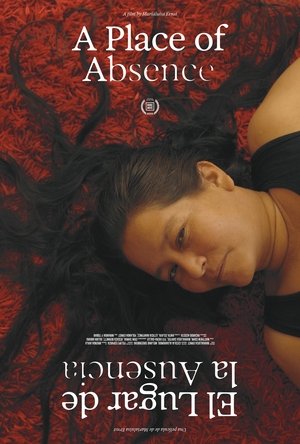
A Place of Absence
This poetic film follows director Marialuisa's journey with Anita and Leticia, Central American women traveling with the Caravan of Mothers of Missing Migrants.
2025
Raha
A portrait of a queer HIV+ Iranian refugee in Quito.
2024

Im Park: Biz bewiise muesch dich
A portrait of three female skaters in Switzerland.
2023

Cat's Attic
Brair Kani explores an ancestral house located in Srinagar, Kashmir. Using the attic as a site of reflection, the film navigates the relationship between space, belonging and personal history. Inhabiting the confines of the attic, the house spirits exist simultaneously as carriers of collective memory and as manifestations of the emotional landscape.
2023
Business as Usual
Following the dealings of Mauritanian fixers ferrying migrants by sea, this film shows the human cost of irregular migration in West Africa. Interrogating the role of fixers as facilitators of the voyage across the sea as well as the casualties that occur, this asks if they are very different from 16th century slave catchers.
2023
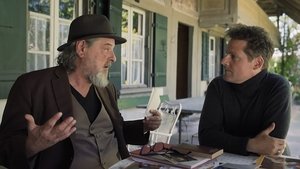
Albert Anker. Malstunden bei Raffael
With his vivid oil paintings, Albert Anker captured Swiss folk life like no other. Together with musician Endo Anaconda we discover the "Anker-House", Anker's old studio.
2022

Mein Leben und der Notenschnitt
Sixth-graders have many things on their minds. But they are confronted with an important decision: do they continue their education in secondary school A, B, or C, or do they go to grammar school after all? And what even are those things? How do children deal with the hopes and fears associated with this step?
2021
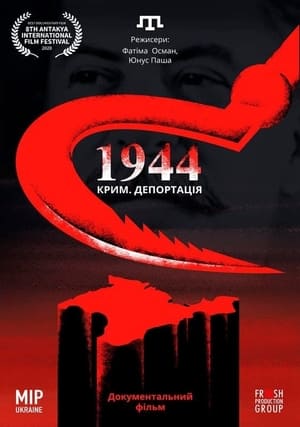
1944. Deportation
In 1944 Crimean Tatars has suffered a long road in exile. It was accompanied by famine, illness and loss. In the first years of exile, almost half of deported Crimean Tatars died. But those, who survived, dreamed of only one thing - to return to Crimea. The documentary 1944 tells about the tragedy of all Crimean Tatars through several separate life stories. They are cherished by each Crimean Tatar family and must be remembered by all generations to come.
2019
The Deported
The Deported follows four long term residents of the United States, each with an Order of Deportation over their head, and their families as they have to make critical decisions that will either keep their family together and separate them. Their choices are: 1. to self-deport. 2. To take sanctuary in a church. 3. To fight back legally. 4. To fall into denial and do nothing.
2019
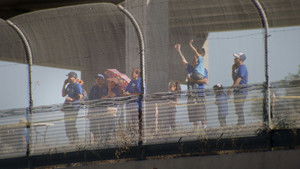
A 3 Minute Hug
As daylight breaks between the border cities of El Paso, Texas, and Juarez, Mexico, undocumented migrants and their relatives, divided by a wall, prepare to participate in an activist event. For three minutes, they’ll embrace in no man’s land for the briefest and sweetest of reunions.
2018
2017 Oscar Nominated Short Films: Documentary
2017
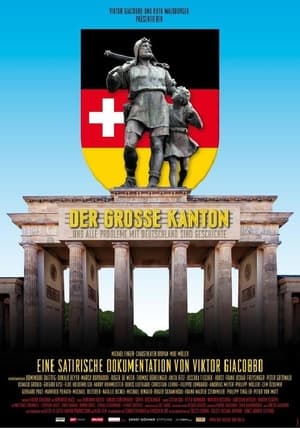
Der grosse Kanton
Is the solution to Switzerland's future to integrate Germany into the confederation? After all, like Michael Ringier, CEO of the Ringier media group, says, blithely ignoring all minorities, we're very close in culture and language. Oskar Freysinger takes out his guitar and sings his answer. Politicians from French-speaking Switzerland and Ticino think expanding will help the country survive. The former German foreign minister thinks the two countries' traditions are too different. The banker Oswald Grübel is worried about Germany's debts, although he'd be prepared to take over its assets. With serious interviews interspersed with gags (boat people on Lake Constance, the last Habsburger as a peasant), Giaccobbo gathers off-the-cuff reactions which reveal a lot about the different mentalities. The movie laughs at preconceived notions, redefines neutrality and reflects on what designates a nation. Switzerland, which loves to teach the world a lesson, will soon helvetize the planet, oder?
2013
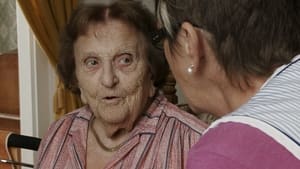
Von heute auf morgen
'From One Day To The Next' follows four elderly people through their everyday lives, observing how they cope with a gradual loss of autonomy.
2013
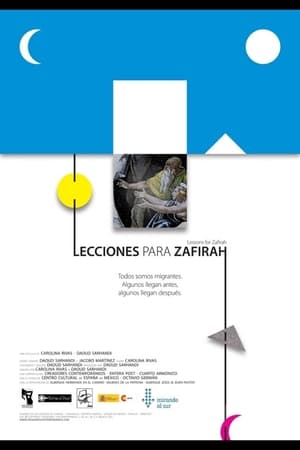
Lessons for Zafirah
A metaphor of the Flood in our times, The Flood is the rain of violence that washes over us. Noah´s Ark is the train that runs through Mexico toward the United States and migrants are the species attempting to save their lives. For the directors, cinema moves people not just by condemnation, but by confronting and fostering emotions which lead to new, constructive ideas. This documentary became a cinematographic diary for their first viewer, their three-year-old daughter, Zafirah.
2011
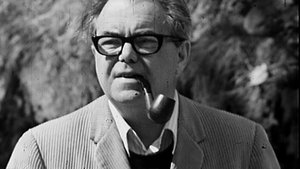
Max Frisch, Citoyen
Max Frisch was the last big Swiss intellectual widely respected as a “voice” in its own right – a character hardly found today. The film retells Frisch’s story as a witness of the unfolding 20th century, wondering if such “voices” are needed at all, or if we could do without them.
2008
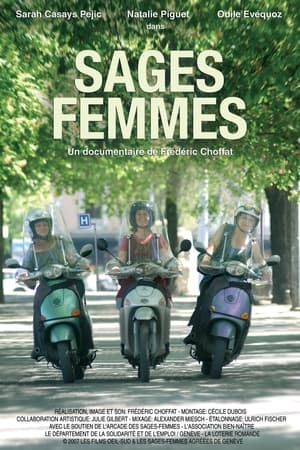
Sages Femmes
2007
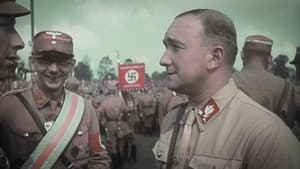
2 or 3 Things I Know About Him
What would your family reminiscences about dad sound like if he had been an early supporter of Hitler’s, a leader of the notorious SA and the Third Reich’s minister in charge of Slovakia, including its Final Solution? Executed as a war criminal in 1947, Hanns Ludin left behind a grieving widow and six young children, the youngest of whom became a filmmaker. It's a fascinating, maddening, sometimes even humorous look at what the director calls "a typical German story." (Film Forum)
2005
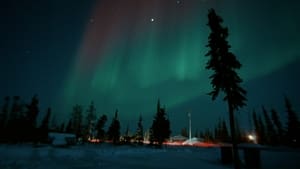
Picture of Light
A documentary of an expedition to Churchill, Manitoba to film the Northern Lights.
1994

A Different History
A three-part documentary about the long road to women's suffrage in Switzerland.
1994
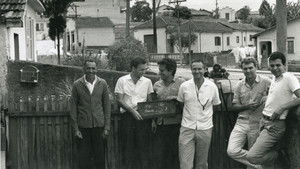
Viramundo
Viramundo shows the saga of the northeastern migrants that arrive in São Paulo, beginning with a train arriving and ending with a train leaving São Paulo in a cycle repeated every day. Viramundo's aim was to question why the military coup d'état in Brazil happened without any popular resistance or revolution or reaction of the society.
1965