Watch The Wonders of Magnetism (1915) Online Free
A series of demonstrations that illustrate some of the scientific principles involved in magnetism.
More Like This
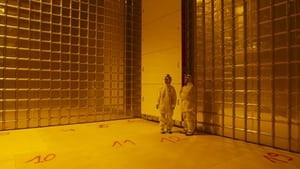
Way Beyond
The Future Circular Collider is the machine of the future. Thanks to it, we will finally be able to go back in time to the origin of our universe. But which way do we go to set up the largest scientific instrument of all time? Between metaphysics and underground tunnels, a story of the preparations or how men are ready to move mountains for more knowledge.
2022

The Secret Science of Sewage
Dr George McGavin and Dr Zoe Laughlin set up base camp at one of the UK's biggest sewage works to investigate the revolutionary science finding vital renewable resources and undiscovered life in human waste. Teaming up with world-class scientists, they search for biological entities in sewage with potentially lifesaving medical properties, find out how pee can generate electricity, how gas from poo can fuel a car and how nutrients in waste can help solve the soil crisis. They follow each stage of the sewage treatment process, revealing what the stuff we flush can tell us about how we live today, and the mindboggling biotechnology being harnessed to clean it, making the wastewater safe enough to return to the environment.
2021
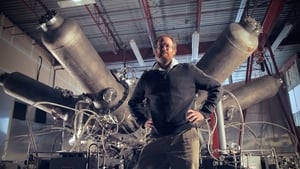
Let There Be Light
Let There Be Light follows the story of dedicated scientists working to build a small sun on Earth, which would unleash perpetual, cheap, clean energy for mankind. After decades of failed attempts, a massive push is now underway to crack the holy grail of energy.
2017
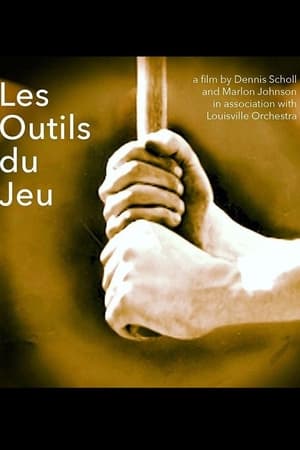
Les Outils du Jeu
This non-narrative short film examines one of the great American icons: the Louisville Slugger baseball bat. The film was conceived by its co-directors, Marlon Johnson and Dennis Scholl, along with the Louisville Orchestra's conductor, Teddy Abrams, to be screened set to a live performance by the orchestra of Claude Debussy's "Jeux".
2017
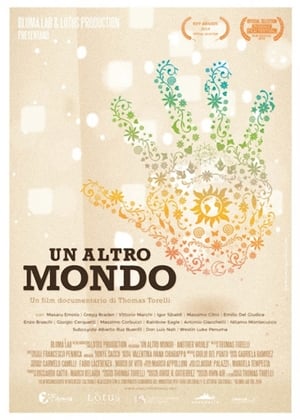
Another World
A feature documentary about the journey of mankind to discover our true force and who we truly are. It is a quest through science and consciousness, individual and planetary, exploring our relationships with ourselves, the world around us and the universe as a whole.
2014

Stem Cell Universe With Stephen Hawking
The use of embryonic stem cells has ignited fierce debate across the spiritual and political spectrum. But what if we could create manmade stem cells - or find super cells in adults that could forever replace embryonic cells and remove the controversy? Today, we are on the brink of a new era - an age where we may be able to cure our bodies of any illness. Stephen HAWKING has spent his life exploring the mysteries of the cosmos, now there is another universe that fascinates him - the one hidden inside our bodies - our own personal galaxies of cells.
2014

Sniper: Bulletproof
Sniper: Bulletproof deconstructs and analyzes the little-known sniper events that have occurred when no other course of action was possible. The people who planned the takedowns, or pulled the trigger, share their techniques and bring to light the many factors that had to be considered in each mission: terrain, wind speed, temperature, elevation changes... all are critical to taking out targets considered bulletproof. A sniper has one chance, one breath, to rise to the occasion and save the day... if they miss, there may never be another opportunity. As these never told before stories unfold, the viewer also learns about the high-tech gear each sniper carries on their classified missions.
2011

The Polio Crusade
The film interweaves the personal accounts of polio survivors with the story of an ardent crusader who tirelessly fought on their behalf while scientists raced to eradicate this dreaded disease. Based in part on the Pulitzer Prize-winning book Polio: An American Story by David Oshinsky, Features interviews with historians, scientists, polio survivors, and the only surviving scientist from the core research team that developed the Salk vaccine, Julius Youngner.
2009
The Dawn of Sound: How Movies Learned to Talk
Film historians, and survivors from the nearly 30-year struggle to bring sound to motion pictures take the audience from the early failed attempts by scientists and inventors, to the triumph of the talkies.
2007
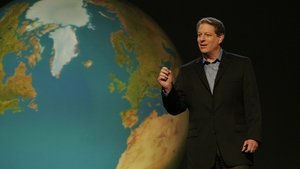
An Inconvenient Truth
A documentary on Al Gore's campaign to make the issue of global warming a recognized problem worldwide.
2006
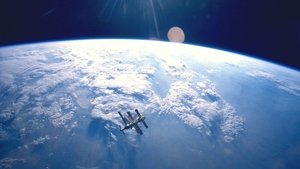
Mission to Mir
This film shows how far we have come since the cold-war days of the 50s and 60s. Back then the Russians were our "enemies". And to them the Americans were their "enemies" who couldn't be trusted. Somewhere in all this a young girl in Oklahoma named Shannon set her sights on becoming one of those space explorers, even though she was told "girls can't do that." But she did.
1997
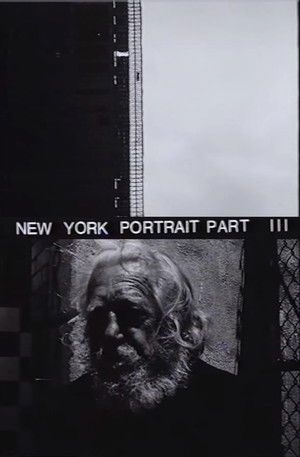
New York Portrait, Chapter III
"[Hutton’s] latest urban film, New York Portrait, Chapter III, takes on a unique tone in relation to Hutton’s ongoing exploration of rural landscape. The very fact that Hutton is dealing with older footage, with archives of memory more than immediacy, gives it a different texture than his earlier New York films. Hutton always found the presence of nature in the city, not only in his many shots of sky and vegetation, but also in the geometry and texture of the city itself, which seemed to project an independence from the human." (Tom Gunning)
1990
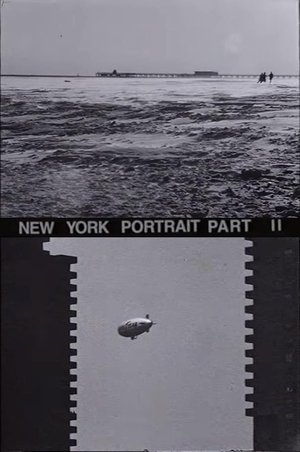
New York Portrait, Chapter II
Chapter Two represents a continuation of daily observations from the environment of Manhattan compiled over a period from 1980-1981. This is the second part of an extended life's portrait of New York.
1981
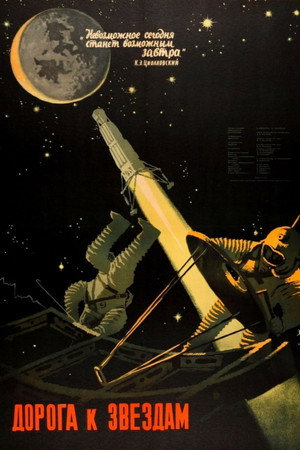
Road to the Stars
This film consists of three parts. The first dramatizes the life of the founder of Soviet astronautics, Konstantin Tsiolkovsky; the second describes the development of rocket technology; and the third visualizes the future with enactments of the first manned spaceflight, spacewalk, space station construction and humans on the moon.
1957
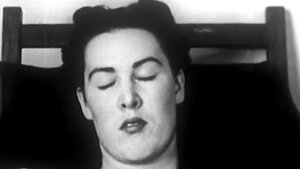
Photographic Studies in Hypnosis: Abnormal Psychology
Silent film showcasing hypnosis and its effects.
1938
Visions of Lourdes
Charles Dekeukeleire, then a questioning Catholic, was spurred into making this documentary on a pilgrimage with the Catholic Young Workers’ Movement. The director’s approach is one of critical reflection; A film emotional and fervent, even acerbic.
1932
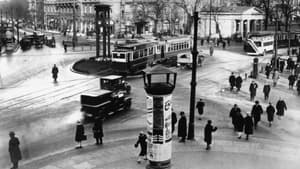
Berlin: Symphony of a Great City
A day in the city of Berlin, which experienced an industrial boom in the 1920s, and still provides an insight into the living and working conditions at that time. Germany had just recovered a little from the worst consequences of the First World War, the great economic crisis was still a few years away and Hitler was not yet an issue at the time.
1927
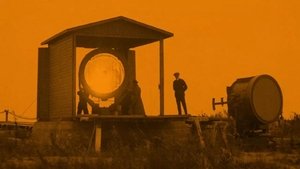
Finlandia
A documentary from Erkki Karu, one of the earliest pioneers of Finnish cinema: This government-produced propaganda film introduces the nature, sports, military, agriculture and capital of Finland.
1922
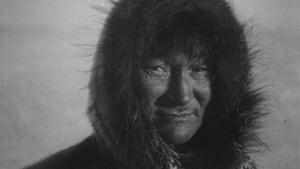
Nanook of the North
This pioneering documentary film depicts the lives of the indigenous Inuit people of Canada's northern Quebec region. Although the production contains some fictional elements, it vividly shows how its resourceful subjects survive in such a harsh climate, revealing how they construct their igloo homes and find food by hunting and fishing. The film also captures the beautiful, if unforgiving, frozen landscape of the Great White North, far removed from conventional civilization.
1922

Train Entering Hove Station
Most movie fans know that the first filmmakers liked to shoot trains entering stations. This example by Sussex film pioneer George Albert Smith illustrates why. The train's rush towards the audience brings movement and visual drama. The flurry of human activity offers plenty for the audience to engage with - who are these people and where are they going? And the time pressure exerted by the fact that the train must soon depart adds narrative tension - will everyone get on and off in time?
1897