Watch Toumast - Entre Guitare et Kalashnikov (2010) Online Free
In 1996, Kalashnikovs were publicly burnt in Timbuktu. At the time, the "Flame of Peace" symbolized the end of the Touareg rebellion, which had been suppressed in bloody massacres. That year, the rebels laid down their arms. That year, with the government having made promises, the families who had fled abroad left Mauritania, Algeria and Burkina Faso to return home. In the fight for rights and survival waged by this people, who for centuries had found their freedom in one of the world's most inhospitable regions, the Sahara, culture and arms have been in direct competition ever since.
More Like This

Urban Amazons
Modern Amazons are fierce heroines. They are ready to fight for what is important to them. Without explaining, without compromising, always persisting. They fight for victory in the ring for acceptance, and too, for fellow sufferers and humanity.
2021
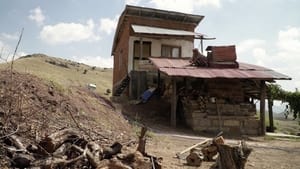
Zelihas Hütte
2020
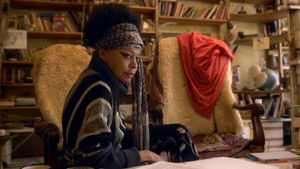
Miriam Goldschmidt – Creator of the In-between
Nearing the end of a long and successful stage career, Miriam Goldschmidt finds her prowess as an actress increasingly on the wane. She struggles to memorize her lines and as her last project with lifelong collaborator, the legendary director Peter Brook, threatens to fall apart, Miriam looks back. Referencing Brook’s ground-breaking book «The Empty Space», she uses an empty rehearsal room in Berlin to invoke her archetypal life journey that took an orphaned black child from post-war Germany to the world’s biggest stages. We «Call Her Miriam» is a bewitching and moving portrait of a great artist living between dream and reality, truth and fction and life and death.
2019

Chris the Swiss
Croatia, 7th of January 1992: In the middle of the war, a young journalist's body is discovered dressed in the uniform of an international mercenary group. Twenty years later, his cousin Anja Kofmel investigates his story.
2018
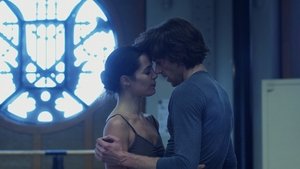
The Paris Opera
A behind-the-scenes look at the of how the Paris Opera is run under the direction of Stephane Lissner.
2017
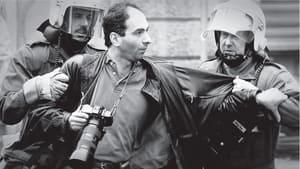
Staatenlos - Klaus Rózsa, Fotograf
Klaus Rozsa, a well-known and politically active photographer, lived in Zurich for decades as a stateless individual. All of his applications for naturalisation were refused on political grounds. In 1956 he fled Hungary, growing up in Switzerland with a Jewish father who had survived Auschwitz and Dachau. Due to the extreme proximity of such a fate, the camera led him repeatedly to places where injustice was done. It was this particular quality of his camerawork that proved fateful for him.
2016
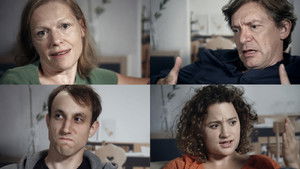
Family Fragments
The film reconstructs the memories of a divorced family with empathy yet merciless precision. An intimate family story emerges during the investigation into the reasons for the separation. Hinging on the subtle and touching testimonies of the family members, the film delves into complex interrelationships. Actors bring the family's memories alive as if they were their own. The result is a chronicle of a family drama, which the real protagonists complement and comment on – a reflection on the mechanisms and dynamics shaping and directing their family life over the years.
2015
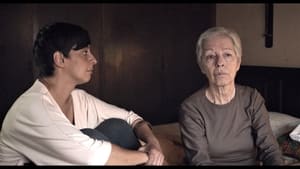
Cloudy Times
Arami Ullón must return to Paraguay to make an important decision: what will happen to her sick mother, Mirna? The heartfelt gaze of the camera reveals a relationship filled with love, but also unspoken and unresolved issues. A sensitive film which examines the inner turmoil of the daughter during the final stages of her mother’s degenerative illness.
2014
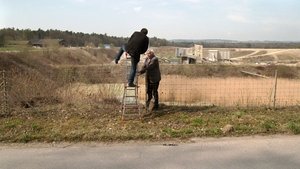
Journey to the Safest Place on Earth
Over 350,000 tons of highly radioactive waste and spent fuel rods are in temporary storage on site at nuclear power complexes and at intermediate storage sites all over the world. More than 10,000 additional tons join them every year. It is the most dangerous waste man has ever produced. Waste that requires storage in a safe final repository for hundreds of thousands of years. Out of reach of humanity and other living creatures. The question is, where? Together with Swiss-British nuclear physicist Charles McCombie, who has been searching for a safe final storage site for highly radioactive nuclear waste for thirty-five years, director Edgar Hagen investigates the limitations and contradictions involved in this project of global significance. Supporters and opponents of nuclear energy struggle for solutions whilst dogmatic worldviews are assailed by doubt
2013
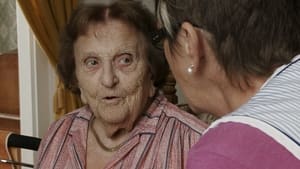
Von heute auf morgen
'From One Day To The Next' follows four elderly people through their everyday lives, observing how they cope with a gradual loss of autonomy.
2013
De la cuisine au parlement
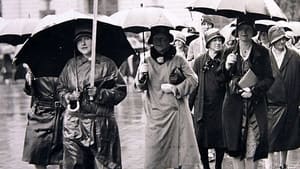
Switzerland was one of the last countries in the world to grant women the right to vote. This film guides us through a century of Swiss history, tracing the imprint left by the women who fought for the right to leave hearth and home – and by the men who did everything they could to send them back – until they gained legal equality, whose implementation seems to be in question still today.
2012
Special Flight
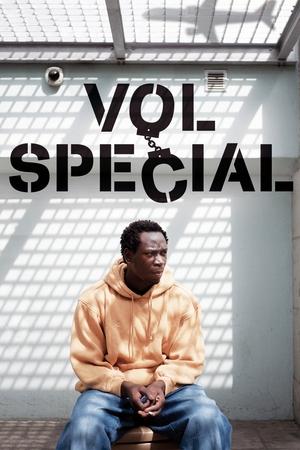
Switzerland still carries out special flights, where passengers, dressed in diapers and helmets, are chained to their seats for 40 hours at worst. They are accompanied by police officers and immigration officials. The passengers are flown to their native countries, where they haven't set foot in in up to twenty years, and where their lives might be in danger. Children, wives and work are left behind in Switzerland. Near Geneva, in Frambois prison, live 25 illegal immigrants waiting for deportation. They are offered an opportunity to say goodbye to their families and return to their native countries on a regular flight, escorted by plain-clothes police officers. If they refuse this offer, the special flight is arranged fast and unexpectedly. The stories behind the locked cells are truly heartbreaking.
2011
Albert Hofmann - Wahrnehmungen
2011
Sounds and Silence - Travels with Manfred Eicher
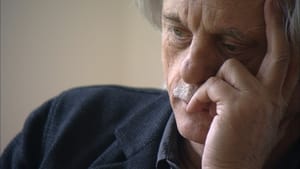
On the way through a world of sounds and noise – with Manfred Eicher, the oustanding discoverer and mediator of contemporary music and founder of the music label ECM. On this journey we are meeting musicians and composers, but also people and places which are connected with him and with each other. We are encountering stories, landscapes, cities, disputes and hugs, tranquillity, hectic pace, work, self-doubt, joy, passion.
2009
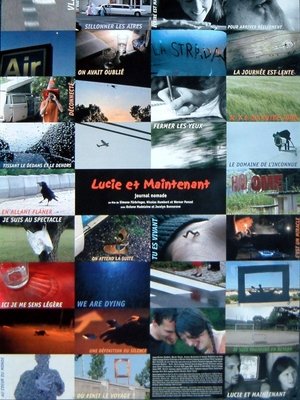
Lucie et Maintenant
In May of 1982 Julio Cortázar, the Argentinean writer and his companion in life, Carol Dunlop set out in their VW bus on a journey along the highway from Paris to Marseille that, for each of them, was to be their final one. Twenty-five years later, Océane Madelaine and Jocelyn Bonnerave set out to undertake the journey again.
2007
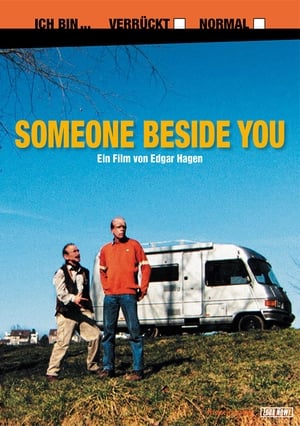
Someone Besides You
Along with several courageous psychiatrists and their clients, the author sets out to film a documentary road movie that takes him to Switzerland, Europe, and the U.S. On their travels in mobile homes, they explore the depths of the human psyche in search of answers to the question: What is the human mind and how does it behave in psychotic extreme situations?
2007

Exit: The Right to Die
Switzerland is presently the only country in the world where suicide assistance is legal. Exit: The Right to Die profiles that nation's EXIT organization, which for over twenty years has provided volunteers who counsel and accompany the terminally-ill and severely handicapped towards a death of their choice.
2006
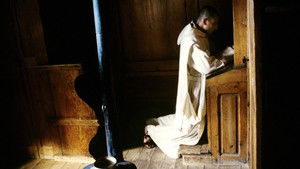
Into Great Silence
An intimate portrayal of the everyday lives of Carthusian monks of the Grande Chartreuse, high in the French Alps (Chartreuse Mountains). The idea for the film was proposed to the monks in 1984, but the Carthusians said they wanted time to think about it. The Carthusians finally contacted Gröning 16 years later to say they were now willing to permit Gröning to shoot the movie, if he was still interested.
2005
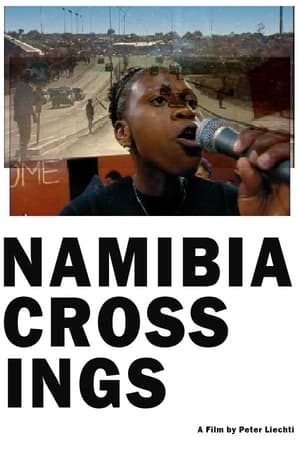
Namibia Crossings
“Namibia Crossings” takes a trip through a country of archaic beauty and bizarre contradictions. The film creates polyphonies of soulful landscapes made up of each individual's highs and lows.
2004

Remue-ménage
2002