Watch The Other Shore (1997) Online Free
This film deals with the aftermath of the Algerian war of liberation. Georges Montero, an Algerian-born Frenchman, manages an olive canning factory in Oran. He travels to Paris for a cataract operation. Marinette, his sister, and Belka, his friend and a recent immigrant, want him to return to France permanently. Friction develops between the two friends as Georges is pressured to sell his factory. Friendship developed between Georges and his surgeon, who as a French Arab has severed ties with his culture and country of origin.
Cast
Claude Brasseur, Roschdy Zem, Marthe Villalonga, Sid Ahmed Agoumi, Catherine Hiegel, Marilyne Canto, Slimane Benaïssa, Abbes Zahmani, Ariane Ascaride
More Like This
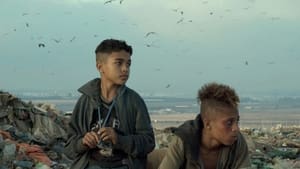
Final Round
Rachid is a young man who survives in Morroco boxing in clandestine fights in order to save enough money with which to pay a smuggler, and be able to cross the Strait of Gibraltar with his two friends.
2022
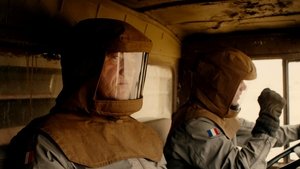
The Atomic Adventure
Algeria desert, 1961. France just detonated an atomic bomb. A patrol of seven soldiers is sent to ground zero to take samples and measure the current radioactivity. The more they advance, the more they perceive that they are entering a dangerous uncharted territory: the future…
2019

A View of Love
Happily married with a daughter, Marc is a successful real estate agent in Aix-en-Provence. One day, he has an appointment with a woman to view a traditional country house. A few hours later, Marc finally puts a name to her face. It's Cathy, the girl he was in love with growing up in Oran, Algeria, in the last days of the French colonial regime. Marc hurries to her hotel. They spend the night together. Then she's gone again. And Marc's mother tells him Cathy never left Algeria. She was killed with her father in a bombing just before independence...
2010
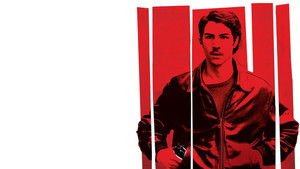
A Prophet
Sentenced to six years in prison, Malik El Djebena is alone in the world and can neither read nor write. On his arrival at the prison, he seems younger and more brittle than the others detained there. At once he falls under the sway of a group of Corsicans who enforce their rule in the prison. As the 'missions' go by, he toughens himself and wins the confidence of the Corsican group.
2009
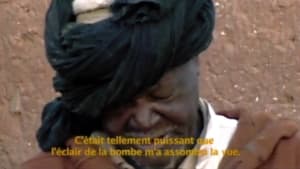
Gerboise Bleue
"Gerboise bleue", the first French atomic test carried out on February 13, 1960 in the Algerian Sahara, is the starting point of France's nuclear power. These are powerful radioactive aerial shots carried out in areas belonging to the French army. Underground tests will follow, even after the independence of Algeria. From 1960 to 1978, 30,000 people were exposed in the Sahara. The French army was recognized recognized nine irradiations. No complaint against the army or the Atomic Energy Commission has resulted. Three requests for a commission of inquiry were rejected by the National Defense Commission. For the first time, the last survivors bear witness to their fight for the recognition of their illnesses, and revealed to themselves in what conditions the shootings took place. The director goes to the zero point of "Gerboise Bleue", forbidden access for 47 years by the Algerian authorities
2009
The Price of Freedom
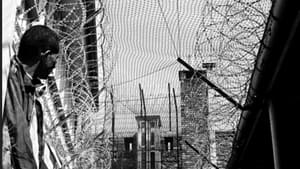
In the midst of the Algerian liberation war, two characters, a meddah (traditional storyteller) and a guerrab (water distributor), having become aware of their subhuman condition in their own country, join the National Liberation Army (ALN) to fight against inhumane colonialism. They will climb the ranks to become political commissioners before falling on the field of honor, the first in a skirmish and the other in Barberousse prison (Serkadji) where he will be guillotined.
2007
Days of Glory
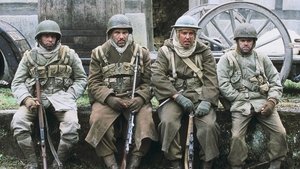
1943. They have never stepped foot on French soil but because France was at war, Said, Abdelkader, Messaoud and Yassir enlist in the French Army, along with 130,000 other “indigenous” soldiers, to liberate the “fatherland” from the Nazi enemy. Heroes that history has forgotten…
2006
The Desert Ark
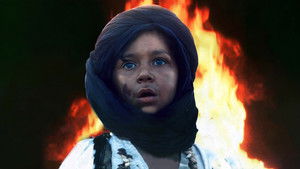
The Desert Ark (L'Arche du Desert), a variation on Romeo and Juliet set in the Algerian desert. A young couple must face inevitable conflict when their rival families discover their secret love. Taking refuge in a cave, they listen to the sounds of a senseless campaign of violence and murder, which is the culmination of the extremism that has long divided their two communities. Nominated for the Golden Leopard at the 1997 Locarno Film Festival.
1998
The Forgotten Hill
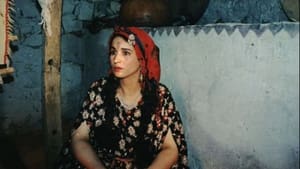
At the outbreak of the Second World War, two friends, Mokrane and Menach, abruptly interrupt their studies and return to their remote native Kabylian village of Tagsa. While waiting to be drafted into the French Army they have time to woo. Mokrane falls for beautiful Aazi and soon marries her only to find out that she can bear no child. Menach, on his part, is stongly attracted to Davda, but the latter is already married to a rich merchant...Happiness does not seem to be in store for the two former students...
1996
Elli Fat Mat
27 years after 1962, Antoine returns to Algiers...
1989

One Roof, One Family
Selim Mechoubine, a young man of 28, is the eldest of a large family. In the cramped accommodation he shares with his parents, brothers and sisters... he occupies the kitchen, the refuge of his dreams and his many fantasies. Selim, the court clerk where divorcing couples parade..., wants to get married. His mother finds him “the rare pearl”. But now, the bride's family demands that the couple have their own home... Selim's misadventure begins; he finds himself confronted with the problems of the housing crisis which forces him to begin a long quest, procedures, requests to find the sine qua non condition for his marriage.
1982
The Refusal
In 1971, the Algerian government nationalized hydrocarbons. The consequences of this decision on the community of Algerians in France are numerous. The Galti family is prey to these economic problems. The father, Khaled, former member of the F.L.N. in France, does not escape the sentence. Sharazade, his wife and comrade in combat, finds herself torn between her role as wife, mother and nostalgia for a country and a bygone past. As for his son Karim, a victim of socio-cultural division, all he has left is refusal.
1982
Chronicle of the Years of Fire
A meticulous chronicle of the evolution of the Algerian national movement from 1939 until the outbreak of the revolution on November 1, 1954, the film unequivocally demonstrates that the "Algerian War" is not an accident of history, but a slow process of suffering and warlike revolts, uninterrupted, from the start of colonization in 1830, until this "Red All Saints' Day" of November 1, 1954. At its center, Ahmed gradually awakens to political awareness against colonization, under the gaze of his son, a symbol of the new Algeria, and that of Miloud, half-mad haranguer, half-prophet, incarnation of Popular memory of the revolt, the liberation of Algeria and its people.
1975
The Charcoal Maker
Film describes the miserable existence of a charcoal-burner who is barely able to feed his family. His search for work in town ends in failure and he is forced to return to his village.
1973
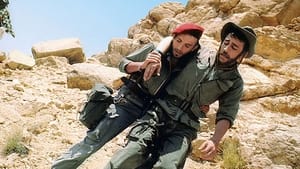
To Be Twenty in the Aures
A group of refractory and pacifist Bretons is sent to Algeria. These beings confronted with the horrors of war gradually become killing machines. One of them did not accept it and deserted, taking with him an FLN prisoner who was to be executed the next day.
1972
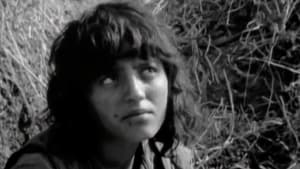
Noua
In Algeria in 1954, in a village in the Aurès region, poverty reigns over peasants enslaved by colonial administrators and Algerian landowners. Noua, in love with the son of a peasant dispossessed of his land, must be sold to a wealthy landowner.
1972
Pas De Blanc À La Une
Pas De Blanc À La Une, by Youcef Bouchouchi, treatises the brutality of the conflict during the war of independence in Algeria from 1854 to 1962, and the systematic use of torture which pushes even the most hesitant to make up their minds.
1971

Opium and the Stick
In 1950, in Algeria, in a village in Kabylia, Algerian resistance fighters resisted the French occupation army. Bachir returns to the village to escape the clashes ravaging Algiers. In Thala, he has two brothers, Ali and Belaïd. The first is engaged with the ALN (The National Liberation Army) and fights against the colonizer. His second brother, Belaïd, the eldest, is convinced of a French Algeria. His family torn apart, Bachir decides to join the war and takes sides against the repression of the French army. The French army is trying in vain to turn the population against the insurgents by using disinformation. The more time passes, the more the inhabitants of the village and surrounding areas, oppressed, rally to the cause of the FLN, their houses and their fields will be burned... Adaptation to the cinema of the eponymous novel Opium and the Stick, published in 1965, by Mouloud Mammeri, the film was dubbed into Tamazight (Berber), a first for Algerian cinema.
1970
Le Serment
The Oath, a TV film produced by Algerian television in 1963 following the end of the war of independence, tells the story of young Algerians who joined the resistance after the bloody repressions of May 1945 in Constantinois by the French colonial army .
1963
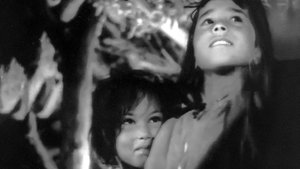
Yasmina
"Yasmina" filmed in 1961 in the middle of the Algerian war tells the story of a little Algerian girl with her hen and her family whose father was killed in a bombing by the French colonial army of occupation. The family, after a long journey, heads towards the refugee camps on the Tunisian border. Produced by the Cinema Service of the Provisional Government of the Algerian Republic (GPRA) in the midst of the war of independence, these films were intended to re-inform the population and international public opinion on the abuses committed by the French colonial army: torture, arrests and arbitrary executions, napalm bombings, fires in douars, entire villages wiped off the map, etc. which the French media described as a "pacification" campaign. The latter censoring or reorienting any images that could harm the colonial narrative.
1961