Watch Le Serment (1963) Online Free
The Oath, a TV film produced by Algerian television in 1963 following the end of the war of independence, tells the story of young Algerians who joined the resistance after the bloody repressions of May 1945 in Constantinois by the French colonial army .
Cast
Taha El-Amiri, Abdelhalim Rais, Saïd Hilmi, Mohamed Ouaniche
More Like This

Sahel: Pátria ou Morte
For decades, the countries of the African Sahel region have been targets of colonialism and exploitation by France and other Western powers. This documentary addresses the popular resistance and new paths of development forged by Burkina Faso, Niger, and Mali after experiencing civil and military uprisings in recent years. The film explores the popular resistance that sustains the revolution in the three Sahel countries and was made after extensive coverage of the ongoing social dynamics and geopolitical disputes.
2025
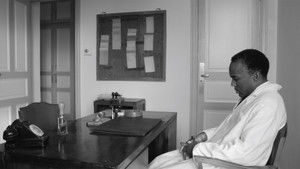
True Chronicles of the Blida Joinville Psychiatric Hospital in the Last Century, when Dr Frantz Fanon Was Head of the Fifth Ward between 1953 and 1956
1953, colonized Algeria. Fanon, a young black psychiatrist is appointed head doctor at the Blida-Joinville Hospital. He was putting his theories of ‘Institutional Psychotherapy’ into practice in opposition to the racist theories of the Algies School of Psychiatry, while a war broke out in his own wards.
2025

Fanon
Frantz Fanon, a French psychiatrist from Martinique, has just been appointed head of department at the psychiatric hospital in Blida, Algeria. His methods contrast with those of the other doctors in a context of colonization. A biopic in the heart of the Algerian war where a fight is waged in the name of Humanity.
2025
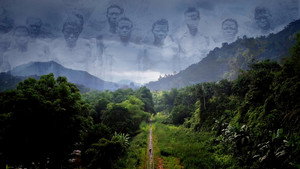
Congo-Océan, un chemin de fer et de sang
2024

Red Island
Madagascar, at the turn of the 1960s and 1970s. On an air base of the French army, the soldiers live the last carefree years of colonialism. Influenced by his readings of Fantômette, Thomas, a child who is not yet 10 years old, gradually forges a look at the world around him.
2023
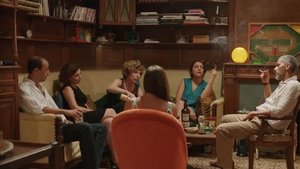
The Blessed
Algiers, a few years after the civil war. Amal and Samir have decided to celebrate their twentieth wedding anniversary in a restaurant. While on their way, their share their views on Algeria: Amal talks about lost illusions and Samir about the necessity to cope with them. At the same time, their son Fahim and his friends Feriel and Reda are wandering about in a hostile Algiers about to steal their youth.
2017

A View of Love
Happily married with a daughter, Marc is a successful real estate agent in Aix-en-Provence. One day, he has an appointment with a woman to view a traditional country house. A few hours later, Marc finally puts a name to her face. It's Cathy, the girl he was in love with growing up in Oran, Algeria, in the last days of the French colonial regime. Marc hurries to her hotel. They spend the night together. Then she's gone again. And Marc's mother tells him Cathy never left Algeria. She was killed with her father in a bombing just before independence...
2010
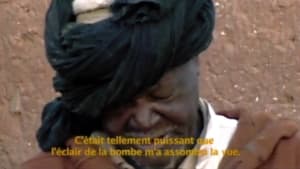
Gerboise Bleue
"Gerboise bleue", the first French atomic test carried out on February 13, 1960 in the Algerian Sahara, is the starting point of France's nuclear power. These are powerful radioactive aerial shots carried out in areas belonging to the French army. Underground tests will follow, even after the independence of Algeria. From 1960 to 1978, 30,000 people were exposed in the Sahara. The French army was recognized recognized nine irradiations. No complaint against the army or the Atomic Energy Commission has resulted. Three requests for a commission of inquiry were rejected by the National Defense Commission. For the first time, the last survivors bear witness to their fight for the recognition of their illnesses, and revealed to themselves in what conditions the shootings took place. The director goes to the zero point of "Gerboise Bleue", forbidden access for 47 years by the Algerian authorities
2009
The Price of Freedom
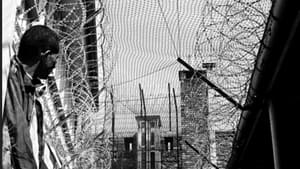
In the midst of the Algerian liberation war, two characters, a meddah (traditional storyteller) and a guerrab (water distributor), having become aware of their subhuman condition in their own country, join the National Liberation Army (ALN) to fight against inhumane colonialism. They will climb the ranks to become political commissioners before falling on the field of honor, the first in a skirmish and the other in Barberousse prison (Serkadji) where he will be guillotined.
2007
The Desert Ark
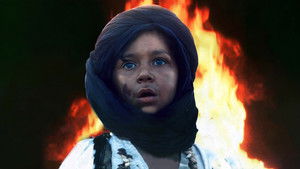
The Desert Ark (L'Arche du Desert), a variation on Romeo and Juliet set in the Algerian desert. A young couple must face inevitable conflict when their rival families discover their secret love. Taking refuge in a cave, they listen to the sounds of a senseless campaign of violence and murder, which is the culmination of the extremism that has long divided their two communities. Nominated for the Golden Leopard at the 1997 Locarno Film Festival.
1998
A Captain's Honor
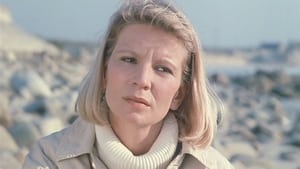
During a televised debate on the Algerian war in the early 1980s, Professor Paulet denounced the methods of Captain Caron, killed in action in 1957. The widow of the captain, Patricia, decided to file a defamation suit.
1982
Lion of the Desert
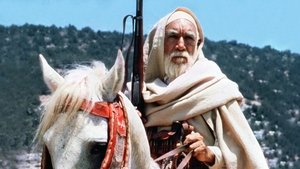
Resistance leader Omar Mukhtar opposes Italian colonization before World War II. The brutal guerrilla war against Italian General Rodolfo Graziani and the Fascist forces of Benito Mussolini highlights the struggle for Libyan independence and the harsh tactics utilised by the colonisers.
1981
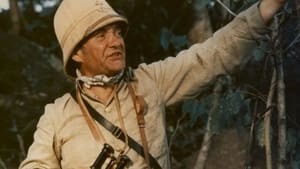
Black and White in Color
French colonists in Africa, several months behind in the news, find themselves at war with their German neighbors. Deciding that they must do their proper duty and fight the Germans, they promptly conscript the local native population. Issuing them boots and rifles, the French attempt to make "proper" soldiers out of the Africans. A young, idealistic French geographer seems to be the only rational person in the town, and he takes over control of the "war" after several bungles on the part of the others.
1976
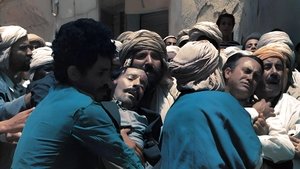
Chronicle of the Years of Fire
A meticulous chronicle of the evolution of the Algerian national movement from 1939 until the outbreak of the revolution on November 1, 1954, the film unequivocally demonstrates that the "Algerian War" is not an accident of history, but a slow process of suffering and warlike revolts, uninterrupted, from the start of colonization in 1830, until this "Red All Saints' Day" of November 1, 1954. At its center, Ahmed gradually awakens to political awareness against colonization, under the gaze of his son, a symbol of the new Algeria, and that of Miloud, half-mad haranguer, half-prophet, incarnation of Popular memory of the revolt, the liberation of Algeria and its people.
1975
Papillon
A man befriends a fellow criminal as the two of them begin serving their sentence on a dreadful prison island, which inspires the man to plot his escape.
1973
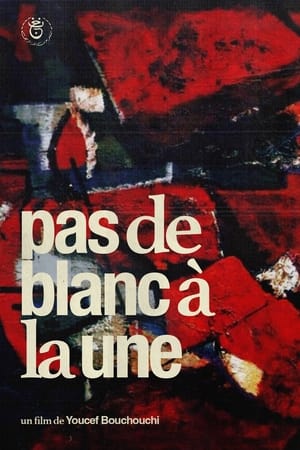
Pas De Blanc À La Une
Pas De Blanc À La Une, by Youcef Bouchouchi, treatises the brutality of the conflict during the war of independence in Algeria from 1854 to 1962, and the systematic use of torture which pushes even the most hesitant to make up their minds.
1971
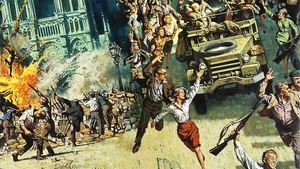
Is Paris Burning?
Near the end of World War II, General Dietrich von Choltitz receives orders to burn down Paris if it becomes clear the Allies are going to invade, or if he's unable to maintain control of the city. After much contemplation, Choltitz ignores orders, enraging the Germans and giving hope to various resistance factions that the city will be liberated. Choltitz, alongside Swedish diplomat Raoul Nordling, helps a leader organise his forces.
1966

Le Petit Soldat
Despite his lack of political convictions, photojournalist Bruno Forestier is roped into a paramilitary group waging a shadow war in Geneva against the Algerian independence movement.
1963
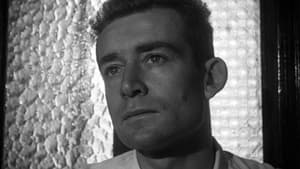
The Olive Trees of Justice
The son of a French colonialist in Algeria returns to Algeria after learning that his father is ill. Memories from childhood return. He also must deal with some problems involving the Algerian fight for independence.
1962
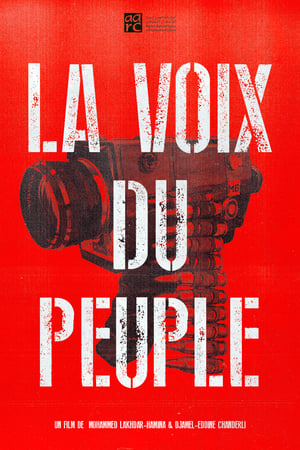
Sawt Echaâb
“La Voix du Peuple,” composed of archival photographs by René Vauthier and others, exposes the root causes of the armed conflict of the Algerian resistance. Participating in a war of real images against French colonial propaganda, these images aimed to show the images that the occupier had censored or distorted, by showing the extortions of the French occupation army: torture, arrests and arbitrary executions, napalm bombings, roundabout fires, erasing entire villages from the map, etc. This is what the French media described as a “pacification campaign”.
1961