Watch Yasmina (1961) Online Free
"Yasmina" filmed in 1961 in the middle of the Algerian war tells the story of a little Algerian girl with her hen and her family whose father was killed in a bombing by the French colonial army of occupation. The family, after a long journey, heads towards the refugee camps on the Tunisian border. Produced by the Cinema Service of the Provisional Government of the Algerian Republic (GPRA) in the midst of the war of independence, these films were intended to re-inform the population and international public opinion on the abuses committed by the French colonial army: torture, arrests and arbitrary executions, napalm bombings, fires in douars, entire villages wiped off the map, etc. which the French media described as a "pacification" campaign. The latter censoring or reorienting any images that could harm the colonial narrative.
More Like This

Red Island
Madagascar, at the turn of the 1960s and 1970s. On an air base of the French army, the soldiers live the last carefree years of colonialism. Influenced by his readings of Fantômette, Thomas, a child who is not yet 10 years old, gradually forges a look at the world around him.
2023
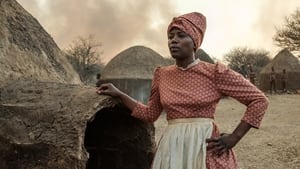
Measures of Men
Berlin at the end of the 19th Century. Alexander Hoffmann is an ambitious PhD student of Ethnology. When a delegation of the Herero and Nama tribes travels to Berlin during a ‘Colonial Exhibition’, he takes a special interest in their young female translator Kezia Kambazembi as subject for his studies.
2023
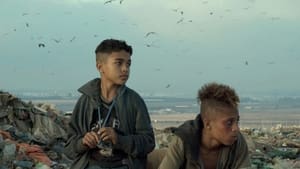
Final Round
Rachid is a young man who survives in Morroco boxing in clandestine fights in order to save enough money with which to pay a smuggler, and be able to cross the Strait of Gibraltar with his two friends.
2022
Cactus/es lost in the streets
When a northeastern brazilian worker, Filismino, is forced to move to the big southeastern metropolis of São Paulo, the northeastern grim reaper is forced to go there and kill him.
2022
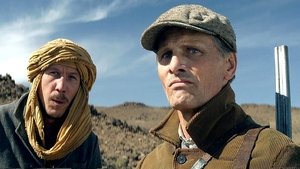
Far from Men
A French teacher in a small Algerian village during the Algerian War forms an unexpected bond with a dissident who is ordered to be turned in to the authorities.
2015

Mesrine: Killer Instinct
Jacques Mesrine, a loyal son and dedicated soldier, is back home and living with his parents after serving in the Algerian War. Soon he is seduced by the neon glamour of sixties Paris and the easy money it presents. Mentored by Guido, Mesrine turns his back on middle class law-abiding and soon moves swiftly up the criminal ladder.
2008
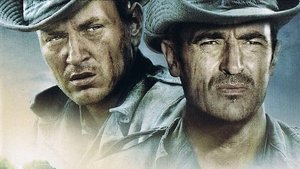
Intimate Enemies
A drama following a French platoon during Algeria's war of independence.
2007

The Harem of Madame Osmane
In Algiers in 1993, while the civil war is starting, Mrs Osmane's tenants have to endure her bad temper. Her husband left her and the fear to lose her respectability haunt her. The former member of the Resistance during the Independence War persists in controlling the slightest moves of the households rather than struggle against her own frustrations. Learning her daughter is in love, the possibility of finding herself alone will push her to the limit: The symbolical Mrs Osmane "harem" is about to collapse.
2000

Traps
The year is 1950 and an English couple, Louise and Michael, have arrived in French-occupied Indochina to cover a story on a French-owned rubber plantation. They are to be the guests of the enigmatic plantation overseer, Daniel, and his beautiful yet difficult daughter Viola, at their elegant, decaying villa amid a tropical jungle. Michael and Louise hope that some time spent working in an exotic location will help reignite the passion in their floundering marriage. Instead they become unwittingly involved in the personal, sexual and political tensions of their hosts. Daniel is desperate to hold onto a way of life no longer possible in a country struggling for independence, bringing him into conflict with not only his daughter but also with his adopted country.
1994

Wild Reeds
As the Algerian War draws to a close, a teenager with a girlfriend starts feeling homosexual urges for two of his classmates: a country boy, and a French-Algerian intellectual.
1994
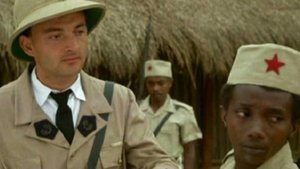
Tabataba
Tabataba tells the story of a small Malagasy village during the independence uprising which took place in 1947 in the south of the country. For several months, part of the Malagasy population revolted against the French colonial army in a bloody struggle. The repression in villages that followed was terrible, leading to fires, arrests and torture. Women, children and the elderly were the indirect victims of the conflict and suffered particularly from famine and illness. One leader of the MDRM Malagasy Party, which campaigns for the independence of the country, arrives in a village. Solo (François Botozandry), the main character, is still too young to fight but he sees his brother and most of the men in his clan join up. His grandmother, Bakanga (Soavelo), knows what will happen, but Solo still hopes his elder brother will return a hero. After months of rumours, he sees instead the French army arrive to crush the rebellion.
1989
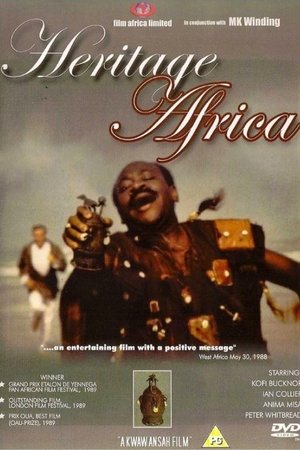
Heritage Africa
The story of Quincy Bosomfield who is the product of colonial education and has risen to become the district commissioner. In the process, he abandons his African heritage and all that has real meaning to him.
1989
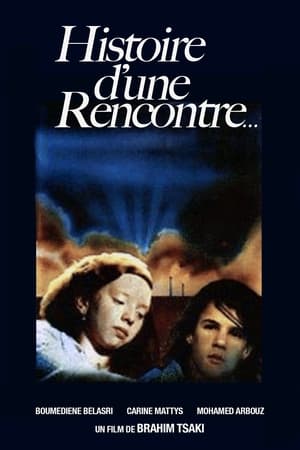
Tale of an Encounter
Two deaf and dumb children. She is the daughter of an American Oil engineer. He is the son of an Algerian farmer. They meet and manage to communicate, transcending all the cultural barriers that separate them.
1985
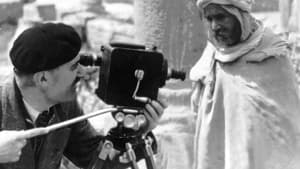
The Zerda or the Songs of Forgetting
“La Zerda and the songs of oblivion” (1982) is one of only two films made by the Algerian novelist Assia Djebar, with “La Nouba des femmes du mont Chenoua” (1977). Powerful poetic essay based on archives, in which Assia Djebar – in collaboration with the poet Malek Alloula and the composer Ahmed Essyad – deconstructs the French colonial propaganda of the Pathé-Gaumont newsreels from 1912 to 1942, to reveal the signs of revolt among the subjugated North African population. Through the reassembly of these propaganda images, Djebar recovers the history of the Zerda ceremonies, suggesting that the power and mysticism of this tradition were obliterated and erased by the predatory voyeurism of the colonial gaze. This very gaze is thus subverted and a hidden tradition of resistance and struggle is revealed, against any exoticizing and orientalist temptation.
1983
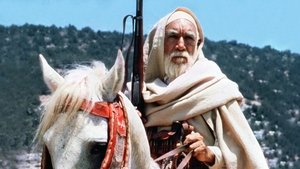
Lion of the Desert
Resistance leader Omar Mukhtar opposes Italian colonization before World War II. The brutal guerrilla war against Italian General Rodolfo Graziani and the Fascist forces of Benito Mussolini highlights the struggle for Libyan independence and the harsh tactics utilised by the colonisers.
1981
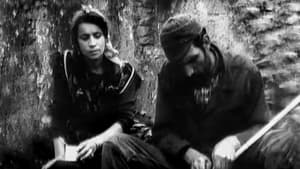
The Charcoal Maker
Film describes the miserable existence of a charcoal-burner who is barely able to feed his family. His search for work in town ends in failure and he is forced to return to his village.
1973

Dead of Summer
A woman left alone in Morocco by her architect husband begins to lose her mind.
1970
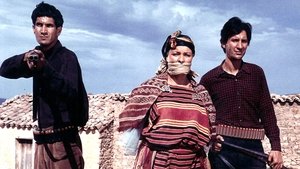
The Outlaws
In prison in colonial Algeria, shortly after the end of the Second World War, three indigenous cellmates make out. Once free, they attack the authority represented by the triad of the boss, the gendarme and the administrator. “Living the colonial condition,” confided Tewfik Farès, “is something! It’s not sociologically or historically speaking. It’s life. And I think that’s all there in it. [...] For a hundred and thirty years, we wait. We hold back. We push back. We hope. At the same time, on different occasions, there are skirmishes, unrest.
1969

The Juggler
A Holocaust survivor moves to Israel and experiences difficulty adjusting to life.
1953
Kaddour à Paris
1938