Watch The Love of Books: A Sarajevo Story (2011) Online Free
Documentary which tells the story of a group of men and women who risked their lives to rescue a library - and preserve a nation's history - in the midst of the Bosnian war. Amid bullets and bombs and under fire from shells and snipers, this handful of passionate book-lovers safeguarded more than 10,000 unique, hand-written Islamic books and manuscripts - the most important texts held by Sarajevo's last surviving library.
More Like This
Sarajevo Safari
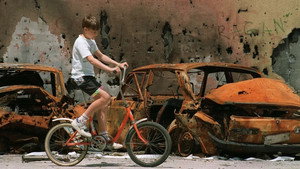
Among the many dramatic episodes of the siege of Sarajevo in the years 1992 to 1996, the story of a human safari has remained concealed from the public eye. Few people knew that those fighting the war on the Serbian side were not only the Bosnian Serb Army, volunteers and mercenaries but also a small, clandestine group: wealthy foreigners who paid high fees for the chance to shoot at the residents of the city under siege.
2022
Brotherhood
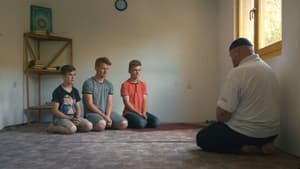
Jabir, Usama and Uzeir are three young brothers in a Sunni family of shepherds. Since childhood, their father Ibrahim has rigidly trained them in the principles of the Quran and has filled their minds with stories of the Bosnian War.
2022
Postwar Album
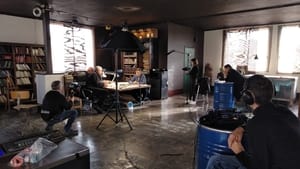
Winter 2019. Spanish war photographer Gervasio Sánchez, who documented with his camera the long and tragic siege of Sarajevo during the Bosnian War (1992-95), returns to the city in search of the children he met among the ruins, those who survived to grow up, live and remember.
2021
Svet na dotyk
2019
American Animals
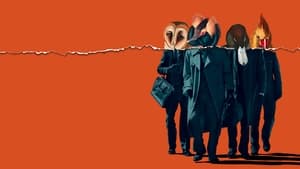
Lexington, Kentucky, 2004. Four young men attempt to execute one of the most audacious art heists in the history of the United States.
2018
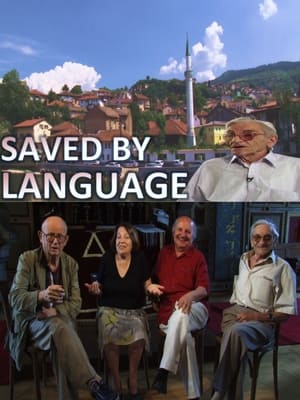
Saved by Language
Can a language save your life? Yes it can, even an ancient one from the 15th century. Saved by Language tells the story of Moris Albahari, a Sephardic Jew from Sarajevo (born 1930), who spoke Ladino/Judeo-Spanish, his mother tongue, to survive the Holocaust. Moris used Ladino to communicate with an Italian Colonel who helped him escape to a Partizan refuge after he ran away from the train taking Yugoslavian Jews to Nazi death camps. By speaking in Ladino to a Spanish-speaking US pilot in 1944 he was able to survive and lead the pilot, along with his American and British colleagues, to a safe Partizan airport.
2015
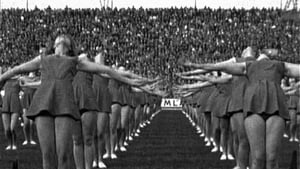
Yugoslavia: How Ideology Moved Our Collective Body
A research-based essay film, but also a very personal perspective on the history of socialist Yugoslavia, its dramatic end, and its recent transformation into a few democratic nation states.
2013
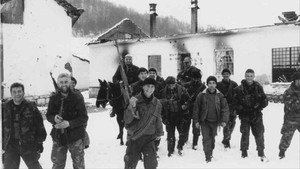
Sarajevo Ricochet Part 1: The US Green Light
This two-part documentary reveals how al-Qaeda used Bosnia as a training-ground, money-laundering centre and forward operating base during the brutal civil war of 1992-95. The veterans went on to attack New York, Washington DC, London, Madrid, Mombasa and Bali. The story also reveals how the people of Srebrenica were betrayed by the Sarajevo government in advance of the massacres of July 1995.
2011
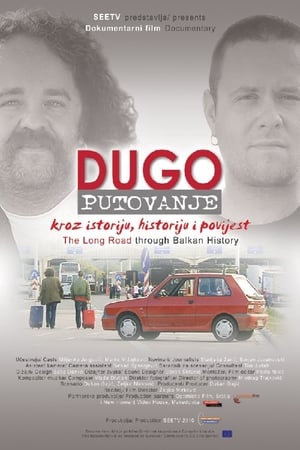
The Long Road Through Balkan History
Bosnian Croat writer Miljenko Jergović and Serbian writer Marko Vidojković replace one another by the steering wheel of Yugo, a symbol of their common past while driving on the Brotherhood and Unity Highway that stretched across five of six republics of Yugoslavia.
2009
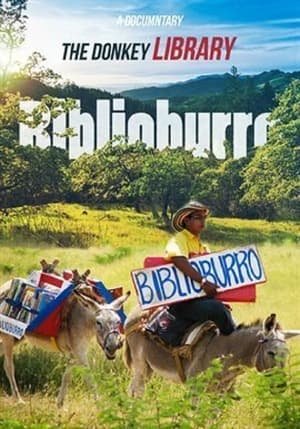
Biblioburro, the Donkey Library
This documentary follows the life of a one-of-a-kind man, and his one-of-a-kind library. Luis Soriano is a Colombian schoolteacher who spends weekends taking his donkey, and book collection, to the poverty-ridden towns of Magdalena Province. Facing down drug dealers, dangerous creatures, and overbearing heat, Soriano bravely faces down fear to promote education and literature.
2008
Scouting for Boys
Lord Baden-Powell's 1908 handbook Scouting for Boys is one of the most influential and best-selling books of all time. In the 20th century, only the Bible, the Koran and the Thoughts of Chairman Mao sold more. But they had fewer jokes, no pictures and were useless at important stuff like tying knots. In this entertaining and affectionate film, Ian Hislop uncovers the story behind the book which kick-started the Scout Movement - a work which is very eccentric, very Edwardian and very English. Hislop discovers that the book is also very radical and addresses a variety of modern issues, such as citizenship, disaffected youth and social responsibility. He explores the maverick brilliance of Baden-Powell, a national celebrity after his heroism in the Boer War, and considers the book's candid focus on health and well-being.
2007
Suzana from the Cellar
A cellar-dwelling woman talks about her life to a camera during the devastating war in Bosnia.
1995
Bosnia!
The carnage in Sarajevo provides the focus of this French documentary which seeks to call attention to the terrible conflict in the hopes of finally ending it. The film is divided into five parts. Each part covers a time frame ranging from April 4, 1992, the beginning of the war, to the present. The major issues that occur are three-fold. It depicts the systematic genocide of Bosnians, the silence of Western countries, and the determination of the Bosnians to resist. They refuse to be seen as victims, even though the filmmakers portray them so. Also included are the origins and political aspects of the war. It offers interviews with participants. It also reveals how the U.S. State Department censored reports about Serbian death camps.
1994
Bums and Dogs
A hotel in the centre of town is a war-time home and refuge for many of Sarajevo's homeless people. Every morning they leave the hotel and wander around the destroyed city gathering again at the defunct hotel in the afternoon. This film follows their separate fates through the bitter comparing of images of the bums with those of dogs abandoned by their owners and now left et the mercy of the war ravaged streets of Sarajevo.
1993
Serbian Epics
Paul Pawlikowski's award-winning documentary on life behind Serbian lines in Bosnia. The film observes the roots of the extreme nationalism which has torn apart a country and provides a chilling examination of the dangerous power of ancient nationalist myths.
1992
A Walk Through Prospero's Library
A short made for TV with director Peter Greenaway discussing the dazzling 3.5 minute opening sequence from his film, 'Prospero's Books'. As Prospero (John Gielgud) walks through his library, Greenaway comments on the historical, mythological, biblical & fictional characters occupying the library.
1992
The People's Palace: A Portrait of the New York Public Library
With a mission of collecting, preserving and making accessible the materials of human culture, the New York Public Library plays a vital role in the cultural life of the Big Apple. This film provides a multifaceted portrait of the institution. Viewers will learn about the library's history, collections and research centers as well as the individuals charged with upholding its mission while always keeping an eye to the future.
1991
Stone Sleeper
Film inspired by the beauty of medieval tombstones, stećaks, scattered around the mountains of Bosnia-Herzegovina and Mak Dizdar’s poem about them. Film explores the distant past immortalized in inscriptions on these ancient tombstones.
1969
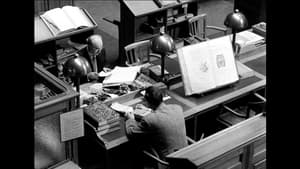
All the World's Memory
A documentary about the Bibliothèque Nationale in Paris. It presents the building, with its processes of cataloguing and preserving all sorts of printed material, as both a monument of cultural memory and as a monstrous, alien being.
1956
Prameny síly
1948