Watch Postwar Album (2021) Online Free
Winter 2019. Spanish war photographer Gervasio Sánchez, who documented with his camera the long and tragic siege of Sarajevo during the Bosnian War (1992-95), returns to the city in search of the children he met among the ruins, those who survived to grow up, live and remember.
Cast
Gervasio Sánchez, Enric Martí
More Like This

The Man I Left Behind
Larry Towell is a photographer with the prestigious Magnum agency. For 40 years, he has travelled our troubled planet, capturing the unspeakable. In this cinematic diary, he looks back on his profession, his doubts, the need for images, the absurdity of borders, the danger of “getting used to war” and the essence of his quest, which is also that of the film: humanity. Yet another impressive work by Matthieu Rytz, talented filmmaker born in Nyon!
2024
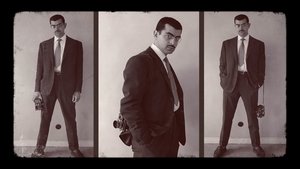
Ramón Masats: el ojo irónico
A journey through the life and outstanding work of the Spanish photographer and filmmaker Ramón Masats.
2023
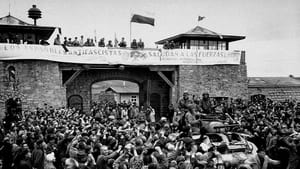
The Mauthausen Resistance
During World War II, the photographer Francisco Boix and other Spanish Republican prisoners of the Mauthausen concentration camp, where 120,000 people died, managed not only to survive their indescribable experience, but also, after the war, to reveal to the world what really happened in that hell, saving from destruction thousands of official photographs taken by the SS.
2021
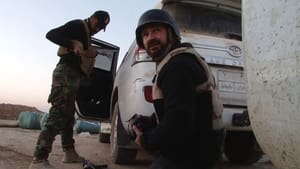
You are Not a Soldier
As filmmaker Maria Carolina Telles comes to terms with the death of her father, a man who regretted never making it to the frontlines of World War II, she focuses her lens on the life of another man who had his own unique experience as a civilian in the midst of combat: award-winning war photographer André Liohn.
2021
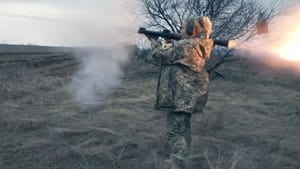
Inner Wars
Since the uprising of a pro Russian insurgency in eastern Ukraine in 2014, hundreds of women joined the army. Only a few made it to the front line. Filmmaker Masha embeds herself in the war zone to follow the daily life of three of them. By sharing the intimacy of these fighters, Masha soon becomes a victim of this brotherhood conflict jeopardizing this film and her life.
2020
Mafia Is Not What It Used to Be
Palermo, Sicily, Italy, 2017. Twenty-five years after the murders of anti-mafia judges Giovanni Falcone, on May 23, 1992, and Paolo Borsellino, on July 19, 1992; and on the occasion of the tributes held in memory of both heroes, skeptical photographer Letizia Battaglia, chronicler of their titanic combat, criticizes the opportunism of shady characters who, like businessman Ciccio Mira, profit from the commemoration of both tragedies.
2019
Stronger Than a Bullet
Iran, January 16th, 1979. Shah Mohammad Reza Pahlavi flees after being overthrown. Ayatollah Khomeini returns to Tehran and proclaims the Islamic Republic on April 1st, 1979. In the same year, Saddam Hussein seizes power in Iraq and, after several border skirmishes, attacks Iran on September 22nd, 1980, initiating a cruel war that will last eight years. Since its outbreak, correspondent Saeid Sadeghi documented it from its beginning to its bitter end.
2017
Sarajevo
The events in Sarajevo in June 1914 are the backdrop for a thriller directed by Andreas Prochaska and written by Martin Ambrosch, focusing on the examining magistrate Dr. Leo Pfeffer (Florian Teichtmeister) investigating the assassination of Archduke Franz Ferdinand. Trying to do his job in a time of lawlessness and violence, intrigues and betrayal, Leo struggles to maintain his integrity and save his love, Marija, and her father, prominent Serbian merchant. But the events of Sarajevo have set into motion an inescapable course of events that will escalate to become … the Great War.
2014
Sarajevo Ricochet Part 1: The US Green Light
This two-part documentary reveals how al-Qaeda used Bosnia as a training-ground, money-laundering centre and forward operating base during the brutal civil war of 1992-95. The veterans went on to attack New York, Washington DC, London, Madrid, Mombasa and Bali. The story also reveals how the people of Srebrenica were betrayed by the Sarajevo government in advance of the massacres of July 1995.
2011
Final Absolution: History of a Photograph
During a military uprising known as “El Porteñazo”, a priest is photographed while trying to help a soldier wounded in combat. The photo travels the world and is awarded the most important prizes in photojournalism, such as the Pulitzer Prize and the World Press. Throughout this documentary, photographers, editors and witnesses reveal various aspects surrounding that image: who is the priest, who was its author, the events that surrounded the photographic event, what was its political role and what said image represents in the history of Venezuelan journalism. Additionally, it allows the presentation of other photographs, some unpublished, that Rondón managed to capture in those difficult moments.
2010
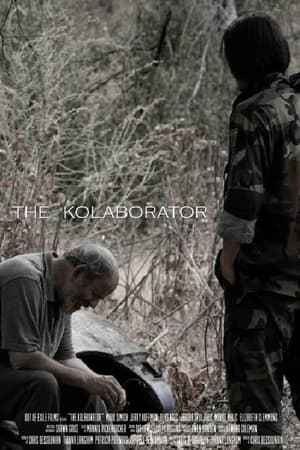
The Collaborator
During the conflict in the former Yugoslavia many soldiers were convinced to kill fellow citizens including friends and relatives in the name of patriotism. The Kolaborator follows the story of Goran, 24, a promising young soccer player who is forced to become a soldier. Goran goes from being a talented athlete to an executioner virtually overnight. Following orders, Goran lines up civilians, shoots them and drags them into mass graves. Justifying his role as a protector of his people, Goran becomes increasingly detached from the task until his soccer coach and life-long friend, Asim, is led in front of him. As a familiar face stands defeated before him, Goran must reconsider his actions and choose between his own life and that of his dear friend.
2007

Grbavica: The Land of My Dreams
A woman and her daughter struggle to make their way through the aftermath of the Balkan war.
2006
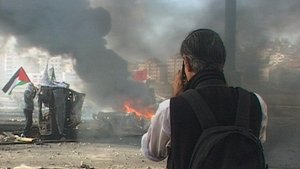
War Photographer
Documentary about war photographer James Nachtwey, considered by many the greatest war photographer ever.
2001
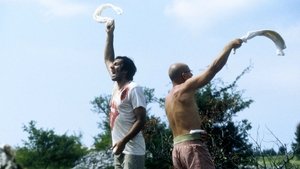
No Man's Land
Two soldiers from opposite sides get stuck between the front lines in the same trench. The UN is asked to free them and both sides agree on a ceasefire, but will they stick to it?
2001
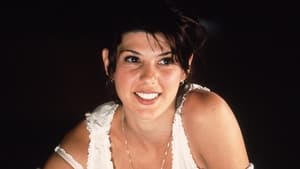
Welcome to Sarajevo
Follow a group of international journalists into the heart of the once cosmopolitan city of Sarajevo—now a danger zone of sniper and mortar attacks where residents still live. While reporting on an American aid worker who’s trying to get children out of the country, a British correspondent decides to take an orphaned girl home to London.
1997
Suzana from the Cellar
A cellar-dwelling woman talks about her life to a camera during the devastating war in Bosnia.
1995
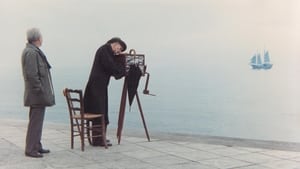
Ulysses' Gaze
An exiled filmmaker finally returns to his home country where former mysteries and afflictions of his early life come back to haunt him once more.
1995
Bosnia!
The carnage in Sarajevo provides the focus of this French documentary which seeks to call attention to the terrible conflict in the hopes of finally ending it. The film is divided into five parts. Each part covers a time frame ranging from April 4, 1992, the beginning of the war, to the present. The major issues that occur are three-fold. It depicts the systematic genocide of Bosnians, the silence of Western countries, and the determination of the Bosnians to resist. They refuse to be seen as victims, even though the filmmakers portray them so. Also included are the origins and political aspects of the war. It offers interviews with participants. It also reveals how the U.S. State Department censored reports about Serbian death camps.
1994
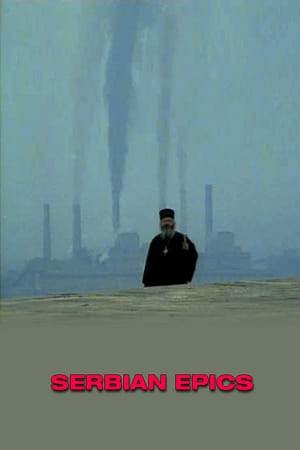
Serbian Epics
Paul Pawlikowski's award-winning documentary on life behind Serbian lines in Bosnia. The film observes the roots of the extreme nationalism which has torn apart a country and provides a chilling examination of the dangerous power of ancient nationalist myths.
1992
Stealing of the Sun
While new, monster housings are being erected, people grow a small farm in their vicinity. Soon the bulldozers come and ransack it.
1978