Watch The Invisible Front (2014) Online Free
Between 1944–1953, courageous resistance movement took place in the Baltic region of Europe, uniting the partisan troops for struggle against the Soviet Union. “The Invisible Front” was a coded name used by the Soviet Interior forces to describe the resistance movement in Lithuania. Film depicts the story of the fighters through the words and experience of the partisan leader, Juozas Luksa, and interviews with eyewitnesses of those events - both the partisans and the Soviet fighters. Tales of horror, torture and courage are told in the rare archival footage that has never been screened before, and interviews with the surviving members of the resistance movement.
Cast
Andrius Mamontovas, Darius Udrys
More Like This
La Guerre, Donald Trump et nous : 2025, l'année de tous les dangers
2025, the year of the intensification of a total and deadly war, which nothing and no one seems able to stop, targeting military personnel and civilians, and which has now claimed more than 1.5 million lives or left that many wounded on both sides. But 2025 is also the year of our break with Donald Trump's America, an America with violent and unpredictable reactions, which risks abandoning the old continent, its most loyal ally for 80 years, for Vladimir Putin. How can we stop this bloodshed on our doorstep? How can we contain the master of the Kremlin, a dictator whose predatory logic threatens to spread beyond Ukraine? Sabotage, ghost ships, interference operations, and drone flights: he is already waging a hybrid war against the rest of Europe. Is armed conflict between Europe and Russia now a possibility?
2026
Mr. Nobody Against Putin
As Russia launches its full-scale invasion of Ukraine, primary schools across Russia’s hinterlands are transformed into recruitment stages for the war. Facing the ethical dilemma of working in a system defined by propaganda and violence, a brave teacher goes undercover to film what’s really happening in his own school.
2025
THE SCHOOLGIRL
Grandma's recount of her journey to school, but she was never alone in the forest.
2024
Monika Liu Eurovizija'22 Backstage
A short documentary on Monika Liu's Eurovision journey in Turin 2022.
2023
Techno, Mama
Nikita loves to listen to techno music and dreams to go to Berlin and visit the famous club “Berghain”. His mother Irena doesn’t know about his son’s dreams and soon enough their mutual expectations will clash.
2021

A Very Animated War
From 1945 to 1989, after the capitulation of Nazi Germany, two rival ideologies, communism and capitalism, faced each other in a merciless battle. On one side of the Iron Curtain and on the other, throughout the Cold War, the USSR and the United States sought to shape children’s imaginations through their magazines and films. Never in the history of mankind have so many comic books been published and so many cartoons produced for young people. In November 1989, communism collapsed with the Berlin Wall; capitalism was left to decide the future of the world. What if this victory had been prepared for a long time, and our thinking conditioned, from our early childhood, to ensure this absolute triumph?
2021
Dance Alone
2021

The Lawyer
Marius is a highly successful lawyer based in Vilnius. He becomes obsessed with Ali, a handsome Syrian refugee he first encounters in an online chatroom run out of Belgrade. Marius is rich and enjoys a vibrant social and cultural life. Nevertheless, he feels that something is missing from it. The journey from Lithuania to Serbia is a relatively short one, but can the two navigate their way through the gulf that separates their very different lives? And how do they deal with the precarious obstacles of the physical borders that stand between them? Written and directed by Romas Zabarauskas, The Lawyer questions assumptions about what it means to be an immigrant and the possibilities offered by life in contemporary Europe.
2020
PBS NewsHour: Inside Putin's Russia
Correspondent Nick Schifrin and producer Zach Fannin take us inside Vladimir Putin's Russia, with an in-depth look at the resurgent national identity, the government's propaganda machine, the risk of being a Kremlin critic and much more.
2017
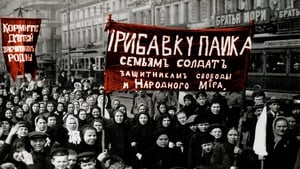
Lenin and the Other Story of the Russian Revolution
Vladimir Ilyich Ulyanov, better known as Lenin, is remembered as the instigator of the October Revolution of 1917 and, therefore, as one of the men who changed the shape of the world at that time and forever, but perhaps the actual events happened in a way different from that narrated in the history books…
2017
Emilia
Soviet Lithuania in 1972. A young theatre actress is trying to make a difference and tell the forbidden story of repression in a play.
2017

Other Girls
Other Girls tells the story of four young girls nearing graduation, all of them struggling with various issues.
2015
We Will Sing
A group of protesters, from all around Lithuania, gather at the Television Tower to protect it from approaching Soviet tanks and paratroopers.
2015
The Shadow of Heaven
It has been over one hundred years since M. K. Čiurlionis left his lasting imprint on Lithuanian culture. He was a composer, painter, genius, and madman who created an entirely new space, new context, and new universe.
2008

The Last Days
Romance brings two warring families together in this historical drama. As citizens fight for independence in 1810s Lithuania, Tadeusz, the son of a murderer, and Zosia, a young woman, come together for a wedding against a backdrop of changing politics, ancient traditions, and the uncertain future of a country.
1999

The Corridor
The atmosphere of a corridor between yesterday and tomorrow, where many doors open into the unknown. A series of faces, gestures and images both real and imagined time. A fragmentary narrative without dialogue depicting several people in Vilnius.
1995

Homeland
The film is an emotional story about fateful historical events in the 20th century, which took place in three Baltic countries- Latvia, Lithuania and Estonia. The story is also about their efforts to regain independence.
1990
I'll take Your Bread
Documentary film showing authentic Lithuanian traditions & rituals during major seasonal festivals: Winter solstice, Mardi Gras, Easter, Midsummer.
1987

Nobody Wanted to Die
The film is set in Lithuania after the Second World War. It shows dramatic events in a small Lithuanian farming community, where people are split between the Soviets and the "brothers in the woods", who are fighting to defend their land from the Soviets after the end of the Second World War.
1966
Jons und Erdme
Adaptation of Hermann Sudermann's novel about the troubled relationship between the strong willed Erdme and her irascible husband Jons in the Lithunian moors.
1959