Watch A Very Animated War (2021) Online Free
From 1945 to 1989, after the capitulation of Nazi Germany, two rival ideologies, communism and capitalism, faced each other in a merciless battle. On one side of the Iron Curtain and on the other, throughout the Cold War, the USSR and the United States sought to shape children’s imaginations through their magazines and films. Never in the history of mankind have so many comic books been published and so many cartoons produced for young people. In November 1989, communism collapsed with the Berlin Wall; capitalism was left to decide the future of the world. What if this victory had been prepared for a long time, and our thinking conditioned, from our early childhood, to ensure this absolute triumph?
More Like This
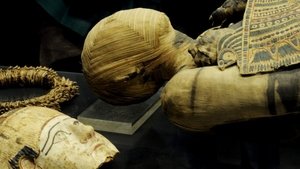
Momies d'Égypte, en quête d'immortalité
2025

We Lend a Hand: The Forgotten Story of Ontario Farmerettes
In 2018, Bonnie Sitter, an author based in Exeter, Ontario searches through some of her family photographs. She finds a captivating little black and white image: a group of smiling young women on the running board of a vehicle. When she flips the photo, an intriguing caption reads: “Farmerettes 1946”. This moment sparks a compelling research journey that eventually leads her to co-author an entire book on a forgotten subject.
2025

Lumière, Le Cinéma!
In one of those wonderful coincidences of history, lumière, the French word for “light,” was also the last name of brothers Auguste and Louis, whose brilliant invention, the cinematograph, helped to inaugurate the most beloved art form of the last 130 years. Institute Lumière director Thierry Frémaux uses Lumière, Le Cinema! to guide the viewer through over a hundred shorts—some famous, some forgotten, some never before seen—directed by Lumière and company. In the process, Frémaux illuminates how the brothers employed the camera as a creative instrument as they (and their operators) mastered framing, staging, and subject selection for quotidian and exotic microdocumentaries as well as the first ever fictional motion pictures. The result is not only a glorious re(telling) of the genesis of cinema but a profound meditation on the beautiful world captured—and the mysterious world imagined—by the Lumières.
2024

Berlin Tempelhof Airport - Gateway to Freedom
Located in former West Berlin, Tempelhof Airport reflects the dramatic history of the 20th century. Once a Nazi showpiece, it later became a symbol of freedom during the Berlin Airlift and the Cold War. In 1978, East German citizen Constanze Glien unexpectedly arrived here after her flight was hijacked, changing the course of her life.
2024

The Daughter of the Pope: Lucrezia Borgia
The incredible story of Lucrezia Borgia (1480-1519), daughter of Pope Alexander VI (1431-1503), deliberately used politically by her powerful family and historically slandered as a poisoner and incestuous femme fatale. But who was the real Lucrezia?
2024

Consuelo et Antoine de Saint Exupéry: Apprivoiser les Étoiles
2024
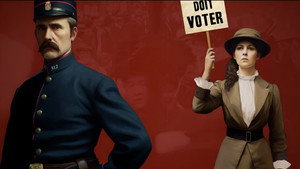
Citoyennes !
2024
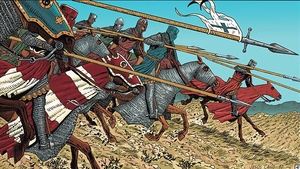
1212. The Battle of Las Navas de Tolosa
On 16 July 1212, a Crusader army made up of Castilians, Aragonese and Navarrese (but also French, English and Germans) confronted the army of the Almohad Caliph an-Nasir at the foot of the Sierra Morena mountain range. The Battle of Las Navas de Tolosa, as the battle is known, is considered the most important battle of the Middle Ages on the Iberian Peninsula and is a key event in the history of Spain. More than 800 years later, a group of archaeologists and specialists have begun an archaeological study of the battlefield. Is everything that has been said about the battle true? What secrets does the terrain hide? And, above all, what can we learn today about events that took place hundreds of years ago and that pitted tens of thousands of people against each other in the south of our country?
2023

Kaffee - Geheimnisse eines Wundertranks
Coffee is the second most important commodity in the world after oil. The drink has a long history and what's more, its effect seems to be stimulating in two senses.
2021
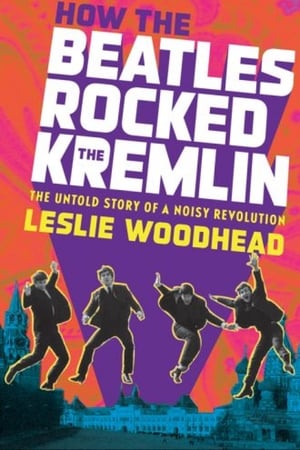
How the Beatles Rocked the Kremlin
In August 1962, director Leslie Woodhead made a two-minute film in Liverpool's Cavern Club with a raw and unrecorded group of rockers called the Beatles. He arranged their first live TV appearances on a local show in Manchester and watched as the Fab Four phenomenon swept the world. Twenty-five years later while making films in Russia, Woodhead became aware of how, even though they were never able to play in the Soviet Union, the Beatles' legend had soaked into the lives of a generation of kids. This film meets the Soviet Beatles generation and hears their stories about how the Fab Four changed their lives, including Putin's deputy premier Sergei Ivanov, who explains how the Beatles helped him learn English and showed him another life. (Storyville)
2009
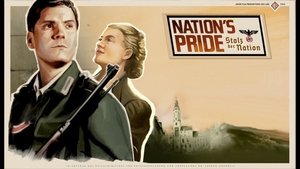
Stolz der Nation
Director Quentin Tarantino tasked Eli Roth to craft a mini-movie called Stolz der Nation (Nation's Pride) that will be included in the theatrical cut of Inglourious Basterds. To help promote Inglourious Basterds via the film-within-a-film, Roth has slapped together a trailer for Nation's Pride blending black and white photography with modern multi-layered camera effects.
2009
Enron: The Smartest Guys in the Room
A documentary about the Enron corporation, its faulty and corrupt business practices, and how they led to its fall.
2005

Michael Moore Hates America
Michael Wilson, like the subject of his film, is trying to get an interview with a multi-millionaire; however, in this case, that millionaire is Michael Moore himself.
2004
Secrets, Lies, and Atomic Spies
Chronicling the lives and covert activities of the so-called "atom spies" in the 1940s, including the big one that got away, Theodore Alvin Hall.
2002
Thirteen Days
The story of the Cuban Missile Crisis in 1962—the nuclear standoff with the USSR sparked by the discovery by the Americans of missile bases established on the Soviet-allied island of Cuba.
2000
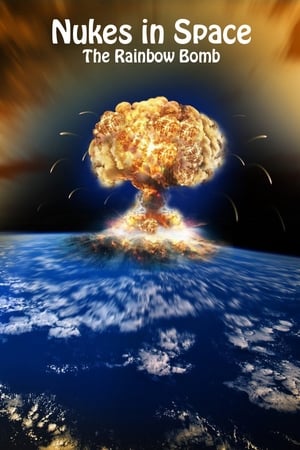
Nukes in Space
U.S. nuclear tests in space, and the development of the military intercontinental ballistic missile (ICBM).
1999
Iron Eagle II
Chappy Sinclair is called to gather together a mixed Soviet/U.S. strike force that will perform a surgical strike on a massively defended nuclear missile site in the Middle East. Chappy finds that getting the Soviet and U.S. Pilots to cooperate is only the most minor of his problems as he discovers someone in the Pentagon is actively sabotaging his mission.
1988
The Atomic Cafe
A disturbing collection of 1940s and 1950s United States government-issued propaganda films designed to reassure Americans that the atomic bomb was not a threat to their safety.
1982
The Day Called X
Portentously portrays the evacuation of Portland, Oregon, when threatened by a nuclear attack on its state-of-the-art civil defense system.
1957

Billion Dollar Spy
Set against the high-stakes backdrop of the late Cold War, Adolf Tolkachev, an ordinary man who risks everything to pass thousands of pages of top-secret Soviet intelligence to the U.S. Despite repeated rejections by a wary CIA, Tolkachev persisted, embodying the courage to stand against a regime that betrayed its own people. Finally, finding an ally in CIA agent Tom Lenihan, Tolkachev was able to fundamentally shift the balance of power, proving that true patriotism lies not in blind allegiance but in the willingness to challenge a government when it strays from its ideals.