Watch The Shadow of Heaven (2008) Online Free
It has been over one hundred years since M. K. Čiurlionis left his lasting imprint on Lithuanian culture. He was a composer, painter, genius, and madman who created an entirely new space, new context, and new universe.
Cast
Mikalojus Čiurlionis, Jonas Čiurlionis
More Like This
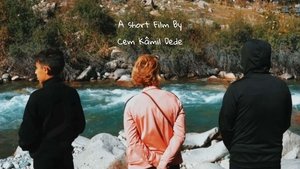
The Day of No One
A silent day unfolds on the slope of a mountain… A child exists alongside his mother and father, yet each of them seems to inhabit a different world. With no dialogue, the film relies on visual storytelling. In certain close-up shots, color fades to black and white; symbolizing moments of inner solitude, personal conflict, and emotional disconnection. The unseen distances within the family are revealed not through words, but through images.
2025

Echo
A reframing of the classic tale of Narcissus, the director draws on snippets of conversation with a trusted friend to muse on gender and identity. Just as shimmers are difficult to grasp as knowable entities, so does the concept of a gendered self feel unknowable except through reflection. Is it Narcissus that Echo truly longs for, or simply the Knowing he possesses when gazing upon himself?
2023
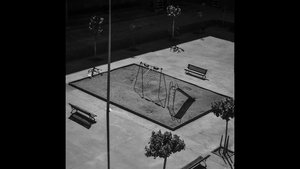
99 days
Two instants separated by 99 days conflict with each other.
2022
Nobody
Half blind and half deaf, ostraziced Cuban writer Rafael Alcides tries to finish his unpublished novels to discover that after several decades, the home made ink from the typewriter he used to write them has faded. The Cuban revolution as a love story and eventual deception is seen through the eyes of a man who is living an inner exile.
2017
Cautivos en la arena
2006
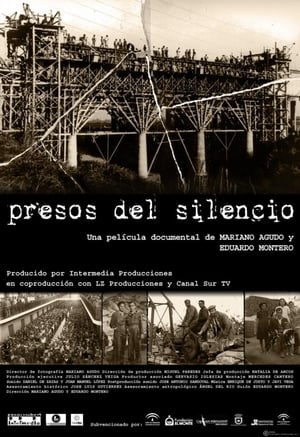
Presos del silencio
2004
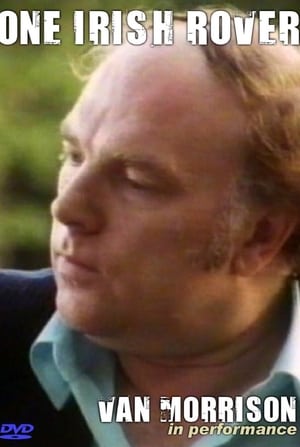
Van Morrison: One Irish Rover
One Irish Rover, a documentary focusing on the words and music of Van Morrison, was broadcast in 1991 on BBC 2 Arena TV special and on A&E cable television program. It is a series of live songs with commentary by Morrison about music and poetry, it has some truly amazing performances. It includes the footage of Morrison and Dylan in Greece, Georgie Fame at Ronnie Scott’s, John Lee Hooker, The Chieftains and Danish Radio Big Band.
1991
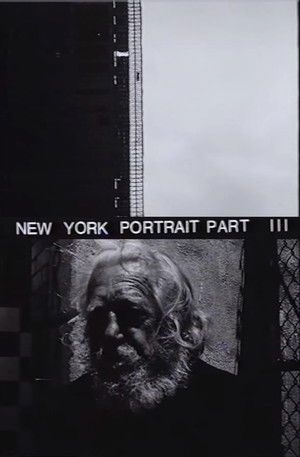
New York Portrait, Chapter III
"[Hutton’s] latest urban film, New York Portrait, Chapter III, takes on a unique tone in relation to Hutton’s ongoing exploration of rural landscape. The very fact that Hutton is dealing with older footage, with archives of memory more than immediacy, gives it a different texture than his earlier New York films. Hutton always found the presence of nature in the city, not only in his many shots of sky and vegetation, but also in the geometry and texture of the city itself, which seemed to project an independence from the human." (Tom Gunning)
1990
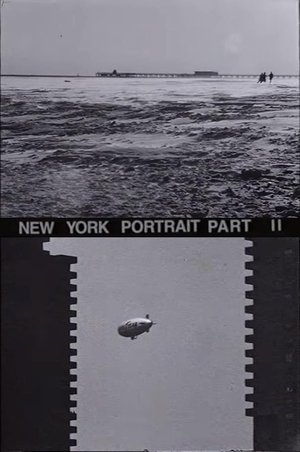
New York Portrait, Chapter II
Chapter Two represents a continuation of daily observations from the environment of Manhattan compiled over a period from 1980-1981. This is the second part of an extended life's portrait of New York.
1981

Everyday Life
Dialogue-free short detailing the daily tasks of a man and his wife.
1976
The Incredible Bread Machine Film
A discussion of the economic and political ideas presented in the book "The Incredible Bread Machine".
1975

Playgirl Models
An overview of the best methods and techniques for taking nude photographs.
1963
Hitler an der Macht
Short film about Hitler's rise to power in 1933
1960

The Dark World
Based on the real life story, the director turned his camera towards the real world of Âşık Veysel, the great poet who wandered around the Anatolian villages.
1953

Petroleum
Short film about the formation and extraction of petroleum
1941
Timber Front
This black-and-white archival film outlines the importance of Canada's forests in the national war effort during the Second World War.
1940

An Bord eines Panzerschiffes
A warship is displayed
1939
Die grüne Hölle
Expedition into the Amazon river and its rain forests
1934
Visions of Lourdes
Charles Dekeukeleire, then a questioning Catholic, was spurred into making this documentary on a pilgrimage with the Catholic Young Workers’ Movement. The director’s approach is one of critical reflection; A film emotional and fervent, even acerbic.
1932
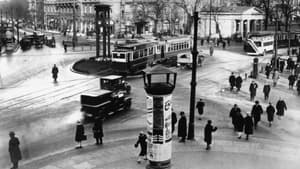
Berlin: Symphony of a Great City
A day in the city of Berlin, which experienced an industrial boom in the 1920s, and still provides an insight into the living and working conditions at that time. Germany had just recovered a little from the worst consequences of the First World War, the great economic crisis was still a few years away and Hitler was not yet an issue at the time.
1927