Watch The Dread (2017) Online Free
The villagers of El Dorado, Argentina, shy away from doctors. Then again, they hardly need one. They have almost as many cures for ailments and illnesses as there are residents in the village. 65 year old Jorge can also cure the most dreaded ailment of them all, the much feared espanto.
More Like This
Ceremony
When the Nuxalk trace the vanished ooligan to a land claim filed the very day smallpox arrived, their radio station becomes courtroom, confessional and conjuring ground; an older law insists: the fish return when the people do.
2026
THE EDGE
As tensions erupt worldwide, three black men retreat for a weekend of healing, meditation, and connection.
2025

Proyecto muerto v6 (6).mp4
2024
Archivos VIH/sida: historias y voces de una pandemia
2021

Leopoldo Jacinto. Vida de campeón
Documentary about the life story of one of Argentina's sports idols. One of the forty-three soccer players who won a World Cup, a fight. Filmed in Mendoza, Santa Fé, Rosario and Buenos Aires.
2019
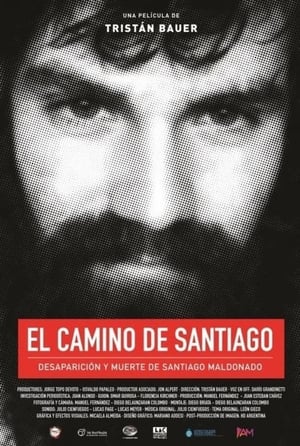
Santiago's Path: Disappearance and Death of Santiago Maldonado
Santiago Maldonado disappeared in the midst of repression against a Mapuche community that claimed to Luciano Benetton for his land. His body was found 78 days later. The need for truth and justice continues
2018

Heal
A documentary film that takes us on a scientific and spiritual journey where we discover that by changing one's perceptions, the human body can heal itself from any disease.
2017
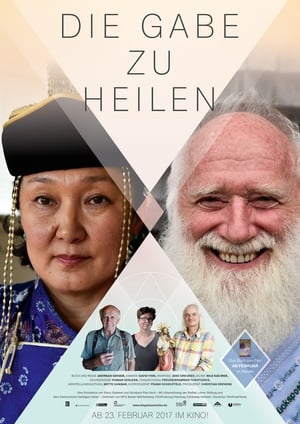
Die Gabe zu heilen
The film tells the stories of five people with special abilities who treat and heal their patients in an unconventional way. These charismatic healers from Germany, Austria and Switzerland are the subjects of this documentary which sets out to show how their old-school, arcane methods can serve as an addition to conventional, academic medicine.
2017
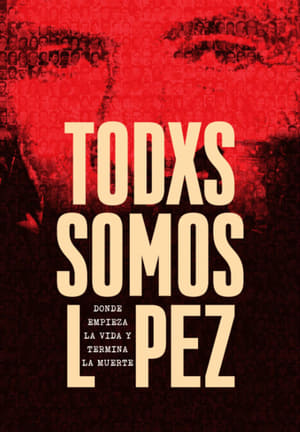
Todxs somos López. Donde empieza la vida y termina la muerte
A chronicle on the days without Jorge Julio López, key witness and complainant on the first trial on genocide in Argentina, dated in 2006. López, who had survived through concentration camps on the late seventies argentinian dictatorship, disappeared for the second time the day the court decision meant to condemn his kidnappers was about to be read.
2017
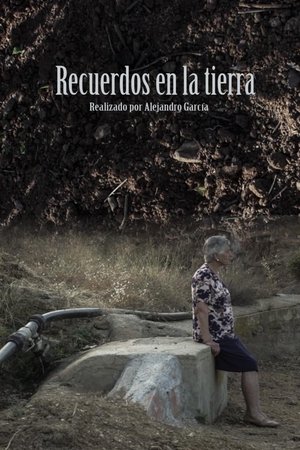
Recuerdos en la tierra
2016
Messi
His teachers, coaches, childhood friends and Barça teammates, together with journalists, writers and prominent figures from the history of football, come together in a restaurant to analyze and pick apart Messi's personality both on and off the field, and to look back at some of the most significant moments in his life. Viewed from Álex de la Iglesia's unique perspective, Messi recreates the player's childhood and teenage years, from his very first steps, with a football always at his feet, through to the decision to leave Rosario for Barcelona, the separation from his family, and the role played in his career by individuals such as Ronaldinho, Rijkaard, Rexach and Guardiola.
2014
Sauacker
SauAcker depicts the obstacles faced by Philipp, a young farmer determined to modernize his father's old-fashioned farm. His motto is "I'll do it my way". Philipp is fully committed and is even risking his relationship to attain his goals. The documentary paints a funny and charming picture of the two wayward heroes and presents an entertaining angle on the realities of contemporary society.
2014
Still
The documentary tells the story of Uschi, a farmer living free and recluded in the bavarian alps. Shot in epic black and white pictures, Still follows Uschi's life over a ten year period. From an untroubled summer of making cheese through pregnancy and the uncertain future of the parental farm, Matti Bauer portrays Uschi's struggle to keep alive the dream of a way of life that has become rather untypical in this day and age.
2014

Falklands' Most Daring Raid
Documentary film about the then longest range bombing mission in history, which changed the outcome of the Falklands War.
2012
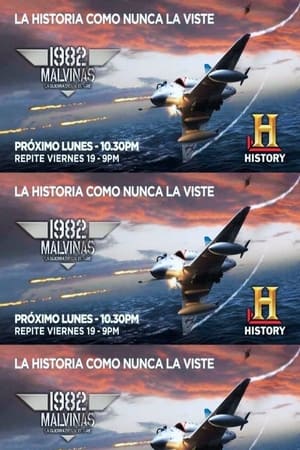
1982 Malvinas, La guerra desde el aire
2009

Der lange Weg ans Licht
Edeltraut Hertel - a midwife caught between two worlds. She has been working as a midwife in a small village near Chemnitz for almost 20 years, supporting expectant mothers before, during and after the birth of their offspring. However, working as a midwife brings with it social problems such as a decline in birth rates and migration from the provinces. Competition for babies between birthing centers has become fierce, particularly in financial terms. Obstetrics in Tanzania, Africa, Edeltraud's second place of work, is completely different. Here, the midwife not only delivers babies, she also trains successors, carries out educational and development work and struggles with the country's cultural and social problems.
2008

Childhoods without Borders: Voices in Motion
"Childhoods without Borders: Voices in Motion" is a documentary in which migrant boys and girls narrate the experiences and challenges they have faced in search of a better life.
Social Genocide
After the fall of the military dictatorship in 1983, successive democratic governments launched a series of reforms purporting to turn Argentina into the world's most liberal and prosperous economy. Less than twenty years later, the Argentinians have lost literally everything: major national companies have been sold well below value to foreign corporations; the proceeds of privatizations have been diverted into the pockets of corrupt officials; revised labour laws have taken away all rights from employees; in a country that is traditionally an important exporter of foodstuffs, malnutrition is widespread; millions of people are unemployed and sinking into poverty; and their savings have disappeared in a final banking collapse. The film highlights numerous political, financial, social and judicial aspects that mark out Argentina's road to ruin.
2004
Silence
A portrait of a family living in a village in Masuria.
1998
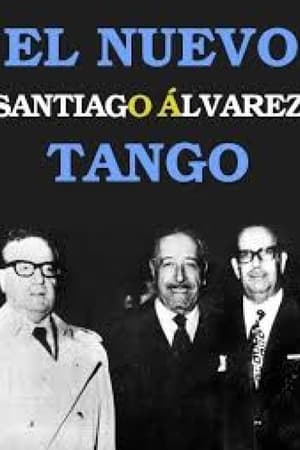
The New Tango
The New Tango (El Nuevo Tango) was not shown in Argentina for a long time as it deals with the ascent of Argentinean president Hector Campora in May 1973, and features Cuban and Chilean presidents, Osvaldo Dorticos and Salvador Allende. A million people gathered on the Plaza de Mayo to acclaim the new President. One of Cámpora's first presidential actions was a granting of amnesty to political prisoners who where jailed during the dictatorship. On 28 May Argentina restored diplomatic relations with Cuba, which then received Argentine aid - such as food and industrial products - to break the United States embargo against Cuba.
1973