Watch Archivos VIH/sida: historias y voces de una pandemia (2021) Online Free
More Like This

Hélène Trésore Transnationale
In this intimate portrait addressed directly to Hélène Hazera, filmmaker Judith Abitbol revisits a key figure of France’s countercultures from the late 1960s to the 1990s. A member of the Gazolines and the FHAR (Homosexual Front for Revolutionary Action), Hazera was a tireless LGBTQ activist who founded Act Up’s Trans and AIDS commissions—one of her proudest achievements. Her true victory, however, was becoming the first transgender journalist at a major national newspaper (Libération), and later a producer at Radio France and France TV. Through her story, Abitbol reconnects with the insurrectionary spirit and creative chaos of those decades—an era when French culture was shaken by radical imagination, humor, and defiance. The film celebrates these modern Antigones who dared to live their desires beyond the reach of any law.
2026
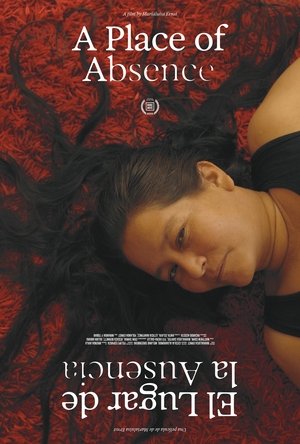
A Place of Absence
This poetic film follows director Marialuisa's journey with Anita and Leticia, Central American women traveling with the Caravan of Mothers of Missing Migrants.
2025
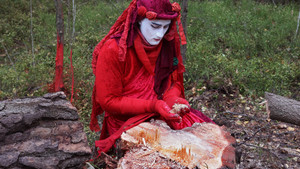
Rebellion for Future
Rebellion for Future depicts the activities of the Extinction Rebellion community from the inside. What price must one pay for criticizing prevailing social practices? How does it feel to face the authorities and their heavy-handed tactics? This feature-length documentary closely follows events over a two-year period, both in the marshlands of Lapland and on the streets of Helsinki. In their efforts to curb the climate crisis and the destruction of nature, the rebels use their own bodies to block factories, production equipment, and streets. Clashes with the authorities are tense, and the rebels are sometimes thrown in jail, brought before the courts, and even subjected to violence.
2025
Ecos del Fuego
2025

Abrazando la Patagonia
2025
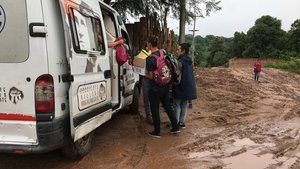
Las Brigadistas
tells the experience of a group of medical students who travel to the north of Argentina to assist different indigenous communities that suffer the dispossession of their lands and structural poverty.
2024
Three Letters: La Mamma Morta
'La Mamma Morta’ is an aria from the opera Andrea Chenier that is also well-known for its use in a memorable sequence in the Oscar award-winning Philadelphia. Thirty years on, this new short film from WNO includes a brand-new recording of the aria featured alongside recreated scenes that better encapsulate the perspectives of people living with HIV today. To mark World AIDS Day 2023, the Welsh National Orchestra released a special new version of La mamma morta, featuring WNO Orchestra, soprano Camilla Roberts and Nathaniel Hall from Channel 4’s It’s a Sin. Released as part of the last rendition in the Three Letters project, this film aims to tackle societal stigma around HIV.
2024

Proyecto muerto v6 (6).mp4
2024

Pussy Riot: Rage Against Putin
Pussy Riot make a comeback after a long absence to stand with Ukraine. Their story and their struggle are told through archival footage and interviews with the group’s members.
2023

Hell of a Cruise
Peels back the curtain on the two-week, claustrophobic nightmare when passengers and crew members boarded the luxury Diamond Princess cruise ship in January of 2020, they had no idea that the deadly novel coronavirus boarded the ship with them, turning the floating paradise into their worst nightmare.
2022

El oficio de buscar a Inés
On the night of July 19, 1977, Inés was traveling by bus when a military patrol detained all the passengers. That morning, almost everyone was released except Inés. Her father began a never-ending search that led him to the very center of Argentina's repressive apparatus. The judicial path and the love of a family that never stops.
2022
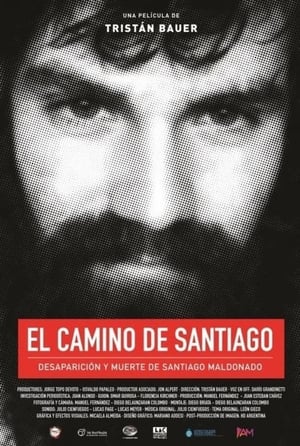
Santiago's Path: Disappearance and Death of Santiago Maldonado
Santiago Maldonado disappeared in the midst of repression against a Mapuche community that claimed to Luciano Benetton for his land. His body was found 78 days later. The need for truth and justice continues
2018
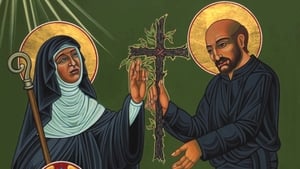
The Boy Who Found Gold
William Hart McNichols is a world renowned artist, heralded by Time magazine as "among the most famous creators of Christian iconic images in the world". As a young Catholic priest from 1983-1990 he was immersed in a life-altering journey working as a chaplain at St. Vincent's AIDS hospice in New York city. It was during this time that he became an early pioneer for LGBT rights within the Catholic church. "The Boy Who Found Gold" is a cinematic journey into the art and spirit of William Hart McNichols. The film follows his colorful life as he crosses paths with presidents, popes, martyrs, and parishioners, finding an insightful lesson with each encounter. McNichols' message as a priest, artist and man speaks to the most powerful element of the human spirit: Mercy.
2016
Fight Back, Fight AIDS: 15 Years of ACT UP
A look at the ACT UP movement from its inception to the present day.
2002
No Regret
Five gay Black men who are HIV-positive discuss how they are battling the double stigmas surrounding their infection and homosexuality.
1993
(In)Visible Women
Women who are HIV-positive discuss how they "came out" about their infection and became politically active.
1991
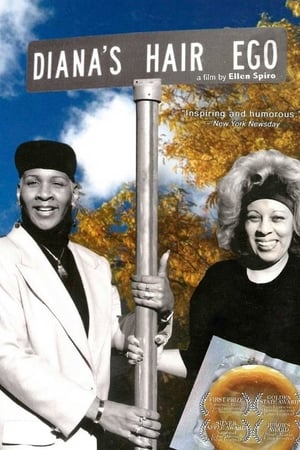
DiAna's Hair Ego: AIDS Info Up Front
A documentary film about AIDS and one unconventional woman's efforts to educate her small, Southern community. DiAna DiAna is a local hairdresser who transformed her beauty parlor into a center for AIDS and safe sex information.
1990

Stiff Sheets
Stiff Sheets indicts public health officials and politicians for the lack of adequate and humane care for people with AIDS in Los Angeles, this time documenting a mock fashion show staged by ACT UP activists.
1989
Danny
A moving personal documentary about Danny, a friend of Kybartas who died of an AIDS-related illness in 1986. This powerful work explores the reason for Danny’s return home and his attempts to reconcile his relationship with his family members who had difficulty facing his homosexuality and his imminent death.
1987

'78 Cup - The Power of Football
Documentary about the Football World Cup held in Argentina in 1978, focusing on the competition and behind the scenes of the most important soccer competition in the world. Two versions of the 1978 official film exist, the first "Copa 78 - O Poder do Futebol" was made by Brazilian directors Maurício Sherman and Victor di Mello in 1979 but was later withdrawn by FIFA because of its controversial content. The film includes an interview with Rodolfo Galimberti, one of the leaders of the Montoneros guerrilla group and also made accusations that the Argentinian competition organisation committee had deliberately hindered Brazilian chances of success by tampering with the pitch at Mar del Plata.
1979