Watch The Circus: Premiere (1928) Online Free
Footage from the premiere of Charlie Chaplin's 1928 film 'The Circus'.
Cast
Vilma Banky, Rod La Rocque, W.C. Fields, Doris Kenyon, Milton Sills, Adolphe Menjou, Billie Dove, George K. Arthur, Cecil B. DeMille, Dolores Costello, John Barrymore, Ralph Forbes
More Like This
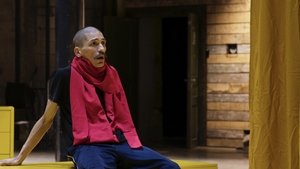
CRONOPIO
An intimate portrait of Mariano "Cronopio" Gedwillo, an Argentinian clown in Riga, as he transforms ordinary life into wonder through the magic of the circus — and teaches others to do the same, all while battling his own loneliness.
2025
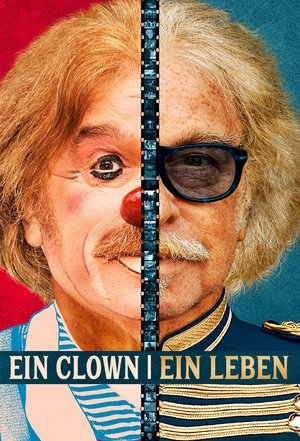
A CLOWN | A LIFE
Documentary about Bernhard Paul who became world famous as the founder of Circus Roncalli and Zippo the Clown...
2022

Cirque du Soleil: The Mystery of Mystère
Cirque du Soleil presents The Mystery of Mystère, a captivating documentary that explores how arts and science merge together using Mystère, the critically acclaimed Las Vegas show at Treasure Island, as the outlet for this message.
2013
Hatching by Cirque du Soleil
A Documentary on the Creation of OVO, by Cirque du Soleil
2013
Timetravel_0
TIMETRAVEL_0 is an extraordinary docudrama that follows Cris McCarthy as she explores the urban web legend of John Titor, the man that came from the future. Cris searches for evidence of Timetravel and John Titor's predictions of a massive civil war. In the process of her filming, her work was investigated by authorities and eventually confiscated by the government. Its recent release has allowed it to be edited and produced.
2009
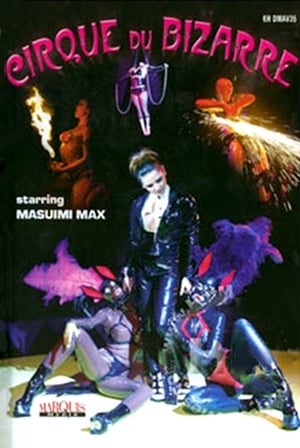
Cirque du Bizarre
Welcome to the Cirque Du Bizarre, the fetish circus par excellence! On the program are artistic and erotic top acts: Sexy latex girls from the dollhouse fire devil Strecko, fetish magicians, chain goddess Brandy Wirtz, pony girl trainer Rubber Stacy, the fetish clowns of "Grandios Gnadenlos," Masuimi Max in a spectacular performance, latex sea lions by Mistress Sandra and much much more.
2008
Midnight Movies: From the Margin to the Mainstream
From 1970-1977, six low budget films shown at midnight transformed the way we make and watch films.
2006

Loose Change
2nd Edition of Loose Change documentary. What if...September 11th was not a surprise attack on America, but rather, a cold and calculated genocide by our own government?We were told that the twin towers were hit by commercial jetliners and subsequently brought down by jet fuel. We were told that the Pentagon was hit by a Boeing 757. We were told that flight 93 crashed in Shanksville, Pennsylvania. We were told that nineteen Arabs from halfway across the globe, acting under orders from Osama Bin Laden, were responsible. What you will see here will prove without a shadow of a doubt that everything you know about 9/11 is a complete fabrication. Conspiracy theory? It's not a theory if you can prove it.Written and narrated by Dylan Avery, this film presents a rebuttal to the official version of the September 11, 2001 terrorist attacks and the 9/11 Commission Report.
2005
Captain Blood: A Swashbuckler Is Born
This documentary is featured on the DVD for Captain Blood (1935), released in 2005.
2005
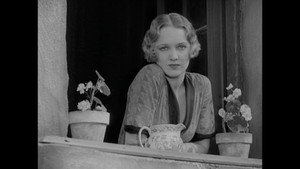
Chaplin Today: City Lights
In 1928, as the talkies threw the film industry and film language into turmoil, Chaplin decided that his Tramp character would not be heard. City Lights would not be a talking picture, but it would have a soundtrack. Chaplin personally composed a musical score and sound effects for the picture. With Peter Lord, the famous co-creator of Chicken Run and Wallace & Gromit, we see how Chaplin became the king of slapstick comedy and the superstar of the movies.
2003
Le Club : Claude Jade
2001
Salò: Fade to Black
A short documentary exploring the ongoing relevance and power of 'Salò o le 120 giornate di Sodoma'.
2001
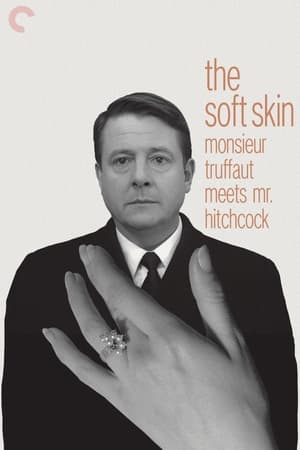
Monsieur Truffaut Meets Mr. Hitchcock
When Francois Truffaut approached Alfred Hitchcock in 1962 with the idea of having a long conversation with him about his work and publishing this in book form, he didn't imagine that more than four years would pass before Le Cinéma selon Hitchcock finally appeared in 1966. Not only in France but all over the world, Truffaut's Hitchcock interview developed over the years into a standard bible of film literature. In 1983, three years after Hitchcock's death, Truffaut decided to expand his by now legendary book to include a concluding chapter and have it published as the "Edition définitive". This film describes the genesis of the "Hitchbook" and throws light on the strange friendship between two completely different men. The centrepieces are the extracts from the original sound recordings of the interview with the voices of Alfred Hitchcock, Francois Truffaut, and Helen Scott – recordings which have never been heard in public before.
1999
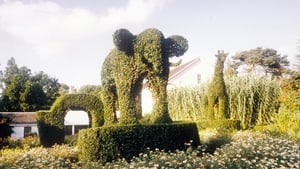
Fast, Cheap & Out of Control
Errol Morris’s Fast, Cheap & Out of Control interweaves the stories of four men, each driven to create eccentric worlds from their unique obsessions, all of which involve animals. There’s a lion tamer who shares his theories on the mental processes of wild animals; a topiary gardener who has devoted a lifetime to shaping bears and giraffes out of hedges and trees; a man fascinated with hairless mole rats; and an MIT scientist who has designed complex, autonomous robots that can crawl like bugs.
1997
Don't - Der Österreichfilm
Found footage sequences from various obscure campy Austrian films assembled together with a very dark disturbing soundtrack.
1996
Vivement Truffaut
A tribute to the late, great French director Francois Truffaut, this documentary was undoubtedly named after his last movie, Vivement Dimanche!, released in 1983. Included in this overview of Truffaut's contribution to filmmaking are clips from 14 of his movies arranged according to the themes he favored. These include childhood, literature, the cinema itself, romance, marriage, and death.
1985
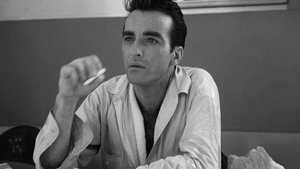
Montgomery Clift
A documentary incorporating footage of Montgomery Clift’s most memorable films; interviews with family and friends, and rare archival material stretching back to his childhood. What develops is the story of an intense young boy who yearned for stardom, achieved notable success in such classic films as From Here to Eternity and I Confess, only to be ruined by alcohol addiction and his inability to face his own fears and homosexual desires. Montgomery Clift, as this film portrays him, may not have been a happy man but he never compromised his acting talents for Hollywood.
1983
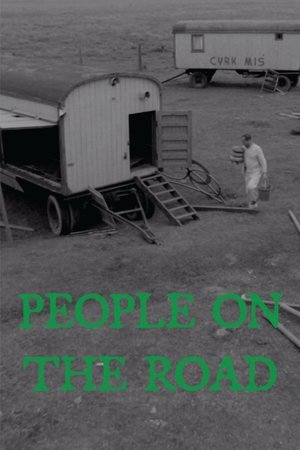
People on the Road
A portrait of a traveling circus.
1960
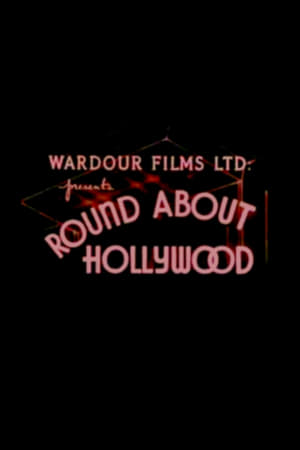
Round About Hollywood
This short travelogue depicts snippets of locations in Hollywood, California, most of them as seen from the streets. Considerable time is taken showing the kinds of architecture of private homes. There are images of various important buildings, and a depiction of the Hollywood Bowl. Finally, there is a sequence revolving around the premiere of the film “Dirigible” (1931) at the famed Chinese Theatre.
1931
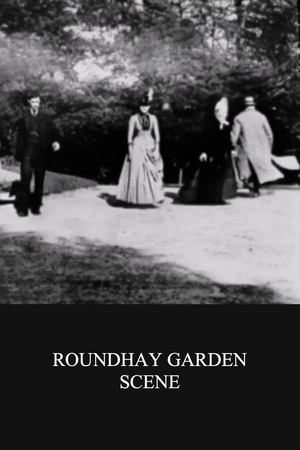
Roundhay Garden Scene
The earliest surviving motion-picture film, and believed to be one of the very first moving images ever created, was shot by Louis Aimé Augustin Le Prince using the LPCCP Type-1 MkII single-lens camera. It was taken on paper-based photographic film in the garden of Oakwood Grange, the Whitley family house in Roundhay, Leeds, West Riding of Yorkshire (UK), on 14 October 1888. The film shows Adolphe Le Prince (Le Prince’s son), Mrs. Sarah Whitley (Le Prince’s mother-in-law), Joseph Whitley, and Miss Harriet Hartley walking around in circles, laughing to themselves, and staying within the area framed by the camera. Roundhay Garden Scene is often associated with a recording speed of around 12 frames per second and runs for about 2 to 3 seconds.
1888