Watch Vivement Truffaut (1985) Online Free
A tribute to the late, great French director Francois Truffaut, this documentary was undoubtedly named after his last movie, Vivement Dimanche!, released in 1983. Included in this overview of Truffaut's contribution to filmmaking are clips from 14 of his movies arranged according to the themes he favored. These include childhood, literature, the cinema itself, romance, marriage, and death.
Cast
Jeanne Moreau, Catherine Deneuve, Claude Jade, Marie Dubois, Fanny Ardant, Jacqueline Bisset, Brigitte Fossey, Bernadette Lafont, Jean-Pierre Léaud, Gérard Depardieu, Charles Denner, Jean-Claude Brialy
More Like This
querido julio
A reflective short film created by Julio Medina’s great-nephew, honoring his life and legacy. Through a personal letter, it explores his lasting impact on those around him, serving as a heartfelt tribute to his memory.
2024
Queen and the Crown
The Queen And The Crown a tribute: A feature length tribute to Her Majesty Queen Elizabeth II, the UK’s longest reigning monarch, from her birth in London on April 21st 1926 to the nationwide outpouring of gratitude and thanks to Her Majesty in June 2022 marking the Platinum Jubilee, and then the sorrow just weeks later and her historic and epic funeral. Following the course of her life as the shock of the abdication in 1936 catapulted her father unexpectedly onto the throne, suddenly making the young princess heir to the crown, we see the way she pledged to give herself entirely to serving the nation.
2022
Django & Django: Sergio Corbucci Unchained
A tribute to Italian filmmaker Sergio Corbucci (1926-90), presented by American filmmaker Quentin Tarantino.
2021
Mountain Monsters: A Tribute to Trapper
The Appalachian Investigators of Mysterious Sightings (A.I.M.S.) team comes together to reminisce and celebrate the life of their founder, John "Trapper" Tice, in this Mountain Monsters special.
2021
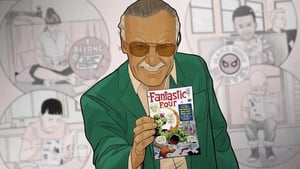
Celebrating Marvel's Stan Lee
Filmed in part in front of a live audience at The New Amsterdam Theater in New York City, this Stan Lee tribute takes viewers on an action-packed journey throughout the life of Lee and across the Marvel Universe, sharing never-before-seen interviews and archive footage with Lee himself from deep within the Marvel and ABC News archives.
2019
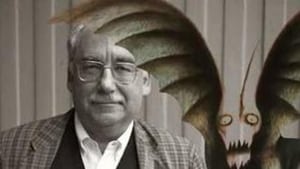
Fantastic Laloux
A short documentary about the life of director and artist René Laloux, featuring an interview with Laloux from 2001.
2010

Concert for Diana
Concert for Diana was a benefit concert held at the then newly built Wembley Stadium in London, United Kingdom in honour of Diana, Princess of Wales, on 1 July 2007, which would have been her 46th birthday. 31 August that year brought the 10th anniversary of her death. The concert was hosted by Diana's sons, Prince William and Prince Harry, who helped to organise many of the world's most famous entertainers and singers to perform. Proceeds from the concert went to Diana's charities, as well as to charities of which William and Harry are patrons. The concert was broadcast in 140 countries with an estimated potential audience of 500 million. In December 2006, 22.500 tickets were made available for purchase for the concert, selling out in just 17 minutes. 63.000 people turned out to Wembley Stadium to watch the performances to commemorate Diana.
2007
Le Club : Claude Jade
2001
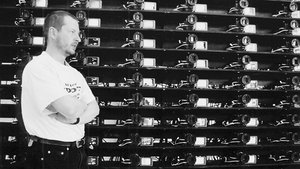
Von Trier's 100 Eyes
Although at first sight this might look like a simple ‘making of DANCER IN THE DARK’, the later developments in the film reveal the whole drama of Lars von Trier’s inner life during the shooting process. All his doubts and insecurities in collaborating with the crew and actors - especially actresses - are exposed. The biggest drama started when Björk walked off the set. Nobody knew whether she would be back or not. Admitting that he feels threatened by women, who can ‘make him feel embarrassed’, the director gives this documentary the nature of a personal diary. When he discusses the importance, purpose and beauty of the use of a hundred cameras in a certain sequence or the meaning of the Dogma 95 rules, the audience is witnessing the process of the artist’s search. Is the pain that the director went through during the shooting really visible in the final result, as Lars von Trier claims in this film? (from: http://www.idfa.nl/)
2000
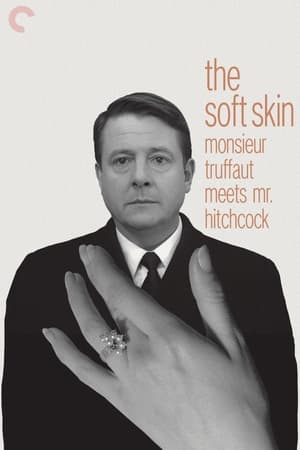
Monsieur Truffaut Meets Mr. Hitchcock
When Francois Truffaut approached Alfred Hitchcock in 1962 with the idea of having a long conversation with him about his work and publishing this in book form, he didn't imagine that more than four years would pass before Le Cinéma selon Hitchcock finally appeared in 1966. Not only in France but all over the world, Truffaut's Hitchcock interview developed over the years into a standard bible of film literature. In 1983, three years after Hitchcock's death, Truffaut decided to expand his by now legendary book to include a concluding chapter and have it published as the "Edition définitive". This film describes the genesis of the "Hitchbook" and throws light on the strange friendship between two completely different men. The centrepieces are the extracts from the original sound recordings of the interview with the voices of Alfred Hitchcock, Francois Truffaut, and Helen Scott – recordings which have never been heard in public before.
1999
Cannes Man
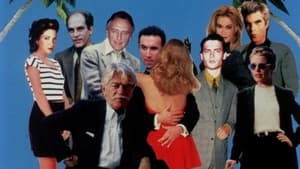
Film producer Sy Lerner makes a bet with a fellow film executive that he can turn any nobody into a star at the Cannes Film Festival. A New York cab driver who is visiting the festival is chosen as the test subject to settle the bet and Sy uses his skills of hype and manipulation to try and turn the cab driver named Frank into the talk of the town. Many celebrities make cameos throughout the film.
1996
In Search of James Bond with Jonathan Ross
Jonathan Ross delves into the world of James Bond and meets with new and former cast members who reveal humorous stories and anecdotes in a series of interviews. All the 5 Bonds at the time are featured, though only Lazenby (reflecting in the usual frank, self criticizing manner), Moore and Brosnan granted an interview. Connery and Dalton are featured through some unused footage from LWT's 30 years of James Bond program. The ever faithful Desmond Llewelyn turns up in character as well as some other less related peeps like Christopher Lee, Paul McCartney and the ultimate playboy: Hugh Hefner -- who all give an interesting perspective on the worlds most famous spy.
1995
Frank and Ollie
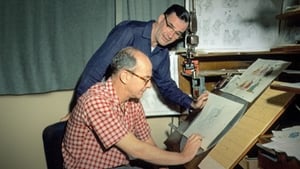
Before computer graphics, special effects wizardry, and out-of-this world technology, the magic of animation flowed from the pencils of two of the greatest animators The Walt Disney Company ever produced -- Frank Thomas and Ollie Johnston. Frank and Ollie, the talent behind BAMBI, PINOCCHIO, LADY AND THE TRAMP, THE JUNGLE BOOK, and others, set the standard for such modern-day hits as THE LION KING. It was their creative genius that helped make Disney synonymous with brilliant animation, magnificent music, and emotional storytelling. Take a journey with these extraordinary artists as they share secrets, insights, and the inspiration behind some of the greatest animated movies the world has ever known!
1995
The Making of 'Rio Grande'
A short documentary about the making of John Ford's "Rio Grande."
1993
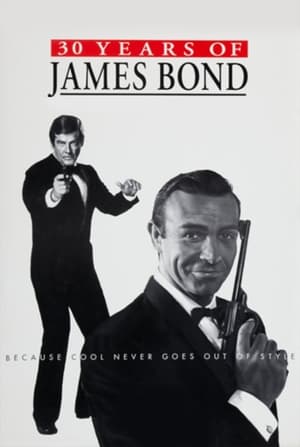
30 Years of James Bond
An examination of why the James Bond films have proved so popular including a discussion between the four actors who have played Bond, an interview with Cubby Broccoli and contributions from the directors, production designers, special effects and stuntmen.
1992
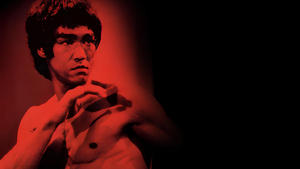
Bruce Lee, the Legend
The Official Golden Harvest tribute to the Master of the Martial Arts Film, Bruce Lee.
1984
Omnibus: François Truffaut
1973
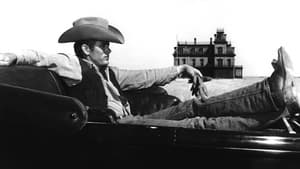
The James Dean Story
Released two years after James Dean's death, this documentary chronicles his short life and career via black-and-white still photographs, interviews with the aunt and uncle who raised him, his paternal grandparents, a New York City cabdriver friend, the owner of his favorite Los Angeles restaurant, outtakes from East of Eden, footage of the opening night of Giant, and Dean's ironic PSA for safe driving.
1957
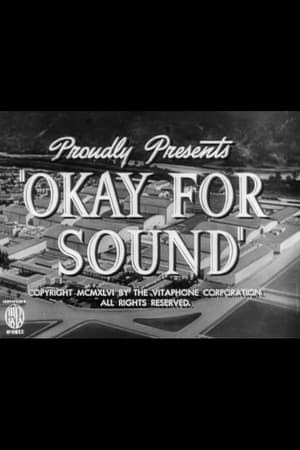
Okay for Sound
This short was released in connection with the 20th anniversary of Warner Brothers' first exhibition of the Vitaphone sound-on-film process on 6 August 1926. The film highlights Thomas A. Edison and Alexander Graham Bell's efforts that contributed to sound movies and acknowledges the work of Lee De Forest. Brief excerpts from the August 1926 exhibition follow. Clips are then shown from a number of Warner Brothers features, four from the 1920s, the remainder from 1946/47.
1946

Naples Is a Battlefield
The capture of Naples, the first great European city to be liberated, revealed the magnitude of the tasks involved in re-creating the means of livelihood and the machinery of government in a devastated, starving and disease-ridden city.
1944