Watch Monsieur Truffaut Meets Mr. Hitchcock (1999) Online Free
When Francois Truffaut approached Alfred Hitchcock in 1962 with the idea of having a long conversation with him about his work and publishing this in book form, he didn't imagine that more than four years would pass before Le Cinéma selon Hitchcock finally appeared in 1966. Not only in France but all over the world, Truffaut's Hitchcock interview developed over the years into a standard bible of film literature. In 1983, three years after Hitchcock's death, Truffaut decided to expand his by now legendary book to include a concluding chapter and have it published as the "Edition définitive". This film describes the genesis of the "Hitchbook" and throws light on the strange friendship between two completely different men. The centrepieces are the extracts from the original sound recordings of the interview with the voices of Alfred Hitchcock, Francois Truffaut, and Helen Scott – recordings which have never been heard in public before.
Cast
Claude Chabrol, Patricia Hitchcock, Madeleine Morgenstern, Jean-Louis Richard, Laura Truffaut, François Truffaut, Alfred Hitchcock, Helen Scott
More Like This
Brainwashed: Sex-Camera-Power
Investigates the politics of cinematic shot design, and how this meta-level of filmmaking intersects with the twin epidemics of sexual abuse/assault and employment discrimination against women, with over 80 movie clips from 1896 - 2020.
2022
Running with the Devil: The Wild World of John McAfee
Through raw, revealing footage and interviews with fugitive tech pioneer John McAfee, this documentary uncovers new layers of his wild years on the run.
2022
Jaws vs. Kraken
Something shocking is happening in the abyss around Guadalupe Island. Photos of great whites with strange scars believed to be from giant squids have surfaced. Dr. Tristan Guttridge leads a mission to get a glimpse into the battles between the two beasts.
2022
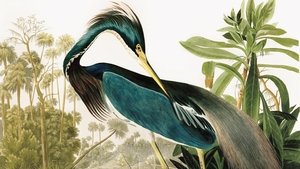
Birds of America
In the first half of the 19th century, the French ornithologist Jean-Jacques Audubon travelled to America to depict birdlife along the Mississippi River. Audubon was also a gifted painter. His life’s work in the form of the classic book ‘Birds of America’ is an invaluable documentation of both extinct species and an entire world of imagination. During the same period, early industrialisation and the expulsion of indigenous peoples was in full swing. The gorgeous film traces Audubon’s path around the South today. The displaced people’s descendants welcome us and retell history, while the deserted vistas of heavy industry stretch across the horizon. The magnificent, broad images in Jacques Loeuille’s atmospheric, modern adventure reminds us at the same time how little - and yet how much - is left of the nature that Audubon travelled around in. His paintings of the colourful birdlife of the South still belong to the most beautiful things you can imagine.
2022
Ears, Eyes and Throats: Restored Classic and Lost Punk Films 1976-1981
This collection of short films represents a hint of the tectonic shift in the underground film world in connection with the punk rock “movement.” Restored from original negatives, it showcases the reasonably well-known alongside the extremely rare, from music shorts to impressionistic documentary.
2019
Unacknowledged
Dr. Steven Greer presents brand new top-secret evidence supporting extraterrestrial contact, including witness testimony, classified documents, and UFO footage, while also exploring the consequences of ruthlessly enforcing such secrecy.
2017

Laerte-se
In this film, Laerte conjugates the body in the feminine, and scrutinizes concepts and prejudices. Not in search of an identity, but in search of un-identities. Laerte creates and sends creatures to face reality in the fictional world of comic strips as a vanguard of the self. And, on the streets, the one who becomes the fiction of a real character. Laerte, of all the bodies, and of none, complicates all binaries. In following Laerte, this documentary chooses to clothe the nudity beyond the skin we inhabit.
2017
His Name Was Jason: 30 Years of Friday the 13th
A retrospective documentary about the groundbreaking horror series, Friday the 13th, featuring interviews with cast and crew from the twelve films spanning 3 decades.
2010
Religulous
Commentator-comic Bill Maher plays devil's advocate with religion as he talks to believers about their faith. Traveling around the world, Maher examines the tenets of Christianity, Judaism and Islam and raises questions about homosexuality, proof of Christ's existence, Jewish Sabbath laws, violent Muslim extremists.
2008
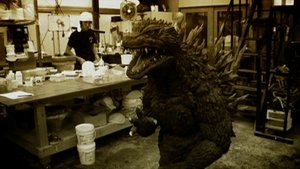
Bringing Godzilla Down to Size: The Art of Japanese Special Effects
A look at the unrecognized work of the talented artists and craftsmen who've maintained the tradition of Japanese special-effects. Highlighted is Yasuyuki Inoue along with various crew members who crafted meticulously detailed miniatures and risked life and limb as suit actors. All done to bring to life some of film's most iconic monsters through a distinct Japanese artform.
2008
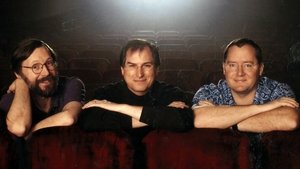
The Pixar Story
A look at the first years of Pixar Animation Studios - from the success of "Toy Story" and Pixar's promotion of talented people, to the building of its East Bay campus, the company's relationship with Disney, and its remarkable initial string of eight hits. The contributions of John Lasseter, Ed Catmull and Steve Jobs are profiled. The decline of two-dimensional animation is chronicled as three-dimensional animation rises. Hard work and creativity seem to share the screen in equal proportions.
2007
Il cinema digitale secondo Giulio Questi
A conversation with Italian director Giulio Questi about his digital short films.
2007
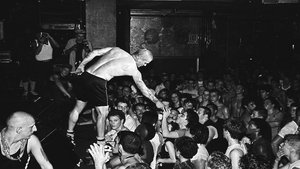
American Hardcore
Inspired by Steven Blush's book "American Hardcore: A tribal history" Paul Rachman's feature documentary debut is a chronicle of the underground hardcore punk years from 1979 to 1986. Interviews and rare live footage from artists such as Black Flag, Bad Brains, Minor Threat, SS Decontrol and the Dead Kennedys.
2006
Captain Blood: A Swashbuckler Is Born
This documentary is featured on the DVD for Captain Blood (1935), released in 2005.
2005
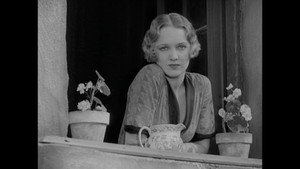
Chaplin Today: City Lights
In 1928, as the talkies threw the film industry and film language into turmoil, Chaplin decided that his Tramp character would not be heard. City Lights would not be a talking picture, but it would have a soundtrack. Chaplin personally composed a musical score and sound effects for the picture. With Peter Lord, the famous co-creator of Chicken Run and Wallace & Gromit, we see how Chaplin became the king of slapstick comedy and the superstar of the movies.
2003
Salò: Fade to Black
A short documentary exploring the ongoing relevance and power of 'Salò o le 120 giornate di Sodoma'.
2001
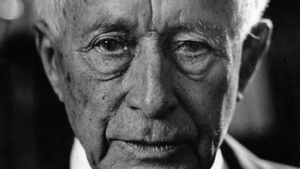
102 Years in the Heart of Europe: A Portrait of Ernst Jünger
102 Years in the Heart of Europe: A Portrait of Ernst Jünger (Swedish: 102 år i hjärtat av Europa) is a Swedish documentary film from 1998 directed by Jesper Wachtmeister. It consists of an interview by the journalist Björn Cederberg with the German writer, philosopher and war veteran Ernst Jünger (1895-1998). Jünger talks about his life, his authorship, his interests and ideas. The actor Mikael Persbrandt reads passages from some of Jünger's works, such as Storm of Steel, The Worker, On the Marble Cliffs and The Glass Bees.
1998
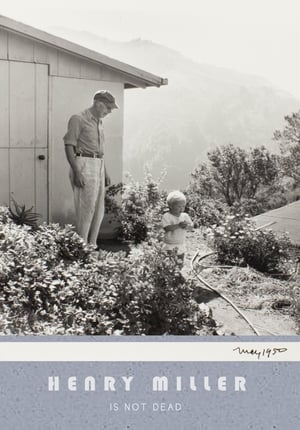
Henry Miller Is Not Dead
In this artistic exploration of the life and work of writer Henry Miller, filmmaker Joe Kishton skillfully weaves clips of films and interviews of Miller with the music of Laurie Anderson. From Miller himself we hear of his difficult relationship with his parents, and of his need to create, even (or especially) when his message abrades social mores.
1996

Montgomery Clift
A documentary incorporating footage of Montgomery Clift’s most memorable films; interviews with family and friends, and rare archival material stretching back to his childhood. What develops is the story of an intense young boy who yearned for stardom, achieved notable success in such classic films as From Here to Eternity and I Confess, only to be ruined by alcohol addiction and his inability to face his own fears and homosexual desires. Montgomery Clift, as this film portrays him, may not have been a happy man but he never compromised his acting talents for Hollywood.
1983
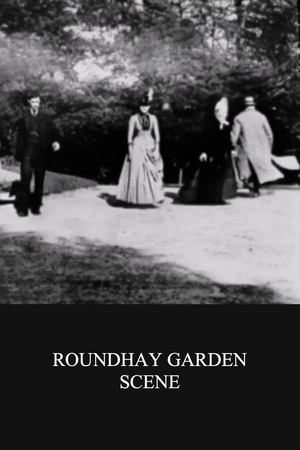
Roundhay Garden Scene
The earliest surviving motion-picture film, and believed to be one of the very first moving images ever created, was shot by Louis Aimé Augustin Le Prince using the LPCCP Type-1 MkII single-lens camera. It was taken on paper-based photographic film in the garden of Oakwood Grange, the Whitley family house in Roundhay, Leeds, West Riding of Yorkshire (UK), on 14 October 1888. The film shows Adolphe Le Prince (Le Prince’s son), Mrs. Sarah Whitley (Le Prince’s mother-in-law), Joseph Whitley, and Miss Harriet Hartley walking around in circles, laughing to themselves, and staying within the area framed by the camera. Roundhay Garden Scene is often associated with a recording speed of around 12 frames per second and runs for about 2 to 3 seconds.
1888