Watch The Central Dogma: From Genomic Information to Protein Synthesis (2008) Online Free
This animated film was made by RIKEN Omics Science Center for the "Beyond DNA" exhibition at the National Science Museum of Japan. The filmmakers attempt to illustrate how molecular machines interact with each other according to the central dogma, with an anime look. This approach helps people (especially kids) to identify these molecules more easily, and to understand how they function in the body. There are two versions of the film: one with English narration and text, and another in Japanese.
More Like This
Influence
How do we influence the world around us? A fluid analysis tool ordinarily used in the laboratory offers new interpretations of human interaction and provides surprising insights about our place in the world.
2023
Sníst hada
2023
Homicide Hunter: Never Give Up
The unsolved rape, mutilation and murder of young G.I. Darlene Krashoc has haunted Joe Kenda in the years since he turned in his gun and badge. Until a crack team of cold case cops uses Kenda’s groundwork to set a trap for a monster hiding in plain sight.
2022
Human By Chance?
If we compare ourselves with our genetically closest living relatives, the chimpanzees, we have few physical advantages. We are far weaker, cannot move nearly as fast, and do not have the same climbing capabilities. Instead, humans excel in areas such as architecture, religion, science, language, writing, art, culture, and ideas. These achievements are due to our larger brain that contain billions of neurons. It was the rapid growth of our brain, originating about 2 million years ago, that allowed us to be the predominant species of the world. What caused this rapid growth of our cerebral cortex? Researchers worldwide have asked this question for many years, but now there finally seems to be an answer.
2020
Rhinos in the Freezer
2019
The Scientist, The Imposter and Stalin: How to Feed the People
The documentary tells two very different human fates in the 1920s Soviet Union. Nikolai Vavilov was a botanical genius, Trofim Lyssenko was an agronomist who made great promises and fake inventions. Each of them tried to solve the country's nutritional problem, but only one succeeded.
2018
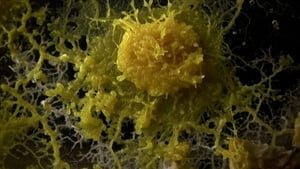
The Creeping Garden
An award-winning feature-length creative documentary exploring the extraordinary world of the plasmodial slime mould through the eyes of the fringe scientists, mycologists and artists. In recent years this curious organism has become the focus of much research in such areas as biological-inspired design, emergence theory, unconventional computing and robot engineering.
2014
Semences : les gardiens de la biodiversité
2014

The Real Beauty and the Beast
It's a condition known as "hypertrichosis" or "Ambras Syndrome," but in the 1500s it would transform one man into a national sensation and iconic fairy-tale character. His name: Petrus Gonsalvus, more commonly known today as the hairy hero of Beauty and the Beast.
2013
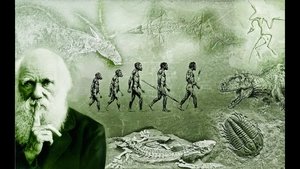
What Darwin Never Knew
Earth teems with a staggering variety of animals, including 9,000 kinds of birds, 28,000 types of fish, and more than 350,000 species of beetles. What explains this explosion of living creatures—1.4 million different species discovered so far, with perhaps another 50 million to go? The source of life's endless forms was a profound mystery until Charles Darwin brought forth his revolutionary idea of natural selection. But Darwin's radical insights raised as many questions as they answered. What actually drives evolution and turns one species into another? To what degree do different animals rely on the same genetic toolkit? And how did we evolve?
2009
Darwin's Darkest Hour
In 1858 Charles Darwin struggles to publish one of the most controversial scientific theories ever conceived, while he and his wife Emma confront family tragedy.
2009
Darwin's Struggle: The Evolution of the Origin of Species
Documentary telling the little-known story of how Darwin came to write his great masterpiece, On the Origin of Species, a book which explains the wonderful variety of the natural world as emerging out of death and the struggle of life. In the twenty years he took to develop a brilliant idea into a revolutionary book, Darwin went through a personal struggle every bit as turbulent as that of the natural world he observed. Fortunately, he left us an extraordinary record of his brilliant insights, observations of nature, and touching expressions of love and affection for those around him. He also wrote frank accounts of family tragedies, physical illnesses and moments of self-doubt, as he laboured towards publication of the book that would change the way we see the world. The story is told with the benefit of Darwin's secret notes and correspondence, enhanced by natural history filming, powerful imagery from the time and contributions from leading contemporary biographers and scientists.
2009
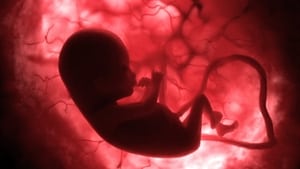
Life Before Birth
With cinematic storytelling, a moving musical score, computer animation, and 4D ultrasound images, this documentary accompanies a new human life from conception to birth, poetically describing developmental milestones and the human experience of living in a womb.
2005
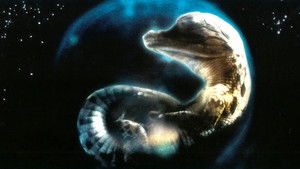
Genesis
An African narrator tells the story of earth history, the birth of the universe and evolution of life. Beautiful imagery makes this movie documentary complete.
2004
Bodysong
Documentary footage from various sources, set to music. Showing the whole of human life, from birth to death and beyond.
2003
The Journey of Man: A Genetic Odyssey
Many geneticists and archaeologists have long surmised that human life began in Africa. Dr. Spencer Wells, one of a group of scientists studying the origin of human life, offers evidence and theories to support such a thesis in this PBS special. He claims that Africa was populated by only a few thousand people that some deserted their homeland in a conquest that has resulted in global domination.
2003
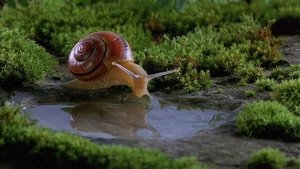
Microcosmos
A documentary of insect life in meadows and ponds, using incredible close-ups, slow motion, and time-lapse photography. It includes bees collecting nectar, ladybugs eating mites, snails mating, spiders wrapping their catch, a scarab beetle relentlessly pushing its ball of dung uphill, endless lines of caterpillars, an underwater spider creating an air bubble to live in, and a mosquito hatching.
1996
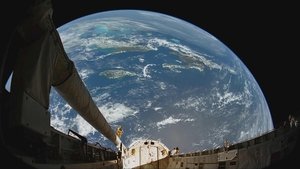
Blue Planet
From the unique vantage point of 200 miles above Earth's surface, we see how natural forces - volcanoes, earthquakes and hurricanes - affect our world, and how a powerful new force - humankind - has begun to alter the face of the planet. From Amazon rain forests to Serengeti grasslands, Blue Planet inspires a new appreciation of life on Earth, our only home.
1990

Powers of Ten
A scientific film essay, narrated by Phil Morrison. A set of pictures of two picnickers in a park, with the area of each frame one-tenth the size of the one before. Starting from a view of the entire known universe, the camera gradually zooms in until we are viewing the subatomic particles on a man's hand.
1977
Hlavátky
1943