Watch The Architect: A Montford Point Marine (2023) Online Free
Loading Cinehub...
In this dynamic and dramatic short film, an African American veteran takes us on an extraordinary journey through his life. From a chance visit to the Pentagon, to growing up in a vibrant integrated neighborhood, his story is one of resilience and inspiration. Fueled by the determination to seize educational opportunities, he enlists just in time to experience the racial divisions of his era before Truman desegregates the military. Thrust into the brutality of the Korean War, the weight of combat becomes an indelible part of his soul. Returning home, he embarks on a new path as an architect and discovers unexpected connections in far-off Pakistan. As his family expands, his sons reflect on the man who raised them and the legacy he instilled. This film unearths the essence of the Black experience in the early 20th century, paints a vivid portrait of the Chosin Reservoir, and unravels the intricate tapestry of race, family, and personal growth.
Cast
David Wilcots, Eric Wilcots, Henry Wilcots, Zhenglong Zhong
More Like This
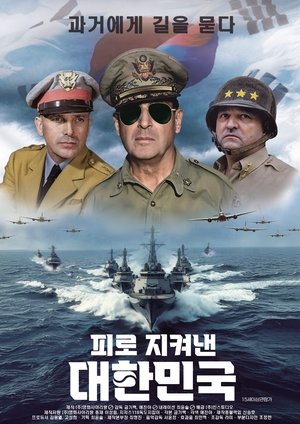
Korea Defended with Blood
2025
The Front Line of Ideology
One year after the Korean War, the conflict had reached a stalemate. The two opposing forces began to search for a way to end the grueling war of attrition, eventually settling on a modest village called ‘Pan Mun Jom’ near Gaeseong as the designated site for negotiations. Despite initial hopes for a quick resolution, the negotiating parties encountered obstacles that prevented an agreement. Disputes over the military demarcation line and the repatriation of prisoners of war thwarted their efforts. The film peels back the layers to reveal the untold story of Pan Mun Jom, shedding light on a history that has remained hidden until now.
2024
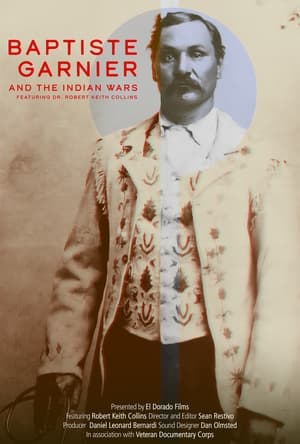
Baptiste Garnier and the Indian Wars
In 1866, as the U.S. modernized its military, the Army Reorganization Act allowed Native Americans to enlist as scouts, heralding a profound era of change. Amidst this backdrop, the film unfolds the story of Baptiste Garnier, a half Oglala Sioux, half French-Canadian scout known as "Little Bat." Torn between his Sioux roots and his U.S. allegiances, he navigated the brutal Indian wars and was at the heart of pivotal battles, including the tragic Wounded Knee massacre. Although perceived as a bridge between two worlds, Baptiste's duality often led him to make heartbreaking decisions. By the time of his untimely death in 1900, shot by a white bartender over a bar tab dispute, he epitomized the complex weave of identity and legacy, raising questions about the cost of serving two peoples in a divided America.
2023
Reimagining A Buffalo Landmark
The Richardson Olmsted Campus, a former psychiatric center and National Historic Landmark, is seeing new life as it undergoes restoration and adaptation to a modern use.
2019

Moriyama-San
One week in the extraordinary-ordinary life of Mr. Moriyama, a Japanese art, architecture and music enlighted amateur who lives in one of the most famous contemporary Japanese architecture, the Moriyama house, built in Tokyo in 2005 by Pritzker-prize winner Ryue Nishizawa (SANAA). Introduced in the intimacy of this experimental microcosm which redefines completely the common sense of domestic life, Ila Bêka recounts in a very spontaneous and personal way the unique personality of the owner: a urban hermit living in a small archipelago of peace and contemplation in the heart of Tokyo. From noise music to experimental movies, the film let us enter into the ramification of the Mr. Moriyama's free spirit. Moriyama-San, the first film about noise music, acrobatic reading, silent movies, fireworks and Japanese architecture!
2017
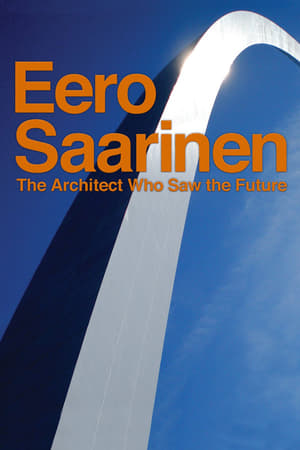
Eero Saarinen: The Architect Who Saw the Future
Best known for designing National Historic Landmarks such as St. Louis’ iconic Gateway Arch and the General Motors Technical Center, Saarinen also designed New York’s TWA Flight Center at John F. Kennedy International Airport, Yale University’s Ingalls Rink and Morse and Ezra Stiles Colleges, Virginia’s Dulles Airport, and modernist pedestal furniture like the Tulip chair.
2016
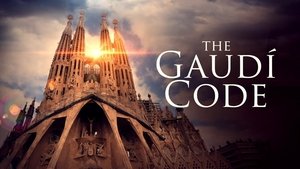
The Gaudi Code
La Sagrada Familia – although still under construction in Barcelona – is a cathedral without any flaws. Almost 100 years after his death, experts are convinced that Gaudi was a mathematical genius and that each embellishing ornament of the Sagrada Familia actually serves an architectural purpose.
2015

Coast Modern
A core group of architects embraced the West Coast from Vancouver to LA with its particular geography and values and left behind a legacy of inspired dwellings. Today, architects celebrate the influence established by their predecessors.
2012
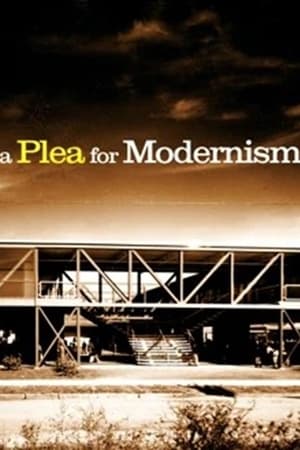
A Plea for Modernism
Phillis Wheatley Elementary School was a significant landmark in the Tremé neighborhood of New Orleans, serving as an important educational institution for African-American students for nearly half a century. The school was known for its innovative modern design that was unique to the region, reflecting the area’s cultural and historical roots. However, the school sustained significant damage during Hurricane Katrina and its aftermath in 2005. Despite the damage, the school’s unique design caught the attention of DOCOMOMO Louisiana, an organization dedicated to preserving modern architecture. They advocated for the restoration of the school through adaptive reuse, citing its historical significance and architectural importance. The organization produced this short film, “A Plea for Modernism,” narrated by actor Wendell Pierce, to raise awareness of the school’s cultural and historical value and promote its restoration.
2011

Great Expectations: A Journey Through the History of Visionary Architecture
This documentary provides an astonishing journey through innovative, futuristic, utopian and sometimes bizarre architecture projects—including concrete illusions of grandeur and Lego-like modular apartments to an Instant City Airship and round, grass-covered subterranean dwellings—from the beginning of the 20th century to today.
2007
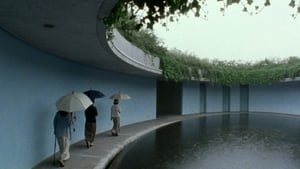
Kochuu
A film about modern Japanese architecture, its roots in the Japanese tradition and its impact on the Nordic building-tradition. Winding its way through visions of the future, traditions, nature, concrete, gardens and high-tech, KOCHUU tells us how contemporary Japanese architects strive to unite the ways of modern man with the old philosophies in astounding constructions. Interviews with, and works by, Japanese architects Tadad Ando, Kisho Kurokawa, Toyo Ito and Kazuo Shinohara and Scandinavian architects Sverre Fehn, Kristian Gullichsen and Juhani Pallasmaa.
2003
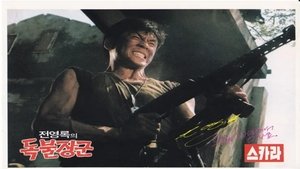
A Self-Righteous Man
As the tragic war of fratricide is drawing to a close, a special agent nicknamed Dokbul, Kang Cheol-gu, is given an intelligence mission to identify and confirm the enemy's unusual movements. While on a mission, Cheol-gu infiltrates the enemy's camp alone and accidentally witnesses a bloody scene of massacre of civilians. He saves the only survivor, Hwang No-in, and is hinted that the enemy's plot is very dangerous. Cheol-gu approaches Mi-young, a People's Army nurse, to extract information, but is exposed to the enemy and escapes a crisis after a fierce battle. In the end, thanks to Cheol-gu's persistence, Mi-young realizes the illusion of the liberation struggle they are calling for, and transforms into Cheol-gu's collaborator to stop their horrific plot, germ warfare, and carries out the mission. However, the result of this tragic war is only futility. A war of illusions where more is lost than gained, and in the end, even the nickname Dokbul sheds hot tears.
1988
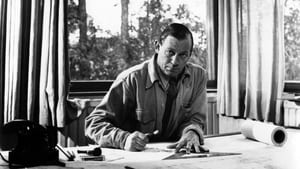
Alvar Aalto: Technology and Nature
The Finnish architect Alvar Aalto (1898–1976) is one of the great figures of modern architecture, ranked alongside Gropius, Le Corbusier and Mies van der Rohe. This film analyses Aalto’s uniquely successful resolution of the demands and possibilities created by new technology and construction materials with the need to make his buildings sympathetic both to their users and to their natural surroundings. His inventive use of timber in particular represents both a reference to the forest landscape of Finland and a building material that is ‘warm’ and extremely adaptable. Filmed in Finland, Italy, Germany and the USA, this documentary shows how the Finnish natural environment and art traditions were essential elements in Aalto’s pioneering harmonization of technology and nature.
1987
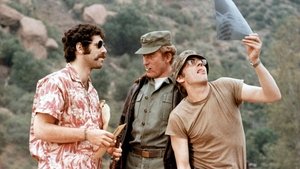
M*A*S*H
One of the world's most acclaimed comedies, M*A*S*H focuses on three Korean War Army surgeons brilliantly brought to life by Donald Sutherland, Tom Skerritt and Elliott Gould. Though highly skilled and deeply dedicated, they adopt a hilarious, lunatic lifestyle as an antidote to the tragedies of their Mobile Army Surgical Hospital, and in the process infuriate Army bureaucrats. Robert Duvall, Gary Burghoff and Sally Kellerman co-star as a sanctimonious Major, an other-worldly Corporal, and a self-righteous yet lusty nurse.
1970

Brasilia, Contradictions of a New City
In 1967, de Andrade was invited by the Italian company Olivetti to produce a documentary on the new Brazilian capital city of Brasília. Constructed during the latter half of the 1950s and founded in 1960, the city was part of an effort to populate Brazil’s vast interior region and was to be the embodiment of democratic urban planning, free from the class divisions and inequalities that characterize so many metropolises. Unsurprisingly, Brasília, Contradições de uma Cidade Nova (Brasília, Contradictions of a New City, 1968) revealed Brasília to be utopic only for the wealthy, replicating the same social problems present in every Brazilian city. (Senses of Cinema)
1968
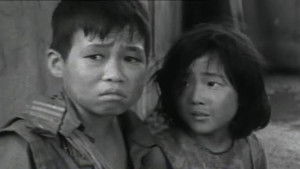
The DMZ
The film exposes the atrocities of war through the eyes of two children who are stranded in the DMZ after the end of the Korean War. The DMZ, strewn with abandoned tanks, dead bodies, land mines, and unexploded shells, is an exceedingly dangerous place for children. But what most endangers them in the end are not weapons but people.
1965

Battle on Shangganling Mountain
The film follows a group of Chinese People's Volunteer Army soldiers who are holding Triangle Hill for several days against US forces. Short of both food and water, they hold their ground until the relief troops arrive. The movie portray the battle as a Chinese victory over an American invasion, and the People's Volunteer Army soldiers were shown as Chinese war heroes."
1956
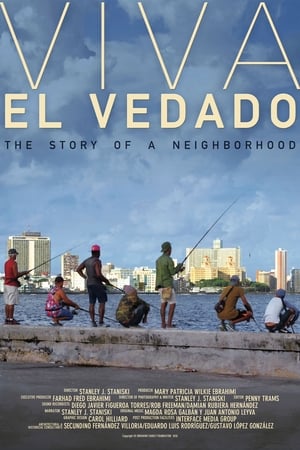
Viva El Vedado
Viva El Vedado presents the history of the Havana neighborhood of El Vedado from the last quarter of the 19th century through the Cuban Revolution and highlights its varied and outstanding architecture. Known as a cultural center of Havana, Vedado is particularly notable for its unique collection of Cuban architecture of the 20th century. The film’s goal is to introduce its audiences to the neighborhood’s remarkable architecture, its vibrant life, and the need for preserving Vedado as part of Havana’s heritage. It is a glimpse beyond tourist fantasies and stereotypes, a rare view of one of Havana’s most important neighborhoods.
Swords to Plowshares
Swords to Plowshares, winner of the San Francisco Foundation 2007 Community Leadership Awards (the John R. May Award). Swords to Plowshares is a critical center of support, advocacy, and services for war veterans. It has successfully transitioned from its origins serving Vietnam War veterans to now accommodating all veterans, including those from the current Iraq War. As a leading advocate for homeless and low-income veterans, it transforms national policy and provides comprehensive services, including counseling, employment programs, housing, and legal assistance.
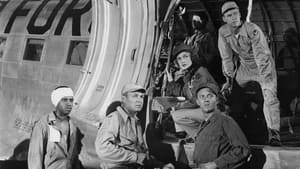
Flight Nurse
In this war drama, set during the Korean War, an Air Force nurse gets involved in a love triangle on the front lines.
1953