Watch A Plea for Modernism (2011) Online Free
Phillis Wheatley Elementary School was a significant landmark in the Tremé neighborhood of New Orleans, serving as an important educational institution for African-American students for nearly half a century. The school was known for its innovative modern design that was unique to the region, reflecting the area’s cultural and historical roots. However, the school sustained significant damage during Hurricane Katrina and its aftermath in 2005. Despite the damage, the school’s unique design caught the attention of DOCOMOMO Louisiana, an organization dedicated to preserving modern architecture. They advocated for the restoration of the school through adaptive reuse, citing its historical significance and architectural importance. The organization produced this short film, “A Plea for Modernism,” narrated by actor Wendell Pierce, to raise awareness of the school’s cultural and historical value and promote its restoration.
Cast
Wendell Pierce
More Like This

Fernand Pouillon, du point du jour à l’éclipse
2023
Echo in the Desert
In the vastness of the Iranian desert, young artists strive for freedom, community, and the preservation of their cultural heritage in the ancient caravanserai of Deyr-e Gachin, while facing the harsh conditions of their surroundings.
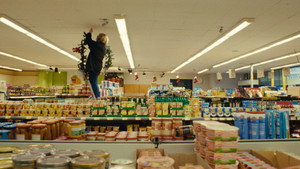
Nothing Remains Nothing Disappears
A Berlin street corner is slowly changing: an aging supermarket turns into a construction site and finally a new building. People restock shelves, demolish walls, take breaks and count money. Those who work here participate in the making and unmaking of the place. How does it shape the conditions of their labor? Between supermarket aisles, construction scaffolding and exposed concrete, different versions begin to overlap. Repetitions appear like echoes between worlds, both playful and eerie.
2026
About the Memoirs of a House
The life of a couple is observed through the home they have left behind.
2022
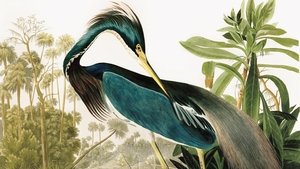
Birds of America
In the first half of the 19th century, the French ornithologist Jean-Jacques Audubon travelled to America to depict birdlife along the Mississippi River. Audubon was also a gifted painter. His life’s work in the form of the classic book ‘Birds of America’ is an invaluable documentation of both extinct species and an entire world of imagination. During the same period, early industrialisation and the expulsion of indigenous peoples was in full swing. The gorgeous film traces Audubon’s path around the South today. The displaced people’s descendants welcome us and retell history, while the deserted vistas of heavy industry stretch across the horizon. The magnificent, broad images in Jacques Loeuille’s atmospheric, modern adventure reminds us at the same time how little - and yet how much - is left of the nature that Audubon travelled around in. His paintings of the colourful birdlife of the South still belong to the most beautiful things you can imagine.
2022
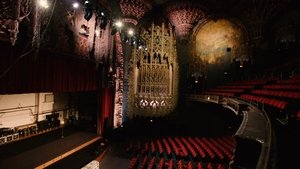
Going Attractions: The Definitive Story of the Movie Palace
Celebrating the splendor and grandeur of the great cinemas of the United States, built when movies were the acme of entertainment and the stories were larger than life, as were the venues designed to show them. The film also tracks the eventual decline of the palaces, through to today’s current preservation efforts. A tribute to America’s great art form and the great monuments created for audiences to enjoy them in.
2019

Bauhaus 100
In 1919 an art school opened in Germany that would change the world forever. It was called the Bauhaus. A century later, its radical thinking still shapes our lives today. Bauhaus 100 is the story of Walter Gropius, architect and founder of the Bauhaus, and the teachers and students he gathered to form this influential school. Traumatised by his experiences during the Great War, and determined that technology should never again be used for destruction, Gropius decided to reinvent the way art and design were taught. At the Bauhaus, all the disciplines would come together to create the buildings of the future, and define a new way of living in the modern world.
2019
The Hermits
In the midst of the chaos of México City, a group of eight bachelor millennials who call themselves ´The Hermits´, open the doors to their tiny apartments in the historic Ermita Building, in the yet-to-be gentrified neighborhood of Tacubaya, and share their life experiences in a time when precarity changes the way in which we love, feel and relate to each other. As we explore the homes of these eight neighbors, we also witness their personalities intersect in a Whatsapp chat, a virtual space that functions as a supporting system that helps them face the adversities that living alone in this city brings.
2019
One Big Home
On the tiny island of Martha's Vineyard, where presidents and celebrities vacation, trophy homes threaten to destroy the islands unique character. Twelve years in the making, One Big Home follows one carpenters journey to understand the trend toward giant houses. When he feels complicit in wrecking the place he calls home, he takes off his tool belt and picks up a camera.
2017
In Between Mountains and Oceans
Finding their place between the forest and the sea, the Japanese have always felt awe and gratitude toward Nature. Since ancient times, they have negotiated their own unique relationship with their natural surroundings. Acclaimed photographer Masa-aki Miyazawa discovered the essence of that ancient way of living in Ise Jingu, Japan’s holiest Shinto shrine. Inspired by the idea of sending a message to the future in the same way this ancient shrine keeps alive the traditions of the past, Miyazawa used an ultra-high resolution 4K camera to create a breathtaking visual journey linking the Ise forest with other forests throughout Japan.
2014
Amancio Williams
A biography documentary of the Argentine modernist architect Amancio Williams.
2013
Can't Stop the Water
For 170 years, a Native American community has occupied Isle de Jean Charles, a tiny island deep in the bayous of Louisiana. They have fished, hunted, and lived off the land. Now the land that has sustained them for generations is vanishing before their eyes. Coastal erosion, sea level rise, and increasing storms are overwhelming the island. Over the last fifty years, Isle de Jean Charles has been gradually shrinking, and it is now almost gone. For these Biloxi-Chitimacha-Choctaw Indians, their land is more than simply a place to live. It is the epicenter of their people and traditions. They now must prepare to say goodbye to the place, where, for eight generations, their ancestors cultivated a unique part of Louisiana culture.
2013
Inside Piano
The fifth project of the Living Architectures series, Inside Piano is composed of three films on three symbolic buildings of Renzo Piano's career. A visit throughout the prototype-building of the Centre Pompidou. An immersion in the soundproof world of a submarine floating in the depths of the Parisian underground. A journey aboard a luminous magic carpet of a highly sophisticated architectural machine. A humorous, caustic and quirky point of view.
2013
The Oyler House: Richard Neutra's Desert Retreat
In 1959, a government employee named Richard Oyler, living in the tiny desert town of Lone Pine, California, asked world-famous modern architect Richard Neutra to design his modest family home. To Oyler's surprise, Neutra agreed. Thus began an unlikely friendship that led to the design and construction of an iconic mid-century modern masterpiece.
2012
Ekodomy aneb Život v rovnováze
2008
The Gateway Arch: A Reflection of America
The Gateway Arch: A Reflection of America chronicles for the first time the complete story of this great American symbol… from Thomas Jefferson, Lewis & Clark, and St. Louis’ role in westward expansion; to the eventual construction of the largest stainless steel structure in history.
2006
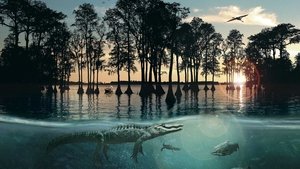
Hurricane on the Bayou
The film "Hurricane on the Bayou" is about the wetlands of Louisiana before and after Hurricane Katrina.
2006
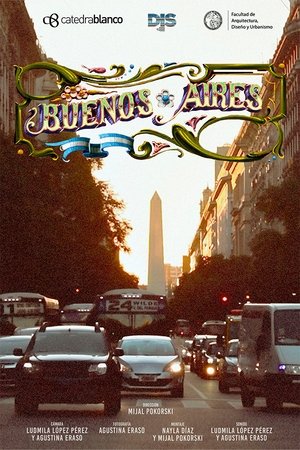
Buenos Aires
This is a short documentary about the old City of Buenos Aires and the new one. It’s an observational piece where the old photos of the same places invite us to live in the old Buenos Aires for a few minutes.
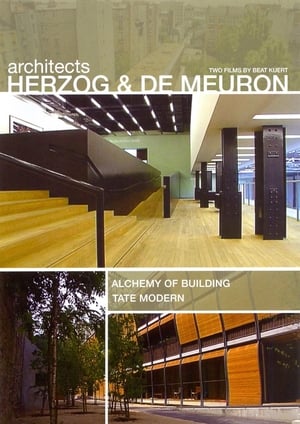
Architects Herzog and deMeuron: The Alchemy of Building & The Tate Modern
Visiting examples of Herzog and de Meurons ground-breaking style, this film reflects their capacity to astonish and explore the way in which they transform what might otherwise be ordinary through new treatments and techniques.
2001
Le Corbusier
Making a documentary on Le Corbusier is not easy, because he is undoubtedly the architect most familiar to the general public but also the most unknown. If most people know his great achievements, such as the Cité radieuse of Marseille, the pavilions of the Cité universitaire de Paris or the Tourettes convent, many are unaware of his works in Moscow, Rio de Janeiro or Chandigarh. Roy Oppenheim pays a vibrant tribute to Corbusier, dismissing the criticisms and darker facets of the character. It presents the career of this pioneering architect, as well as his thinking, the essential principle of which was aimed at the development of human beings and the balance of society. Light, space and greenery are integrated into his large futuristic cities, because according to him the eyes of the inhabitants should be drawn into the distance and not into their neighbor's bathroom.
1967