Watch Tatjana in Motherland (2014) Online Free
Tatjana in Motherland is a partly animated documentary essay about Slovenia and its men. It is a “documentary-tale” of how Slovenian society has been disintegrating in an invisible way. The story will unveil a Slovenian Oedipus archetype of the possessive martyr mother type and her relationship with her son, in which she through emotional manipulation, by constantly creating feelings of guilt, burdens her son to such a degree, that he remains dependent on her for the rest of his life. In order to put this relationship to its best use, all Slovenian governing structures have elevated mother figure on the level of a saint and have assigned to it the cultish role. The result of the Slovenian maternal cult is a typical Slovene male, who is pathologically obsessed with his mother.
Cast
Tatjana Kneževič, Martina Žmuc Tomori, Andrej Perko, Svetlana Makarovič, Saša Einsiedler
More Like This
White Veil
In the village of Anhovo on the Soča River, there lies an old asbestos factory that has managed to outlive wars, regimes and borders. It provided employment and stole life. Even today it continues to exhale smoke.
2025

Mama Micra
The mother of animation director Rebecca Blöcher didn’t want to live an ordinary life. She wanted “something more,” she explains in this stop-motion film. The people around her didn’t understand—in a letter written in 1968, a girlfriend criticizes her for going out on her own and making men jealous, while advising her to dress in a more “feminine” way and to join a cooking course. Blöcher’s mother brushed aside the advice. Years later still, she divorced her husband and stepped into the big wide world.
2024
Fearless Queen of the Night
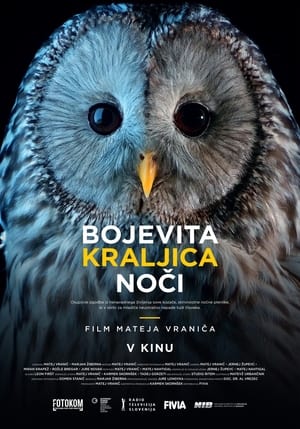
Stunning stories from the unusual life of the Ural owl, a mysterious nocturnal predator that can fearlessly attack even humans. Set over a period of just over a year, 'Fearless Queen of the Night' provides an extraordinary insight into the life of one of the largest European owl species.
2024
The Talent Show
Middle-aged women start acting and launch a drama club. However, nothing big or small goes right. But they never give up the play.
2023
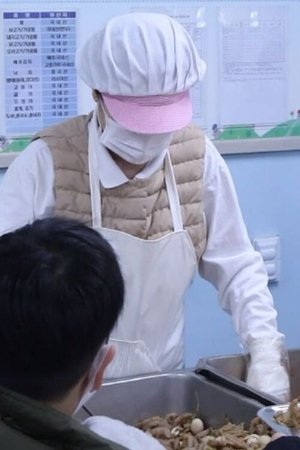
Mi-sun
The life of Mi-sun, an elementary school lunch cook, is somewhat similar to that of her mother. The story of Mi-sun, who is someone's daughter, wife, mother, and friend who has been called a 'feeding lady' after college, when she dreamed of becoming a teacher.
2022

Uma Gota de Esperança
A mother discovers that her son has a disability that causes her breast milk to intoxicate him. But the discovery comes too late to prevent the loss of neurons.
2021
The Maribor Uprisings
Equal parts film, conversation, and social experiment, this interactive documentary uses footage shot by activists in the crowd of the Maribor uprisings, a 2012 to 2013 Slovenian protest, to pull you into the fray, where you must collectively decide what happens next.
2017
First Ladyland
Melania Trump's homeland is open for business.
2017
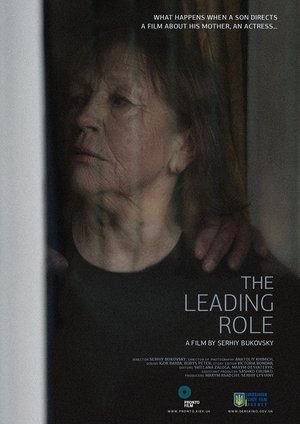
The Leading Role
The film is about the director’s mother, the movie actress Nina Antonova. Now she is 80. She has had hundreds of roles – big and small. It is a personal story about an honest and sad life, about self-sacrifice and freedom. Real fame as an actress came to her only once in her life. It was the leading role in the first Soviet colour TV series Varka’s Land. That was 45 years ago…
2016
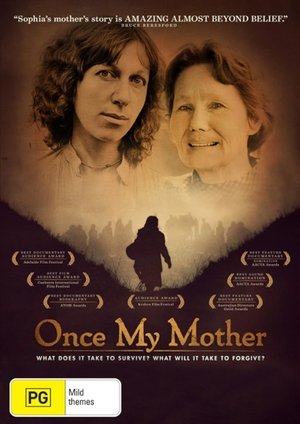
Once My Mother
Australian filmmaker Sophia Turkiewicz investigates why her Polish mother abandoned her and uncovers the truth behind her mother's wartime escape from a Siberian gulag, leaving Sophia to confront her own capacity for forgiveness.
2014
After You
"My mother is spending all her time with her dying father. I’m spending all my time filming her. As the end is getting closer, my mother and I start doing the filming more and more together. It becomes our way of dealing with the time we have left." —Marius Dybwad Brandrud
2013
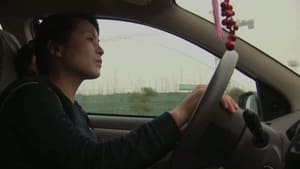
Redefining China's Family: Women
10 May 2007 - China's staggering economic growth has overshadowed a more subtle shift in Chinese society. In domestic life, many women are now ignore the advice of their mothers and grandmothers, turning instead to counselling hotlines and, increasingly, divorce.
2008
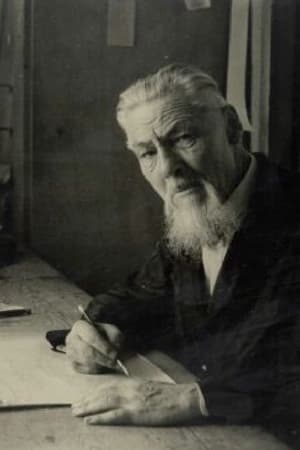
Architect Joze Plecnik: 1872-1957
Plečnik in photographs, Plečnik's house, Trnovo bridge, Trnovo port, Ljubljana castle, shoemaking bridge, triple bridge, market, lock, church of St. Jožef, church in Šiška, Church of Cyril and Methodius in Bežigrad, football stadion, baptistery of the church in Črnuče, church at Barje, NUK, Roman wall, Križanke, Vegova, Peglezen, Tivoli, Chamber of Crafts, mutual insurance company, Žale.
2008

Sieben Mulden und eine Leiche
Thomas Haemmerli is about to celebrate his fortieth birthday when he learns of his mother's death. A further shock follows when he and his brother Erik discover her apartment, which is filthy and full to bursting with junk. It takes the brothers an entire month to clean out the place. Among the chaos, they find films going back to the 1930s, photos and other memorabilia.
2007

Alice och jag
Documentary filmmaker Rebecka Rasmusson becomes pregnant with the man she believes to love, when it turns out that he also has another woman. One evening in front of the TV, Rebecka sees an interview with the 90 year old premier queen Alice Timander who says she never felt loved. Rebecka decides to look her up and together insinuates itself a drama about love, betrayal, being a mother, daughter, and as a woman wearing a dream about making a career.
2006
Mother for Life
The film follows the life of a large family over three decades and generations. The rising saga of a formerly homeless family survived since the mid-seventies solely thanks to the mother's figure, the strength and bond of this "Mama General". Following her motto, "one for all - all for one," she keeps the family together and tied. And yet, it is no longer like before. One force is noticeably weakening. Mama General is dying...
2004

Gangstresses
Gangstresses, a documentary by Harry Davis, tells the story of violence, poverty, and survival in the streets from a female perspective. Over a two-year period, Davis interviews female hustlers, drug dealers, rappers, porn stars, prostitutes, mothers, and daughters. Among them are Champagne, a well-known African American porn star who has a small child; Mama Mayhem, a street hustler; Uneek, a rapper from the Bronx; and Vanessa Del Rio, a famous porn actress. Musicians Lil' Kim, Mary J. Blige, Ice T, and Tupac Shakur also share personal stories of survival. The documentary conducts follow-up research on the women's complicated lives, offering glimpses of both tragic reality and hopeful recovery.
2000

Parents -- Who Needs Them?
Jimmy learns to appreciate his parents when a hand puppet dressed as a jester visits him up in the middle of the night and renders him invisible.
1973

Mai
As the months pass through her, Mai gives us a glimpse into old age that explores between being abandoned and being belonged, passing the time and living the time.