Watch First Ladyland (2017) Online Free
More Like This
White Veil
In the village of Anhovo on the Soča River, there lies an old asbestos factory that has managed to outlive wars, regimes and borders. It provided employment and stole life. Even today it continues to exhale smoke.
2025
Fearless Queen of the Night
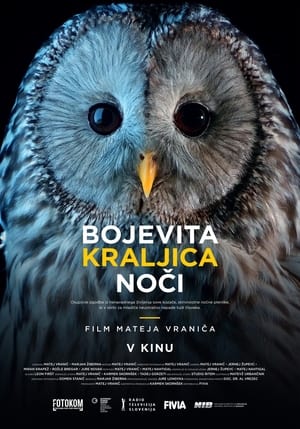
Stunning stories from the unusual life of the Ural owl, a mysterious nocturnal predator that can fearlessly attack even humans. Set over a period of just over a year, 'Fearless Queen of the Night' provides an extraordinary insight into the life of one of the largest European owl species.
2024
Birds of the Lakes Return
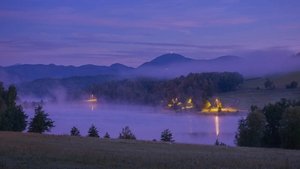
An excellent display of how humans can rehabilitate and restore an area where a heavy industry polluted the water so severely that it was unsuitable to sustain any kind of life. A a film showing how birds returned to an environment once devastated by industry. The lakes around the northern Slovenian town of Velenje, placed in the Central Europe, are geographic center of the film. They emerged as the land above the lignite mines subsided and the depressions were filled with water. The mines started operating at the end of the 19th century. In the mid 20th century a power plant was built that caused a severe pollution of the lake waters to the extent of the lakes not being fit for any kind of life. As a consequence many birds moved from these parts. After a long ecological restoration that started in the mid 1980s, life returned to the water. Gradually the birds returned as well, including some there were previously never observed in this area.
2018
Codelli
Codelli is a feature-length docudrama about a little-known film project by Slovenian inventor Baron Anton Codelli. Together with filmmaker and adventurer Hans Schomburgk he filmed in Togo in 1914 the first live-action film in Africa, which possibly inspired James Rice Burroughs for his novel on Tarzan. In the company of three Codelli’s descendants and actor Primož Bezjak, we traced the fate of Codelli’s film, brought the remains from Togo and Berlin to Ljubljana and used the Green Screen technology to bring to life 15 live-action scenes based on 600 Codelli’s museum photographs.
2017
The Maribor Uprisings
Equal parts film, conversation, and social experiment, this interactive documentary uses footage shot by activists in the crowd of the Maribor uprisings, a 2012 to 2013 Slovenian protest, to pull you into the fray, where you must collectively decide what happens next.
2017
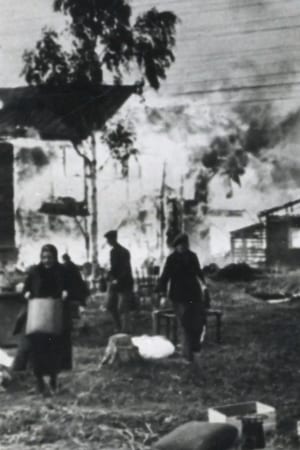
Burnt in Memories
People from tripoint of Italy, Slovenia and Croatia tell their stories of the World War II events that happened there.
2017
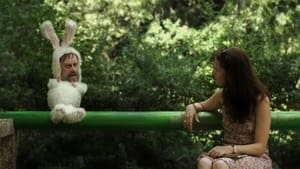
Tatjana in Motherland
Tatjana in Motherland is a partly animated documentary essay about Slovenia and its men. It is a “documentary-tale” of how Slovenian society has been disintegrating in an invisible way. The story will unveil a Slovenian Oedipus archetype of the possessive martyr mother type and her relationship with her son, in which she through emotional manipulation, by constantly creating feelings of guilt, burdens her son to such a degree, that he remains dependent on her for the rest of his life. In order to put this relationship to its best use, all Slovenian governing structures have elevated mother figure on the level of a saint and have assigned to it the cultish role. The result of the Slovenian maternal cult is a typical Slovene male, who is pathologically obsessed with his mother.
2014
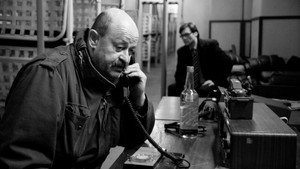
Max's Victory
Worker Maks Bigec decides to take things in his own hands when he hears that his factory will be closed. He takes the factory director as a hostage and demands that the state should reopen the factory.
2011
Trieste Is Ours!
In 2009, a group of military enthusiasts led by the commander France (Gojmir Lešnjak - Gojc) decides to occupy Trieste. The group that stages battles performs it at a completely fictional location. However, this hobby is not to the liking of France's wife Marija (Silva Čušin) and his daughter Mateja (Anja Drnovšek). The daughter as a representative of the young generation has no understanding of her father's enthusiasm for partisans, battles and Tito. France is also confronted by the Slovenian police led by the commander Brane (Dario Varga) as Brane forbids France to stage any more battles ... Will the young generation accept our history and will Trieste be ours?
2009
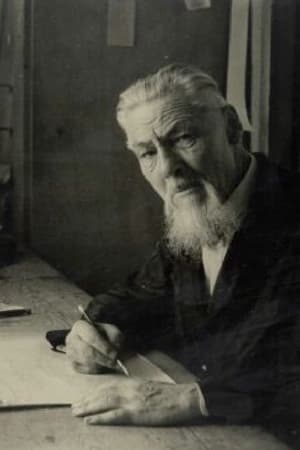
Architect Joze Plecnik: 1872-1957
Plečnik in photographs, Plečnik's house, Trnovo bridge, Trnovo port, Ljubljana castle, shoemaking bridge, triple bridge, market, lock, church of St. Jožef, church in Šiška, Church of Cyril and Methodius in Bežigrad, football stadion, baptistery of the church in Črnuče, church at Barje, NUK, Roman wall, Križanke, Vegova, Peglezen, Tivoli, Chamber of Crafts, mutual insurance company, Žale.
2008
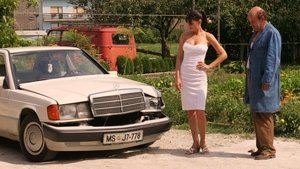
Rooster's Breakfast
After being fired, a young car mechanic Đuro gets recommendation to look for another job in a remote village. His new boss is warm, old fashioned and naive - completely opposite from the world he's coming from. The peaceful atmosphere is shaken when Đuro falls for a regular customer's wife.
2007
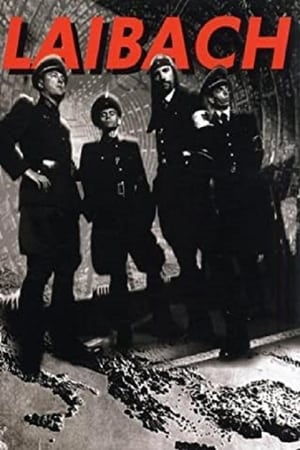
Laibach: The Videos
Laibach is a Slovenian avant-garde music group associated with industrial, martial, and neo-classical musical styles. They formed on June 1, 1980 in Trbovlje, Slovenia (then Yugoslavia). Laibach represents the music wing of the Neue Slowenische Kunst (NSK) art collective, of which it was a founding member in 1984. The name "Laibach" is the German name for Slovenia's capital city, Ljubljana.
2004
Cheese and Jam
A story about a couple from the bottom of the social ladder, about smuggling refugees across borders and other 'suspect' things- it is, first and foremost, an attempt to tell a story about the worst in people, wherever they may be coming from.
2003
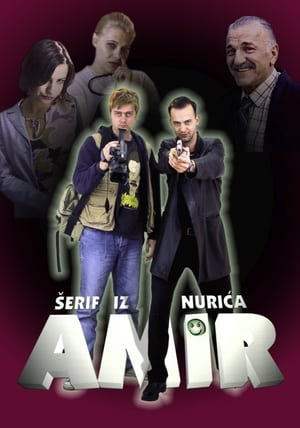
Amir
This film portrays aspects of an Afghan refugee's life - his living conditions in Peshawar and his longing to return to Herat. It is also about Amir's life as a professional musician and his relationships with other musicians in Peshawar.
2002
Triangle
The story is told through different points of view. A woman loves everything green, her husband loves his car, a magician knows the secrets of the stars, a professor knows everything about sound and a cyclist solves a difficult problem. A surreal travel through time and space.
1991
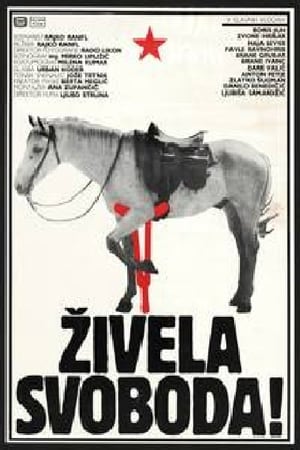
Long Live Freedom
Old man Repovz recalls experiences of the WWII in an entertaining, comic way rather than tragic. A man breaks his arm to avoid being drafted; the other man shoots fire to scare enemy soldiers; love stories, as well as troubles with forced collectivization took place there. A partisan hero finds out that he lost her fiancee, but somewhat cheers up when his white horse comes back to him...
1987
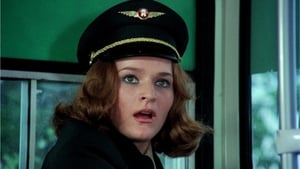
Real Pests!
In Ljubljana lives a bus driver Stebe. He's a widower. He lives with five sons and a maid Rozi. The boys are very naughty and keep annoying Rozi and, in fact all neighbourhood. One day Rozi in desperation declares that she is leaving them, because she cant stand it no more. And she does leave, although she is fond of the boys. Soon afterwards Rozi's niece Meri comes by, asking if she might stay because she wants to find herself a job in town. Meri is good girl but cannot cope with the kitchen work as successfully as her aunt. But the whole Steb family seems to be charmed by her. Even one of Stebe's own colleagues, Tone, begins to take interest in the girl. Meri likes him too. Stebe's boys feel quite disappointed because of it. But all's well that ends well: in full conspiracy Meri qualifies as bus driver while Rozi returns to the Stebe family.
1977
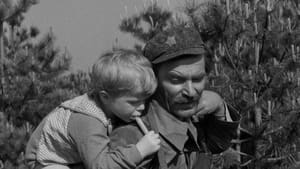
Don't Cry, Peter
Two partisan miners are entrusted with the task of honor to transfer safely three orphan children from a dangerous zone of fighting to the safe liberated territory. In the beginning the two miners feel humiliated because they would like to engage in more important action, but later they become big friends with the children, especially with Peter, the youngest one.
1964
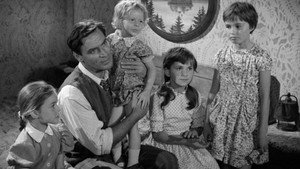
One Fine Day
A story set in a Slovenian village during Italian occupation. Stefuc, a man who has been widowed twice and has four daughters, wants to get married for the third time with Zana, who's already engaged and pregnant with Ludvik. Stefuc tries to separate them away, but realizes that he'll have to marry Hedvika, a nice looking girl who has just returned from Milan. In the meantime, Italian fascist authorities decide to eradicate five Slovenian songs with the help of local traitors.
1962
We'll Meet Tonight
A student of music education comes to the music festival where organizers mix him up with the conductor. He accepts the role which creates lots of comic situations.
1962