Watch The Leading Role (2016) Online Free
The film is about the director’s mother, the movie actress Nina Antonova. Now she is 80. She has had hundreds of roles – big and small. It is a personal story about an honest and sad life, about self-sacrifice and freedom. Real fame as an actress came to her only once in her life. It was the leading role in the first Soviet colour TV series Varka’s Land. That was 45 years ago…
Cast
Nina Antonova, Serhii Bukovskyi
More Like This

Mama Micra
The mother of animation director Rebecca Blöcher didn’t want to live an ordinary life. She wanted “something more,” she explains in this stop-motion film. The people around her didn’t understand—in a letter written in 1968, a girlfriend criticizes her for going out on her own and making men jealous, while advising her to dress in a more “feminine” way and to join a cooking course. Blöcher’s mother brushed aside the advice. Years later still, she divorced her husband and stepped into the big wide world.
2024
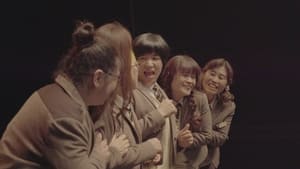
The Talent Show
Middle-aged women start acting and launch a drama club. However, nothing big or small goes right. But they never give up the play.
2023
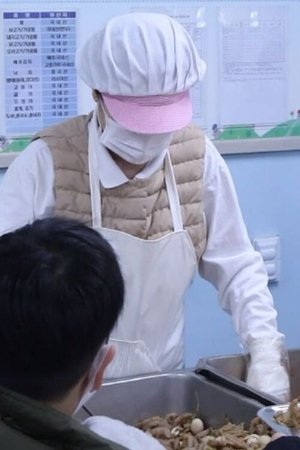
Mi-sun
The life of Mi-sun, an elementary school lunch cook, is somewhat similar to that of her mother. The story of Mi-sun, who is someone's daughter, wife, mother, and friend who has been called a 'feeding lady' after college, when she dreamed of becoming a teacher.
2022

Uma Gota de Esperança
A mother discovers that her son has a disability that causes her breast milk to intoxicate him. But the discovery comes too late to prevent the loss of neurons.
2021

Bombshell: The Hedy Lamarr Story
The life and career of the hailed Hollywood movie star and underappreciated genius inventor, Hedy Lamarr.
2018
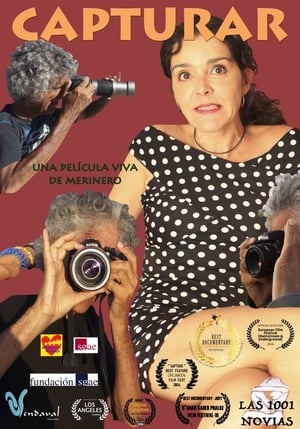
Capturar (Las 1001 novias)
2017

The Silence of the Princess
Diana Mariscal reached a moment of fame in the sixties, when at just 18 years of age she was the lead actress of the movie Fando and Lis by Alejandro Jodorowsky. The moment seemed to trigger a promising career, but her public image faded little by little until disappearing. Forty years later the traces of her existence have not been entirely erased.
2014
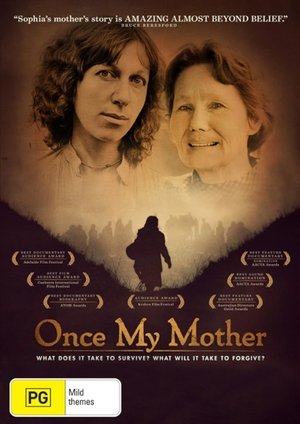
Once My Mother
Australian filmmaker Sophia Turkiewicz investigates why her Polish mother abandoned her and uncovers the truth behind her mother's wartime escape from a Siberian gulag, leaving Sophia to confront her own capacity for forgiveness.
2014

After You
"My mother is spending all her time with her dying father. I’m spending all my time filming her. As the end is getting closer, my mother and I start doing the filming more and more together. It becomes our way of dealing with the time we have left." —Marius Dybwad Brandrud
2013
Redefining China's Family: Women
10 May 2007 - China's staggering economic growth has overshadowed a more subtle shift in Chinese society. In domestic life, many women are now ignore the advice of their mothers and grandmothers, turning instead to counselling hotlines and, increasingly, divorce.
2008

Sieben Mulden und eine Leiche
Thomas Haemmerli is about to celebrate his fortieth birthday when he learns of his mother's death. A further shock follows when he and his brother Erik discover her apartment, which is filthy and full to bursting with junk. It takes the brothers an entire month to clean out the place. Among the chaos, they find films going back to the 1930s, photos and other memorabilia.
2007
Mother for Life
The film follows the life of a large family over three decades and generations. The rising saga of a formerly homeless family survived since the mid-seventies solely thanks to the mother's figure, the strength and bond of this "Mama General". Following her motto, "one for all - all for one," she keeps the family together and tied. And yet, it is no longer like before. One force is noticeably weakening. Mama General is dying...
2004
Thank God I’m in the Film Business!
Eva Ebner is a Berliner who gives the appearance of being rather eccentric. She knows the film business inside out – regardless of whether she’s work- ing behind the camera as an assistant director or in front of it as an actor. Her name is closely associated with a series of now-legendary adaptations of Edgar Wallace’s crime novels which were made in Germany during the 1960s. Upcoming young directors from local film schools have also profited from Ms. Ebner’s unbroken enthusiasm and passion for film. However, this eighty-year-old has a more than broken relationship to the events of her childhood and youth in Gdansk – a time when her life was characterised by an anti-Semitic step-mother and the dangers posed by the Nazi regime. This film portrait does not eschew any of the long dark shadows of that era, nor does it sidestep any friction between portrayer and his subject. (Lothar Lambert)
2003

Bond Girls Are Forever
Through vintage film clips of past Bond movie epics, and with the participation of several former "Bond Girls" as interviewees (among them Dr. No's Ursula Andress and Diamonds Are Forever's Jill St. John), the documentary traces the evolution of the typical James Bond heroine from decorative damsel in distress to gutsy (but still decorative) participant in the action.
2002
There is No Death For Me
It is a documentary story about five legends of russian cinema: Nonna Mordyukova, Tatyana Okunevskaya, Tatyana Samoylova, Lidiya Smirnova and Vera Vasileva. These wonderful women tell about their lifes and careers in hour interview.
2000

Gangstresses
Gangstresses, a documentary by Harry Davis, tells the story of violence, poverty, and survival in the streets from a female perspective. Over a two-year period, Davis interviews female hustlers, drug dealers, rappers, porn stars, prostitutes, mothers, and daughters. Among them are Champagne, a well-known African American porn star who has a small child; Mama Mayhem, a street hustler; Uneek, a rapper from the Bronx; and Vanessa Del Rio, a famous porn actress. Musicians Lil' Kim, Mary J. Blige, Ice T, and Tupac Shakur also share personal stories of survival. The documentary conducts follow-up research on the women's complicated lives, offering glimpses of both tragic reality and hopeful recovery.
2000

The Divine Garbo
Profile of actress Greta Garbo, narrated by Glenn Close
1990
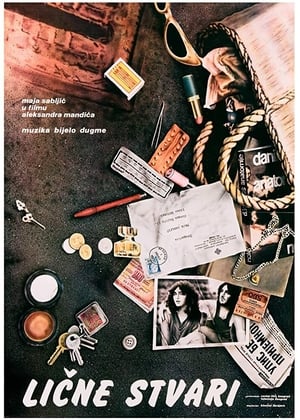
Personal Affairs
The story follows five months in the life of Belgrade student Maja Sabljic, an actress-to-be, from her high school graduation day (at the end of May) until mid September when she tries to enroll at the Film Academy (FDU). The story is presented in the documentary style, involving the real-life persons of the late seventies' Belgrade scene.
1979

Parents -- Who Needs Them?
Jimmy learns to appreciate his parents when a hand puppet dressed as a jester visits him up in the middle of the night and renders him invisible.
1973

Mai
As the months pass through her, Mai gives us a glimpse into old age that explores between being abandoned and being belonged, passing the time and living the time.