Watch Song of Khartoum (1955) Online Free
Gubara was proud of the first color film in African cinema, which attempts to give an African response to the city symphony genre by capturing disparate images of daily life in Khartoum and setting it to music, particularly romantic Arabic songs.
More Like This
Inquietas
2025

1,2,3... Barcelona!
Tourists eating and taking photos. Tourists strolling and taking photos. Tourists bathing on the beach and taking more photos. Barcelona has become an overexploited photocall to the point of paroxysm, and this is what this film shows by turning the camera and pointing towards the visitors. A small gesture that, added to a powerful sound contrast and a caustic sense of humour, exposes without subterfuge a grotesque normality.
2025
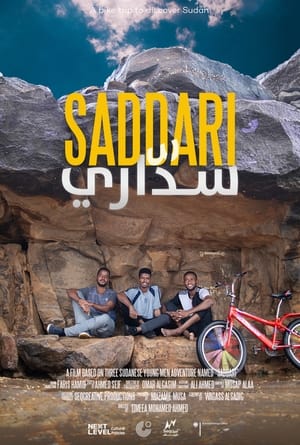
Saddari
Saddari is a story of A 3 Young bikers decide to hit the road to another state for adventure , Ending up embarking on a challenging bike trip across all of Sudan with less than a 100$ In their pockets combined and worn-out bicycles, Facing numerous challenges along the way.
2022
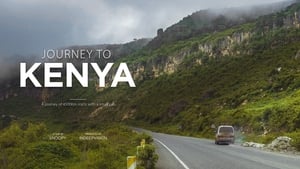
Journey to Kenya
Award winning short documentary by Ibrahim Snoopy, tracks the journey of the MTC martial arts team, which decides after a civil revolution that occurred in Sudan (2018-2019). Facing of lack of the state support and weak financial means, ambitious athletes found themselves forced to travel by land from Sudan to Kenya through Ethiopia to participate in an international championship "LionHeart 2019 Nairobi Open" in Nairobi, Kenya. A journey filled with determination, resilience, hope, and full of difficulties and challenges in order to raise the name of Sudan high in international sports forums and to solidify the art of Jiu-Jitsu in Africa.
2020
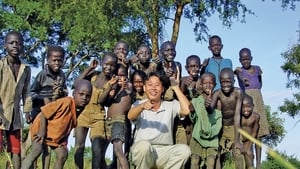
Don't Cry for Me Sudan: Shukran Baba
Tonj, Sudan is the land with only desperation from poverty and war. This is the story about priest also doctor, educator, musician and architect Lee Tae-seok’s work and hidden episode behind.
2020
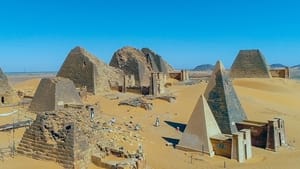
Lost Kingdom of the Black Pharaohs
The Kush Empire was an ancient superpower that dominated the Nile Valley and rivaled the Egyptians, and now, a new, cutting-edge investigation at a mysterious tomb could reveal the secrets of this formidable lost kingdom.
2019
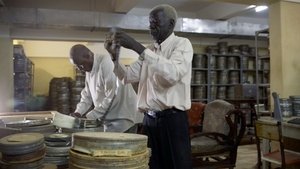
Sudan's Forgotten Films
Benjamin and Awad run Sudan's national film archive. The two men, who have worked together for more than 40 years, are devoted to protecting their country's visual memories. Home to some 13,000 films, the archive preserves pivotal moments of Sudan's turbulent history and is one of the largest in Africa. But the archive is in a fragile state. Following years of neglect and poor storage, many film reels are turning to dust in Sudan's unforgiving tropical climate. The two friends are determined to turn it around and embark on a mission to save the old films. Will they succeed in preserving Sudan's visual history for future generations before it's too late?
2017
Last of a London Summer
The last days of summer captured on 16mm.
2017
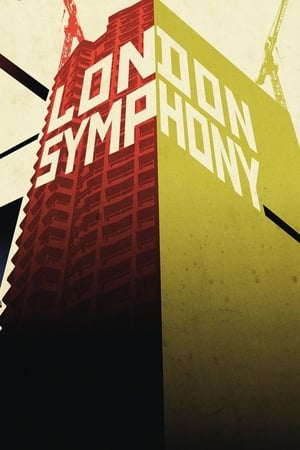
London Symphony
LONDON SYMPHONY is a brand new silent film - a city symphony - which offers a poetic journey through the city of London. It is an artistic snapshot of the city as it stands today, and a celebration of its culture and diversity.
2017
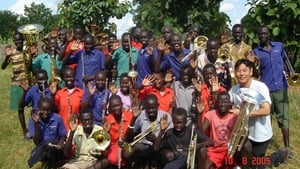
Don't Cry for Me Sudan
A Schweitzer of Korea Father LEE Tae-seok, devoted his life in Sudan; a remote area of Africa.
2010
Hidden Cities
"The theme of the film HIDDEN CITIES is personal urban perceptions, which we call 'the city'. The city, as a living organism, reflecting social processes and interactions, economic relations, political conditions and private matters. In the city, human memories, desires and tragedies find expression in the form of designations and marks engraved in house walls and paving slabs. But what the city really is under this thick layer of signs, what it contains or conceals, is what we are researching in the HIDDEN CITIES project. The source material for the film are 9 sequential photo works created by Gusztáv Hámos between 1975 and 2010. Each of these 'city perceptions' depicts essential situations of urban experiences containing human and inhuman acts in a compact form. The cities in which the photo sequences have been made are Berlin, Budapest and New York – places with a traumatised past: Wars, dictatorships, terrorist catastrophes."
2010
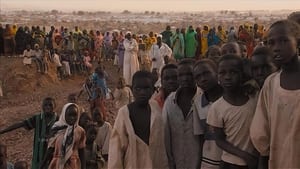
Darfur Now
This acclaimed documentary follows the story of six people who are determined to end the sufferings in Sudan's war-ravaged Darfur. The six - an American activist, an international prosecutor, a Sudanese rebel, a sheikh, a leader of the World Food Program and an internationally known actor - demonstrate the power of how one individual can create extraordinary changes.
2007

The Devil Came on Horseback
While serving with the African Union, former Marine Capt. Brian Steidle documents the brutal ethnic cleansing occuring in Darfur. Determined that the Western public should know about the atrocities he is witnessing, Steidle contacts New York Times reporter Nicholas Kristof, who publishes some of Steidle's photographic evidence.
2007

Circumcized
The elder filmmaker makes a strong statement against the practices of circumcision as they performed around Africa and particularly Sudan. The film is typical of the later Gubara films which are determined to take a stand against the tyrannies that are still keeping people down. Gubara has stated that circumcision is "Nothing more than a bad habit".
2000
The Zar
A short documentary on the practice of Zar in Sudan.
1983

The Hart of London
"The Hart of London" is an endlessly layered tour de force. It explores life and death, the sense of place and personal displacement, and the intricate aesthetics of representation. It is a personal and spiritual film, marked inevitably by Chambers’s knowledge that he had leukemia. The late American avant-garde filmmaker Stan Brakhage said of Hart, "If I named the five greatest films [ever made], this has got to be one of them." Even this high praise falls short of hyperbole. The Hart of London is at the centre of Chambers’s extraordinary achievement.
1970
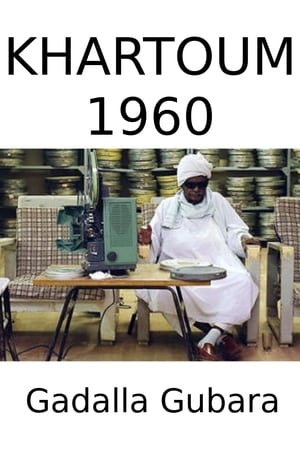
Khartoum 1960
Although perhaps without foresight, Gubara seemingly set out to capture a historic picture of a city that today has completely vanished. He reveals to us the livelier place that Khartoum was before fateful circumstances turned it into a tough, surviving shell of its former self.
1960
Man with a Movie Camera
A cameraman wanders around with a camera slung over his shoulder, documenting urban life with dazzling inventiveness.
1929
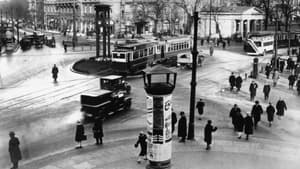
Berlin: Symphony of a Great City
A day in the city of Berlin, which experienced an industrial boom in the 1920s, and still provides an insight into the living and working conditions at that time. Germany had just recovered a little from the worst consequences of the First World War, the great economic crisis was still a few years away and Hitler was not yet an issue at the time.
1927
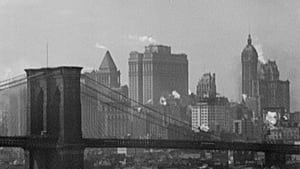
Manhatta
Morning reveals New York harbor, the wharves, the Brooklyn Bridge. A ferry boat docks, disgorging its huddled mass. People move briskly along Wall St. or stroll more languorously through a cemetery. Ranks of skyscrapers extrude columns of smoke and steam. In plain view. Or framed, as through a balustrade. A crane promotes the city's upward progress, as an ironworker balances on a high beam. A locomotive in a railway yard prepares to depart, while an arriving ocean liner jostles with attentive tugboats. Fading sunlight is reflected in the waters of the harbor. The imagery is interspersed with quotations from Walt Whitman, who is left unnamed.
1921