Watch Don't Cry for Me Sudan: Shukran Baba (2020) Online Free
Tonj, Sudan is the land with only desperation from poverty and war. This is the story about priest also doctor, educator, musician and architect Lee Tae-seok’s work and hidden episode behind.
Cast
Lee Geum-hee, Lee Tae-seok
More Like This
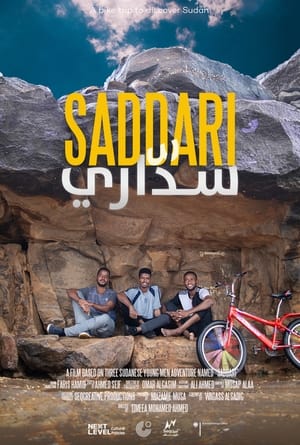
Saddari
Saddari is a story of A 3 Young bikers decide to hit the road to another state for adventure , Ending up embarking on a challenging bike trip across all of Sudan with less than a 100$ In their pockets combined and worn-out bicycles, Facing numerous challenges along the way.
2022

Célibat des prêtres, le calvaire de l'Église
Priests, theologians and bishops are increasingly confessing that the majority of clergy no longer keep celibacy. They condemn the institution of the church and its treatment of priests. And they refuse to obey the ecclesiastical laws imposed by the Vatican. They no longer want to keep their private lives secret. Many are calling for an end to compulsory celibacy.
2022
Procession
Six men who were sexually abused by Catholic clergy as boys become a makeshift family and find empowerment by creating films inspired by their trauma.
2021

Malcolm X and the Sudanese
A poignant documentary exploring the unexpected bond between Malcolm X and Ahmed Osman, a young Sudanese student. Through personal reflections and rare footage, the film traces their friendship, culminating in Osman's emotional return to Harlem, where he revisits the legacy of Malcolm X and his meaningful connection to the Sudanese people.
2020
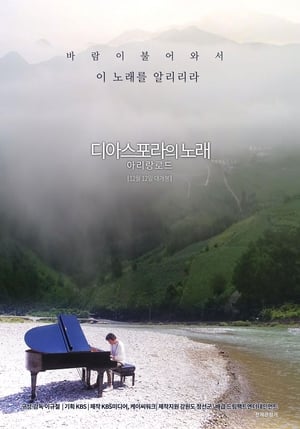
Diaspora: Arirang Road
During the Japanese occupation period, Koreans were forced to deport or drafted to work in other countries. Now 150 years passed, it appears around 7million of those people and their families are spread in 170 countries. There, a world-famous Korean-Japanese musician Yang Bang Ean follows the pathways of Korean diasporas as an inspiration, and performs his cross over music concert called ‘ARIRANG ROAD’.
2019
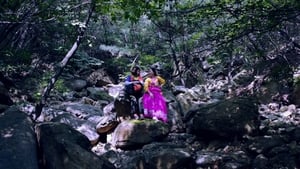
Ryeohaeng
A group of women climbs a summer mountain situated in South Korea. They are refugees who have settled into South Korean society after fleeing from North Korea. For them, climbing the mountains has been an unavoidable journey for survival - a matter of life and death.
2019
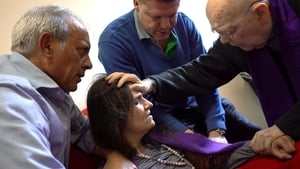
The Devil and Father Amorth
William Friedkin attends an exorcism with Father Gabriele Amorth, as he treats an Italian woman named Cristina for the ninth time. Prior to filming, Cristina had purportedly been experiencing behavioural changes and “fits” that could not be explained by psychiatry, and which became worse during Christian holidays.
2018
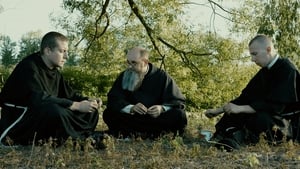
Two Crowns
Recreation of facts and stories of both experts and people who met Maximilian Kolbe and were shocked by his words and actions.
2017
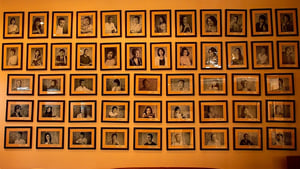
Sound of Nomad: Koryo Arirang
The documentary starts with a diva of a tragic family history related to a history of migration. The rare archival footage reanimates her history reverberating with the current world crisis. Sound of Nomad: Koryo Arirang is a testimonial – a witness to injustice and tragedy, but it is also a declaration of survival – a survival that is not static but transformative – not brittle but fluid. The trains that displace, the deserts that separate form one harsh horizon – a historical limit – but within that limit, against it and across it are people, are a culture, not escaping but flourishing unofficially, with the affective majesty of a melody, a rhythm, an Arirang
2017
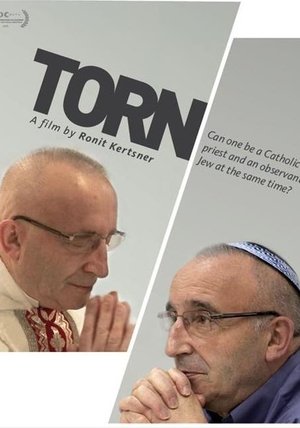
Torn
A Catholic priest discovers that he was born to Jewish parents
2011
Baboya
The piercing cold of 10 below zero wasn't even a problem. In February, 2009, about 400,000 people gathered in Myung Dong for a brief meeting for a single reason. The late cardinal KIM Sou-hwan became the first cardinal in a land of poor faith. He summoned up his courage when no one took action. He practiced love as a miracle until he left us. He was a respected senior of the society beyond the religion in the turbulent times; a figure whose life had been like a fence for the disadvantaged. The late cardinal KIM Sou-hwan was ‘a great man of the era’. His passionate love is now revived on the screen.
2011
Au cœur de Notre-Dame
2011
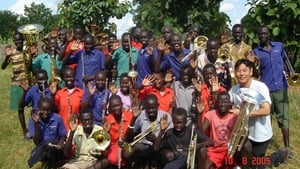
Don't Cry for Me Sudan
A Schweitzer of Korea Father LEE Tae-seok, devoted his life in Sudan; a remote area of Africa.
2010
Cinema in Sudan: Conversations with Gadalla Gubara
The film builds up a portrait of a great Sudanese film-maker, Gadalla Gubara. At eighty-seven, he is one of the pioneers of cinema in Africa. He has recently lost his sight but still continues to film life in Sudan as no one before him. Through his oeuvre, Gadalla reveals to us a Sudan both mysterious and misunderstood. Despite censorship and lack of financial support over sixty years, he has produced cinema that is independent and unique in a country where freedom of expression is a rare luxury.
2008
Darfur Now
This acclaimed documentary follows the story of six people who are determined to end the sufferings in Sudan's war-ravaged Darfur. The six - an American activist, an international prosecutor, a Sudanese rebel, a sheikh, a leader of the World Food Program and an internationally known actor - demonstrate the power of how one individual can create extraordinary changes.
2007
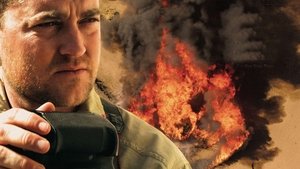
The Devil Came on Horseback
While serving with the African Union, former Marine Capt. Brian Steidle documents the brutal ethnic cleansing occuring in Darfur. Determined that the Western public should know about the atrocities he is witnessing, Steidle contacts New York Times reporter Nicholas Kristof, who publishes some of Steidle's photographic evidence.
2007
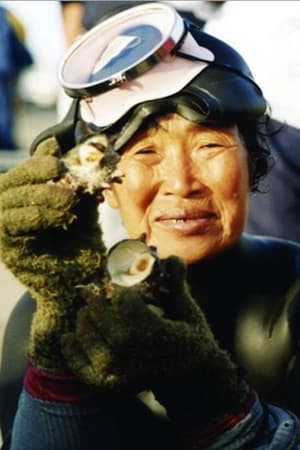
Diving Women of Jeju-do
Jeju-do is the largest of Korean islands and lies between Korea and Japan. There, for hundreds of years, women dive without breathing apparatus, to the ocean floor and collect shellfish, octopus, and urchins that they sell. The divers are in their sixties and seventies and their daughters do not want to inherit their work, lifestyle, and health problems that go with diving. As a filmmaker I was privileged to meet many of these women and dive with them. Their stories of hardship and pride confirmed my desire to record this unique and ancient tradition.
2007
The Zar
A short documentary on the practice of Zar in Sudan.
1983
Ka Ke Ki Ku
This early work from Pierre Perrault, made in collaboration with René Bonnière, chronicles summer activities in the Innu communities of Unamenshipu (La Romaine) and Pakuashipi. Shot by noted cinematographer Michel Thomas-d’Hoste, it documents the construction of a traditional canoe, fishing along the Coucouchou River, a procession marking the Christian feast of the Assumption, and the departure of children for residential schools—an event presented here in an uncritical light. Perrault’s narration, delivered by an anonymous male voice, underscores the film’s outsider gaze on its Indigenous subjects. The film is from Au Pays de Neufve-France (1960), a series produced by Crawley Films, an important early Canadian producer of documentary films.
1960
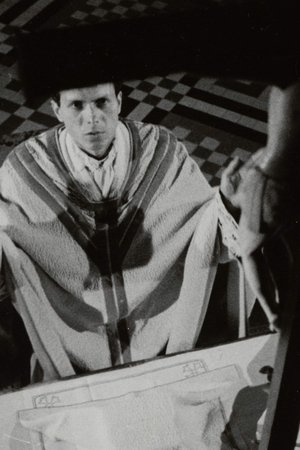
Lumière des hommes
Following the example of an entomologist watching the behavior of insects Edmond Bernhard scrutinizes the doings and the words of a priest - assisted by his choirboys - in the process of saying his mass.
1954