Watch Don't Cry for Me Sudan (2010) Online Free
A Schweitzer of Korea Father LEE Tae-seok, devoted his life in Sudan; a remote area of Africa.
Cast
Lee Geum-hee, Lee Tae-seok
More Like This
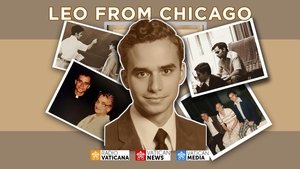
Leo from Chicago
The Vatican media documentary about the roots of Robert Francis Prevost in his native United States. It follows an itinerary that begins with his childhood in Dolton, through the memories of his brothers Louis and John, and continues among schools and universities, communities and parishes, featuring the voices of confreres, teachers, classmates, and longtime friends. A production of the Vatican Dicastery for Communication, in collaboration with the Archdiocese of Chicago and the Apostolate El Sembrador Nueva Evangelización (ESNE), broadcast on the official channels of Vatican Radio – Vatican News.
2025
The Book of Baptist
Baptist Fernandes is an undertaker by trade, but he has dealt with death all his life.
2024
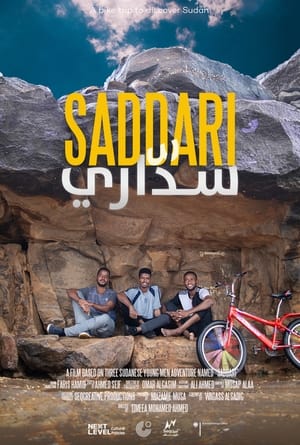
Saddari
Saddari is a story of A 3 Young bikers decide to hit the road to another state for adventure , Ending up embarking on a challenging bike trip across all of Sudan with less than a 100$ In their pockets combined and worn-out bicycles, Facing numerous challenges along the way.
2022
Célibat des prêtres, le calvaire de l'Église
Priests, theologians and bishops are increasingly confessing that the majority of clergy no longer keep celibacy. They condemn the institution of the church and its treatment of priests. And they refuse to obey the ecclesiastical laws imposed by the Vatican. They no longer want to keep their private lives secret. Many are calling for an end to compulsory celibacy.
2022
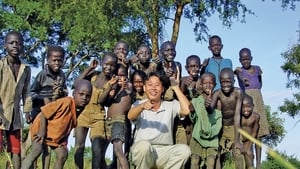
Don't Cry for Me Sudan: Shukran Baba
Tonj, Sudan is the land with only desperation from poverty and war. This is the story about priest also doctor, educator, musician and architect Lee Tae-seok’s work and hidden episode behind.
2020
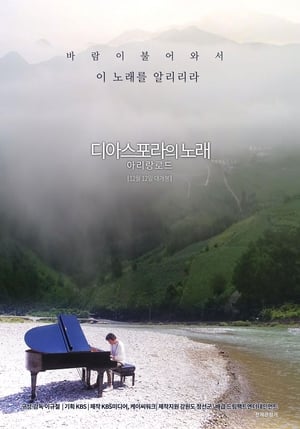
Diaspora: Arirang Road
During the Japanese occupation period, Koreans were forced to deport or drafted to work in other countries. Now 150 years passed, it appears around 7million of those people and their families are spread in 170 countries. There, a world-famous Korean-Japanese musician Yang Bang Ean follows the pathways of Korean diasporas as an inspiration, and performs his cross over music concert called ‘ARIRANG ROAD’.
2019
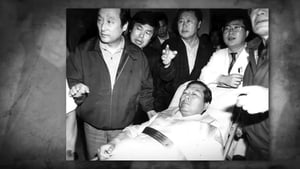
President
This documentary celebrates the life of former President Kim Dae-joong, who fought for democracy in South Korea and peace in the Korean Peninsula. It marks the 10th anniversary of his passing and covers his challenging journey, from his childhood on an island to his imprisonment, exile, near-death experiences, and ultimately becoming the president.
2019
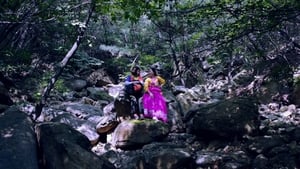
Ryeohaeng
A group of women climbs a summer mountain situated in South Korea. They are refugees who have settled into South Korean society after fleeing from North Korea. For them, climbing the mountains has been an unavoidable journey for survival - a matter of life and death.
2019
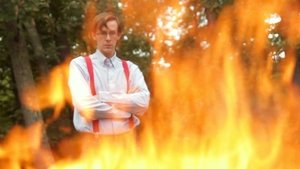
The Sunday Sessions
A religious young man's identity is called into question when he visits a conversion therapist.
2019
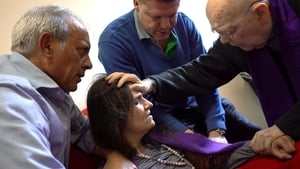
The Devil and Father Amorth
William Friedkin attends an exorcism with Father Gabriele Amorth, as he treats an Italian woman named Cristina for the ninth time. Prior to filming, Cristina had purportedly been experiencing behavioural changes and “fits” that could not be explained by psychiatry, and which became worse during Christian holidays.
2018
Sound of Nomad: Koryo Arirang
The documentary starts with a diva of a tragic family history related to a history of migration. The rare archival footage reanimates her history reverberating with the current world crisis. Sound of Nomad: Koryo Arirang is a testimonial – a witness to injustice and tragedy, but it is also a declaration of survival – a survival that is not static but transformative – not brittle but fluid. The trains that displace, the deserts that separate form one harsh horizon – a historical limit – but within that limit, against it and across it are people, are a culture, not escaping but flourishing unofficially, with the affective majesty of a melody, a rhythm, an Arirang
2017
Radical Disciple: The Story of Father Pfleger
The story of Catholic iconoclast Michael Pfleger who made it his mission to transform the drug ravaged south side Chicago community surrounding his parish. In so doing, Father Mike has run directly into conflict with the local Catholic hierarchy. The film explores issues of racism, the power of the media, and the tension between Pfleger's 'gospel of the streets' versus traditional Church theology.
2009
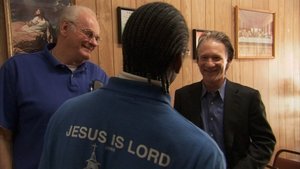
Religulous
Commentator-comic Bill Maher plays devil's advocate with religion as he talks to believers about their faith. Traveling around the world, Maher examines the tenets of Christianity, Judaism and Islam and raises questions about homosexuality, proof of Christ's existence, Jewish Sabbath laws, violent Muslim extremists.
2008
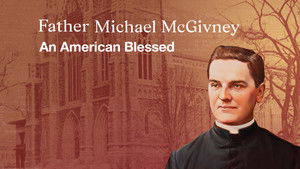
Father Michael McGivney
Father Michael McGivney is a documentary that brings to life the story of one of America's most extraordinary Catholic priests. Born in Connecticut of Irish immigrant parents just a few years before the Civil War, Michael McGivney grew up at a time when millions of Catholic immigrants were struggling to overcome poverty and prejudice. As a parish priest in the gritty New England manufacturing town of New Haven, he made a deep impact on his community, earning the respect of the Protestant establishment and the love of his parishioners at St. Mary's Church. Emboldened to care for families threatened by the death of the breadwinner, Fr. McGivney founded the Knights of Columbus, a mutual benefit society that today remains the world's largest Catholic lay organization with 1.8 million members in 13 nations. This film offers a rare glimpse into the life of an extraordinary priest and visionary leader. (Released 2014)
2008
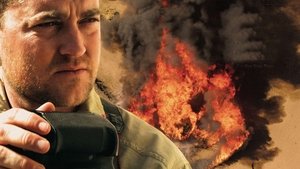
The Devil Came on Horseback
While serving with the African Union, former Marine Capt. Brian Steidle documents the brutal ethnic cleansing occuring in Darfur. Determined that the Western public should know about the atrocities he is witnessing, Steidle contacts New York Times reporter Nicholas Kristof, who publishes some of Steidle's photographic evidence.
2007
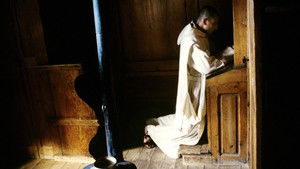
Into Great Silence
An intimate portrayal of the everyday lives of Carthusian monks of the Grande Chartreuse, high in the French Alps (Chartreuse Mountains). The idea for the film was proposed to the monks in 1984, but the Carthusians said they wanted time to think about it. The Carthusians finally contacted Gröning 16 years later to say they were now willing to permit Gröning to shoot the movie, if he was still interested.
2005
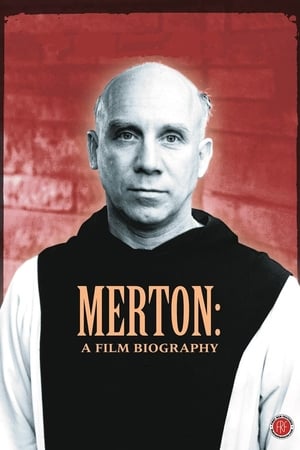
Merton: A Film Biography
In his lifetime, Thomas Merton was hailed as a prophet and censured for his outspoken social criticism. For nearly 27 years he was a monk of the austere Trappist order, where he became an eloquent spiritual writer and mystic as well as an anti-war advocate and witness to peace. Merton: A Film Biography provides the first comprehensive look at this remarkable 20th century religious philosopher who wrote, in addition to his immensely popular autobiography The Seven Storey Mountain, over 60 books on some of the most pressing social issues of our time, some of which are excerpted here. Merton offers an engaging profile of a man whose presence in the world touched millions of people and whose words and thoughts continue to have a profound impact and relevance today.
1984
The Zar
A short documentary on the practice of Zar in Sudan.
1983
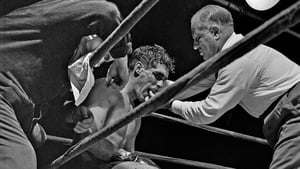
Day of the Fight
Stanley Kubrick’s debut documentary, following Irish-American middleweight boxer Walter Cartier on April 17, 1950—the day of his bout with Bobby James. The film traces Cartier’s quiet morning rituals, training, and anxious hours before the match, culminating in his swift victory that night in Newark. Opening with a brief history of boxing, Kubrick’s tightly crafted short captures the discipline, isolation, and tension behind a fighter’s daily routine.
1951

MISSION
"MISSION" tells the story of a Catholic Campus Ministry at a rural Texas college. The students begin their transformative journey in Catholic adulthood, creating a foundation for their lifelong purpose; to become one with the Body of Christ.