Watch Secrets of a long life (2013) Online Free
Spared by cancer, diabetes and possibly Alzheimer’s, men and women of small stature are intriguing scientists that are trying to postpone age-related illnesses. What mechanisms protect these small Ecuadorian from certain illnesses? From Quito to Los Angeles, via Tel-Aviv, the film follows the revolutionary research, step-by-step, that is attempting to understand and prevent diseases such as cancer. And outlines ways to live in good health… for as long as possible.
Cast
Sylvie Gilman
More Like This

Zara Larsson - Up Close
The documentary gives us a unique insight into the life of a pop star who broke through at ten years old. We follow her around the world and see a side she's never shown before. This is the story of an artist reaching for the very top, but with the knowledge that no matter how much she achieves, it'll never be enough to satisfy her.
2025
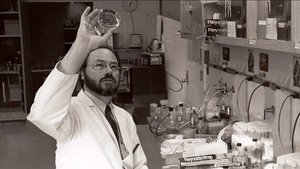
Cracking the Code: Phil Sharp and the Biotech Revolution
The 1977 discovery of RNA splicing by Dr. Phillip A. Sharp, Kentucky farm boy turned Nobel-prize winning scientist, set the stage for a revolution in molecular biology, enabling research into a new class of medicines predicated on recombinant DNA techniques ranging from the development of synthetic insulin and human growth hormone to the COVID-19 vaccine.
2025

Don't Die: The Man Who Wants to Live Forever
In this documentary, wealthy entrepreneur Bryan Johnson puts his body and fortune on the line to defy aging and extend his life beyond all known limits.
2025
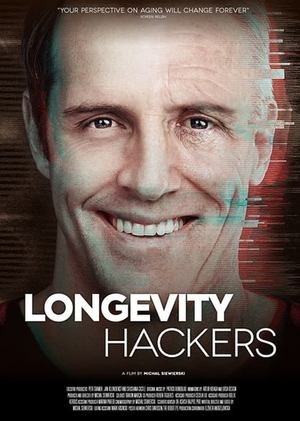
Longevity Hackers
Explores the latest longevity research and whether dramatically extended human lifespan is achievable. Features top scientists, startup leaders, celebrities, and critics offering balanced perspectives on this fascinating field.
2024
Pass It Around
Documentary about living with an addict and grappling with the genetic propensity of becoming one.
2022
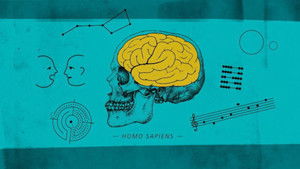
Human By Chance?
If we compare ourselves with our genetically closest living relatives, the chimpanzees, we have few physical advantages. We are far weaker, cannot move nearly as fast, and do not have the same climbing capabilities. Instead, humans excel in areas such as architecture, religion, science, language, writing, art, culture, and ideas. These achievements are due to our larger brain that contain billions of neurons. It was the rapid growth of our brain, originating about 2 million years ago, that allowed us to be the predominant species of the world. What caused this rapid growth of our cerebral cortex? Researchers worldwide have asked this question for many years, but now there finally seems to be an answer.
2020
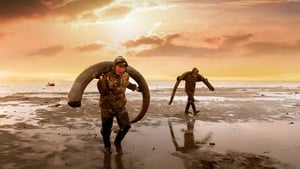
Genesis 2.0
A well-preserved mammoth carcass is found in the remote New Siberian Islands in the Arctic Ocean, opening up the possibility of a world-changing “Jurassic Park” moment in genetics.
2018

The Scientist, The Imposter and Stalin: How to Feed the People
The documentary tells two very different human fates in the 1920s Soviet Union. Nikolai Vavilov was a botanical genius, Trofim Lyssenko was an agronomist who made great promises and fake inventions. Each of them tried to solve the country's nutritional problem, but only one succeeded.
2018
And Man Created the Cow
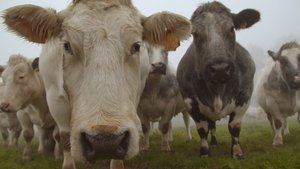
10,000 years ago, the European forests were inhabited by huge cattle with protruding horns: the aurochs. Then man began to domesticate them and created the cow. By crossing species, he adapted the animals over time so that they increasingly met his needs and desires. Industrial livestock farming was born. From then on, beef cattle and dairy cows such as the Holstein cow were bred. Milk production tripled within a few decades. Today, the cow of the future is produced by artificial insemination. By selecting a few breeding bulls that are considered to be top bulls, rapid genetic progress is ensured.
2016
Immortalité, Dernière Frontière
Immortality and eternal life: Will this great human dream come true? In any case, cryonics is making ever greater progress, human cloning no longer seems impossible and research is being carried out into the digital reproduction of the brain. Taking stock in the USA, Canada, Europe and Russia. The documentary delves into a world in which all-too-human people refuse to simply be wiped out by death. It shows how difficult it is to resist the promises of eternal life and also highlights the economic interests behind such endeavors. Google's push is just one sign of a possible two-tier society of the future: on the one hand, the rich who have access to such "offers", on the other, the rest of society.
2016
Le virus qui soigne
2015
The Dark Gene
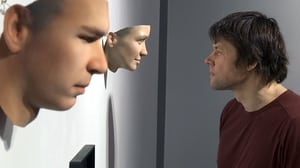
The film tells a very personal story from two perspectives: our protagonist is both doctor and patient. As a patient, he has struggled with recurring depression for years, and as a doctor he wants to find out why. The search for the origins of his illness leads him into the realm of his own genes and casts light on the fundamental changes facing modern society as a result of the tremendous progress being made in the field of genetic sequencing. Along the way, he meets a host of people – researchers, artists, visionaries – who have developed their own very individual approach to genetic coding and are drawing attention to the social significance of genetic technology. The film does not restrict itself to a scientific view of the subject but also makes use of artistic visions and more playful approaches to genetic blueprints.
2015
Genetic Me
Is our life predetermined from birth? Does our genes determine our personality and behavior? Is there a criminal gene? This documentary follows the well-known Danish journalist, author, and neurobiologist Lone Frank, who explores her own self with the help of her genetic map and her family history.
2014
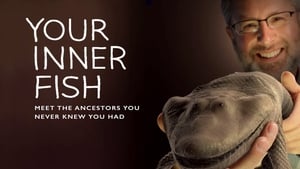
Your Inner Fish
How did your body become the complicated, quirky, amazing machine it is today? Anatomist Neil Shubin uncovers the answers in this 3-part science series that looks at human evolution. Using fossils, embryos and genes, he reveals how our bodies are the legacy of ancient fish, reptiles and primates — the ancestors you never knew were in your family tree.
2014

Mind of a Rampage Killer
Can science help us understand these crimes?
2013
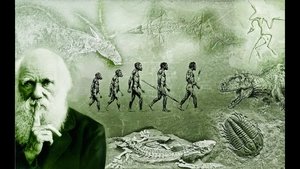
What Darwin Never Knew
Earth teems with a staggering variety of animals, including 9,000 kinds of birds, 28,000 types of fish, and more than 350,000 species of beetles. What explains this explosion of living creatures—1.4 million different species discovered so far, with perhaps another 50 million to go? The source of life's endless forms was a profound mystery until Charles Darwin brought forth his revolutionary idea of natural selection. But Darwin's radical insights raised as many questions as they answered. What actually drives evolution and turns one species into another? To what degree do different animals rely on the same genetic toolkit? And how did we evolve?
2009
The Journey of Man: A Genetic Odyssey
Many geneticists and archaeologists have long surmised that human life began in Africa. Dr. Spencer Wells, one of a group of scientists studying the origin of human life, offers evidence and theories to support such a thesis in this PBS special. He claims that Africa was populated by only a few thousand people that some deserted their homeland in a conquest that has resulted in global domination.
2003
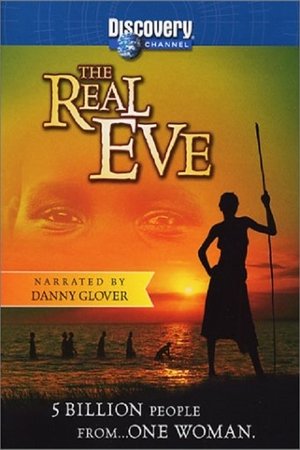
The Real Eve
The made-for-cable documentary film The Real Eve is predicated on the theory that the human race can be traced to a common ancestor. The mitochondrial DNA of one prehistoric woman, who lived in Africa, has according to this theory been passed down from generation to generation over a span of 150,000 years, supplying the "chemical energy" to all humankind.
2002
Gregor Mendel
1965
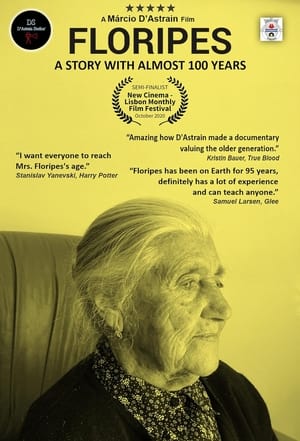
Floripes
A story with almost 100 years told by the 95 years old woman Floripes.