Watch Room 999 (2023) Online Free
In 1982, Wim Wenders asked 16 of his fellow directors to speak on the future of cinema, resulting in the film Room 666. Now, 40 years later, in Cannes, director Lubna Playoust asks Wim Wenders himself and a new generation of filmmakers (James Gray, Rebecca Zlotowski, Claire Denis, Olivier Assayas, Nadav Lapid, Asghar Farhadi, Alice Rohrwacher and more) the same question: “is cinema a language about to get lost, an art about to die?”
Cast
Wim Wenders, Audrey Diwan, Pietro Marcello, Joachim Trier, David Cronenberg, Claire Denis, James Gray, Rebecca Zlotowski, Olivier Assayas, Nadav Lapid, Asghar Farhadi, Alice Rohrwacher
More Like This
Ahab Was Here: Reflections on Moby Dick
A Bulgarian theater company struggles to adapt Herman Melville's epic "Moby Dick" for the stage, revealing the obsessive dedication and creative challenges faced by cast and crew in their quest to bring an unfilmable masterpiece to life.
2025
Catherine Deneuve, in the eye of the camera
She worked with the world’s greatest actors and directors: Buñuel, Mastroianni, Lellouche, Depardieu... The film guides us throughout her career with the filmmakers with whom she invented herself not to be a “cold blonde actress”, thanks to great interviews of many artists who crossed her path.
2023
The Revenge of Bernadette Chirac
2023

Kathryn Bigelow: Hollywood Adrenaline
For more than 40 years Kathryn Bigelow has been making films that explore male violence. With movies like Blue Steel, Point Break, The Hurt Locker and Zero Dark Thirty, the Oscar winning American filmmaker has impressed with hard-hitting moviemaking that holds a mirror up to contemporary America and the world.
2023

Satoshi Kon: The Illusionist
A subtle portrait of Japanese director Satoshi Kon by the specialist of Japanese cinema Pascal-Alex Vincent and a dive into a rich work. With interviews of the greatest Japanese, French and American directors inspired by his work.
2021
Deep Purple: From Here To Infinite
Feature length documentary about the story behind the pioneering and influential British heavy metal band as they enter the studio to record their new album.
2017
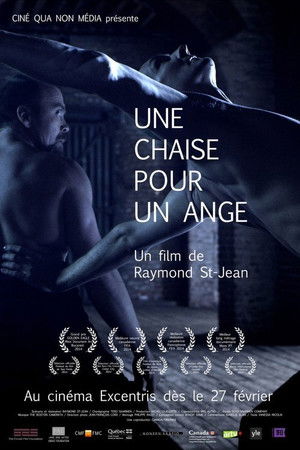
A Chair Fit for an Angel
For two hundred years, the Shakers have been America's most successful utopian society. While seeking harmony, order and perfection in every aspect of their lives, they built minimalistic furniture and buildings that influenced modern design. The Shakers wrote songs of exquisite beauty and danced to the point of ecstasy during their religious meetings. Inspired by this music and dance, choreographer Tero Saarinen created Borrowed Light, a dance piece about communal life and individual sacrifice. Shot in Finland and the United States, featuring interviews and excerpts from Borrowed Light, this documentary explore the cultural legacy of this religious group devoted to creating heaven on earth.
2014
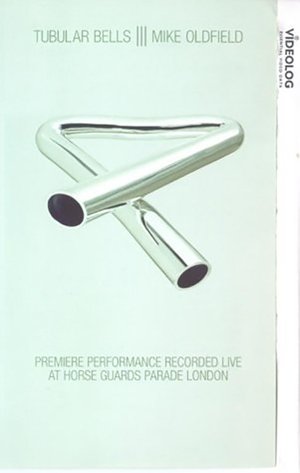
Tubular Bells: The Mike Oldfield Story
Documentary about the musician Mike Oldfield, whose 1973 album Tubular Bells launched the Virgin record label and became the biggest selling instrumental album of all time.
2013

A Brief History of Slasher Films
Writer Adam Rockoff provides a basic overview of the slasher movie genre.
2011
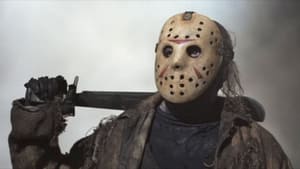
His Name Was Jason: 30 Years of Friday the 13th
A retrospective documentary about the groundbreaking horror series, Friday the 13th, featuring interviews with cast and crew from the twelve films spanning 3 decades.
2010
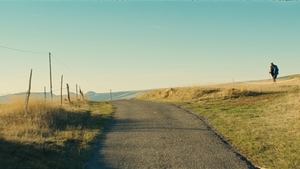
Modern Life
For ten years, Raymond Depardon has followed the lives of farmer living in the mountain ranges. He allows us to enter their farms with astounding naturalness. This moving film speaks, with great serenity, of our roots and of the future of the people who work on the land. This the last part of Depardon's triptych "Profils paysans" about what it is like to be a farmer today in an isolated highland area in France. "La vie moderne" examines what has become of the persons he has followed for ten years, while featuring younger people who try to farm or raise cattle or poultry, come hell or high water.
2008
Drama, Tanz und Beine
2007
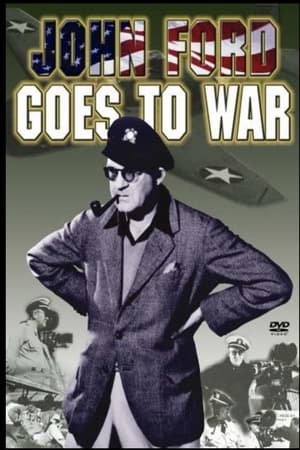
John Ford Goes to War
When World War II broke out, John Ford, in his forties, commissioned in the Naval Reserve, was put in charge of the Field Photographic Unit by Bill Donavan, director of the soon-to-be-OSS. During the war, Field Photo made at least 87 documentaries, many with Ford's signature attention to heroism and loss, and many from the point of view of the fighting soldier and sailor. Talking heads discuss Ford's life and personality, the ways that the war gave him fulfillment, and the ways that his war films embodied the same values and conflicts that his Hollywood films did. Among the films profiled are "Battle of Midway," "Torpedo Squadron," "Sexual Hygiene," and "December 7."
2002
Le Club : Claude Jade
2001
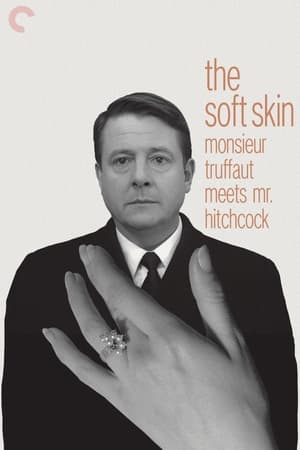
Monsieur Truffaut Meets Mr. Hitchcock
When Francois Truffaut approached Alfred Hitchcock in 1962 with the idea of having a long conversation with him about his work and publishing this in book form, he didn't imagine that more than four years would pass before Le Cinéma selon Hitchcock finally appeared in 1966. Not only in France but all over the world, Truffaut's Hitchcock interview developed over the years into a standard bible of film literature. In 1983, three years after Hitchcock's death, Truffaut decided to expand his by now legendary book to include a concluding chapter and have it published as the "Edition définitive". This film describes the genesis of the "Hitchbook" and throws light on the strange friendship between two completely different men. The centrepieces are the extracts from the original sound recordings of the interview with the voices of Alfred Hitchcock, Francois Truffaut, and Helen Scott – recordings which have never been heard in public before.
1999
Anatomy of a 'Homicide: Life on the Street'
A brief look at the history of "Homicide: Life on the Street", one of the best shows on television and its ratings history as well as some of the people on the show, as well as behind the camera. The primary focus of this PBS documentary is the "Subway" episode which aired on December 5, 1997 on NBC. This two-hour documentary follows the "Subway" episode from conception to award nominations.
1998
Walt Disney's 'The Jungle Book': The Making of a Musical Masterpiece
Documentary about the making of Disney's animated musical adaptation of Kipling's classic.
1997
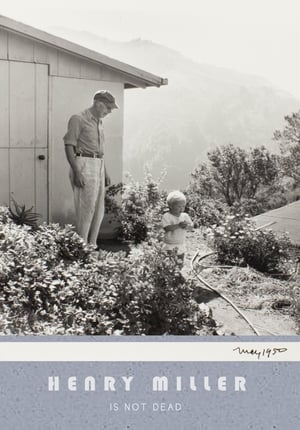
Henry Miller Is Not Dead
In this artistic exploration of the life and work of writer Henry Miller, filmmaker Joe Kishton skillfully weaves clips of films and interviews of Miller with the music of Laurie Anderson. From Miller himself we hear of his difficult relationship with his parents, and of his need to create, even (or especially) when his message abrades social mores.
1996
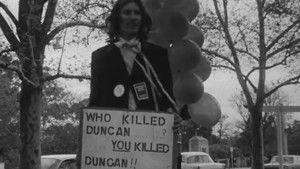
Pride & Snide
A contrast between two kinds of attitudes to gay liberation in Adelaide.
1976
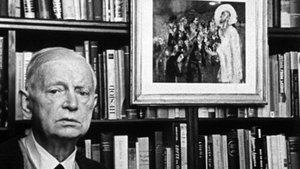
A Life's Work – Carl Th. Dreyer's Jesus Film
Documentary exploring the thirty-seven years of preparatory work that director Carl Th. Dreyer did for "Jesus of Nazareth" – a film that was never produced.
1970