Watch John Ford Goes to War (2002) Online Free
When World War II broke out, John Ford, in his forties, commissioned in the Naval Reserve, was put in charge of the Field Photographic Unit by Bill Donavan, director of the soon-to-be-OSS. During the war, Field Photo made at least 87 documentaries, many with Ford's signature attention to heroism and loss, and many from the point of view of the fighting soldier and sailor. Talking heads discuss Ford's life and personality, the ways that the war gave him fulfillment, and the ways that his war films embodied the same values and conflicts that his Hollywood films did. Among the films profiled are "Battle of Midway," "Torpedo Squadron," "Sexual Hygiene," and "December 7."
Cast
Kris Kristofferson, Peter Bogdanovich, Oliver Stone, Andrew Sarris, Leonard Maltin, F. X. Feeney
More Like This
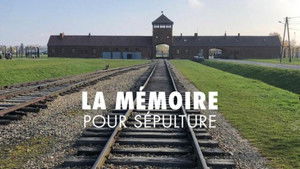
Memory For Burial
Surviving against all odds. In 1940, Benjamin Orenstein, just a teenager, was sent to his first concentration camp in Poland. It was the beginning of a journey that would mark him for life. After years of silence, he now bears witness to one of the darkest chapters in history.
2025
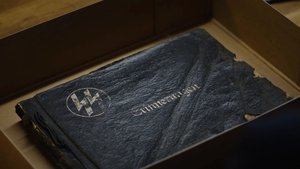
The Lost Album of the SS
In 2016, an album containing 250 previously unseen photos of Nazi officials was discovered in the USA by Stephan Hördler, a prominent Holocaust historian, who immediately understood the album's inestimable value. The album brings together photographs of a "group of friends," all from the same region of Germany, all of whom became SS men. From 1928 to 1943, the photo album allows us to follow their journey. Hördler conducted the investigation, comparing the photos in the album with other, better-known ones, the faces of these men with those of concentration camp officials, and ultimately revealed that it was at Lichtencburg that these young men were trained, a "school" for future camp executioners, and the bonds of camaraderie and informal network that would allow them to help each other, even after the war.
2025

Lumière, Le Cinéma!
In one of those wonderful coincidences of history, lumière, the French word for “light,” was also the last name of brothers Auguste and Louis, whose brilliant invention, the cinematograph, helped to inaugurate the most beloved art form of the last 130 years. Institute Lumière director Thierry Frémaux uses Lumière, Le Cinema! to guide the viewer through over a hundred shorts—some famous, some forgotten, some never before seen—directed by Lumière and company. In the process, Frémaux illuminates how the brothers employed the camera as a creative instrument as they (and their operators) mastered framing, staging, and subject selection for quotidian and exotic microdocumentaries as well as the first ever fictional motion pictures. The result is not only a glorious re(telling) of the genesis of cinema but a profound meditation on the beautiful world captured—and the mysterious world imagined—by the Lumières.
2024

Insurgées ! Les résistantes du ghetto de Varsovie
2023
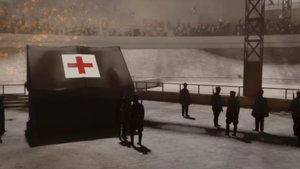
La Rafle du Vel d'Hiv, la honte et les larmes
In 1942, more than 8,000 Jews were arrested on 16 and 17 July and sent to the Vélodrome d'Hiver sports center in the 15th district, a stone's throw from the Eiffel Tower, before being deported. The expression "Vel d'Hiv round-up" has become part of our collective memory, to the point of becoming the main memorial reference point for France during the dark years. Based on research carried out in unpublished or rarely explored archives, this film retraces the history of this roundup as experienced by hunted Jews and police trackers, from its planning in the Vichy offices to its hour-by-hour unfolding in the streets of Paris.
2022

Les Suppliques
Since the defeat, the Nazis, who were the masters of the occupied zone, and the French State, which had been ruling the so-called free zone since Vichy, ordered the Jews to take a census. From the spring of 1941, whether they had been French for several generations or naturalized for a few years, foreigners who had taken refuge in France or stateless people who had been driven out of their country, they were put on file, arrested or threatened at any time. Some wrote to the administration, or directly to Marshal Pétain, who seemed to them to be the last resort. These requests are called Suppliques. Men, women, sometimes children, tried as best they could, by all means, to loosen the trap. They address themselves to their executioners, but they do not know it.
2022

Fellinopolis
Ferruccio Castronuovo was the only authorized eye, between 1976 and 1986, to film the brilliant Italian filmmaker Federico Fellini (1920-1993) in his personal and creative intimacy, to capture the gears of his great circus, his fantastic lies and his crazy inventions.
2021
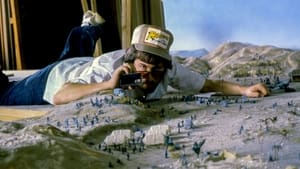
Indiana Jones: The Search for the Lost Golden Age
Hawaii, May 1977. After the success of Star Wars, George Lucas and Steven Spielberg meet to find a new project to work on together, the former as producer, the latter as director. The story of how the charismatic archaeologist Indiana Jones was born and how his first adventure, released in 1981, triumphed at box offices around the world.
2021

Okinawa/Santos
During World War II, many Japanese immigrants in Santos, Brazil, were forced to move to another place. Matsubayashi draws attention to the fact that 60% of the immigrants were from Okinawa. Based on testimonies from interviewees, this film reveals the hidden historical relationship between Okinawa and Brazil.
2020

Une vie avec Oradour
2011
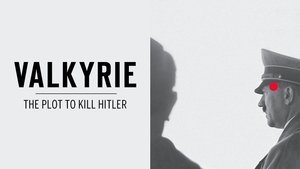
The Valkyrie Legacy
Created as a companion documentary to the film "Valkyrie," this documentary details the true story behind the plot to assassinate Adolph Hitler.
2008
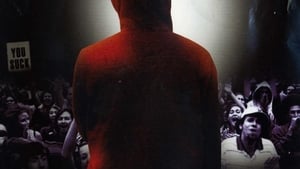
Heckler
HECKLER is a comedic feature documentary exploring the increasingly critical world we live in. After starring in a film that was critically bashed, Jamie Kennedy takes on hecklers and critics and ask some interesting questions of people such as George Lucas, Bill Maher, Mike Ditka, Rob Zombie, Howie Mandel and many more. This fast moving, hilarious documentary pulls no punches as you see an uncensored look at just how nasty and mean the fight is between those in the spotlight and those in the dark.
2007

City of Baseball
"City of Baseball" is a documentary that explores both the past and the present of the Italian baseball league in the seaside resort of Nettuno near Rome. Through league pioneers, current players, fans, and local historians, "City of Baseball" captures the story of how the 1944 Allied invasion of Nettuno brought the American pastime to a town which embraced the sport with a passion that continues today.
2007
The Free French: Unsung Victors
This short film gives background on the Free French movement during World War II.
2006

Fritz Lang, le cercle du destin - Les films allemands
2004
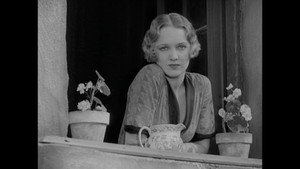
Chaplin Today: City Lights
In 1928, as the talkies threw the film industry and film language into turmoil, Chaplin decided that his Tramp character would not be heard. City Lights would not be a talking picture, but it would have a soundtrack. Chaplin personally composed a musical score and sound effects for the picture. With Peter Lord, the famous co-creator of Chicken Run and Wallace & Gromit, we see how Chaplin became the king of slapstick comedy and the superstar of the movies.
2003
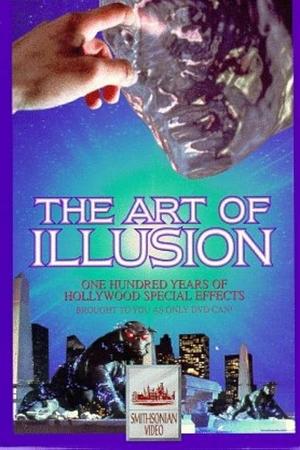
The Art of Illusion: 100 Years of Hollywood Special Effects
A history of movie magic from 1895 to 1995, showing primitive effects used in such films as "A Trip to the Moon" up to the state of the art effects used in "Apollo 13" and "The Abyss."
1997

The Liberation of Auschwitz
This chilling, vitally important documentary was produced to mark the 40th anniversary of the liberation of Auschwitz Concentration Camp. The film contains unedited, previously unavailable film footage of Auschwitz shot by the Soviet military forces between January 27 and February 28, 1945 and includes an interview with Alexander Voronsov, the cameraman who shot the footage. The horrifying images include: survivors; camp visit by Soviet investigation commission; criminal experiments; forced laborers; evacuation of ill and weak prisoners with the aid of Russian and Polish volunteers; aerial photos of the IG Farben Works in Monowitz; and pictures of local people cleaning up the camp under Soviet supervision. - Written by National Center for Jewish Film
1986
Rapids Ahead/Bear Country
The first half is a salute to John Wesley Powell, the first man to explore the Colorado River. Walt Disney presents a behind-the-scenes look at the filming of Ten Who Dared on the same waters. Then the True-Life Adventure Featurette: Bear Country is shown.
1960
Masters of Mayhem
For decades Italian genre cinema dominated the world and before changing beyond recognition it went to unthinkable places. Giants don't die quietly however and this is the story of an industry's most absurd, extreme, blood-soaked fight for survival. Through dozens of brand new interviews, and never-before-seen archival materials, with the men and women who were there during one of the most unique moments in film history, MASTERS OF MAYHEM tells their stories of scandal, contradictions, drama and outrage.