Watch Passions For The Mammoth (2019) Online Free
Ivory harvesting under the extreme conditions of the Russian Far North is slowly but surely turning into a sort of a «mammoth rush». However, as the demand grows, so does social tension in the area.
More Like This

Ein Mammut-Projekt – Wiedergeburt ausgestorbener Arten
Since the disappearance of the last male northern white rhino in 2018, only a mother and daughter remain as representatives of the species in a Kenyan reserve. Mammoths, which became extinct 4,000 years ago, are attracting the interest of the private American laboratory Colossal Biosciences. Its researchers are working to produce ex vivo (with artificial wombs) embryos from cells harvested from mammoths, liberated from the thawed soils of Siberia, and from Asian elephant oocytes, 99.6% of whose genome matches that of the ancient mastodon. They hope to have their first baby mammoth by 2028.
2024

Paradise
In 2021, an extreme heatwave gave rise to huge wildfires in the vast subarctic forests of Sakha, a northeastern republic in Siberia. The village of Shologon lies in this taiga landscape, shrouded in orange smoke and black ash. The forest is burning and the flames are approaching fast.
2023

Attenborough and the Mammoth Graveyard
Sir David Attenborough joins an archaeological dig uncovering Britain's biggest mammoth discovery in almost 20 years. In 2017, in a gravel quarry near Swindon, two amateur fossil hunters found an extraordinary cache of Ice Age mammoth remains and a stone hand-axe made by a Neanderthal.
2021
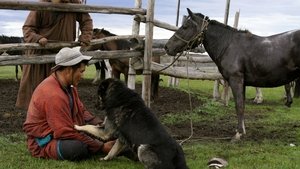
The Bounty Hunter of Mongolia
In the Darhat valley in northern Mongolia, the horses of nomadic tribes are stolen by bandits who then sell them to Russian slaughterhouses. Shukhert, a brave horseman, relentlessly pursues them through the Mongolian taiga, bordering Siberia.
2021
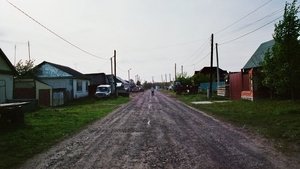
Panoramas
In 1829 the naturalist Alexander von Humboldt attempted a russian-siberian expedition. Humboldt travelled to obtain a clear view of nature, people and life in this immense country. 2019 naturalists and humanists attempted a transdisciplinary expedition on the trails of Humboldt. To capture the events various cameras were taken along. A non-chronological narration.
2019
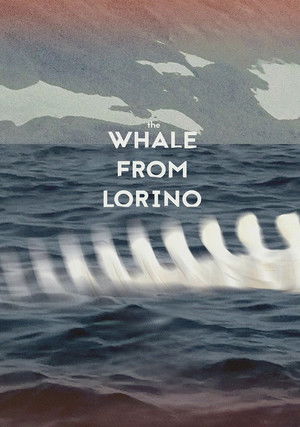
The Whale from Lorino
Chukotka is a place located on the edge of Siberia, where the cold winter lasts for ten months. It's a severe land, where only the strongest are able to survive. One of the oldest Siberian tribes lives there for centuries. Its traditions, culture and life in harmony with nature were brutally destroyed by the Soviet regime. Since the collapse of the USSR, they have been trying to survive, missing the wisdom of their ancestors and hope for the future. One of the last sources of life and tradition of Chukchi is whale hunting, but the fate of this old tradition is also threatened. For the Chukchi people, the whales give hope to survive the next winter. When the land of Lorino warms up from the sun, the hunting begins. It is a battle between two worlds, and each of them is on the edge of disappearing forever.
2019
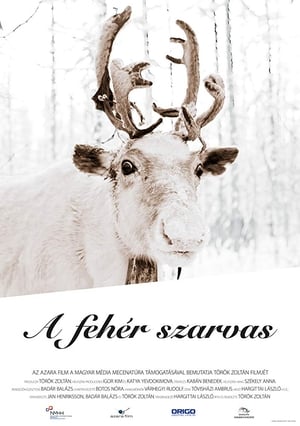
The White Reindeer
Imagine one of the most remote wildernesses in the world. Granddaughter Masha and Vladimir, the protagonists of this story from Central Siberia try the impossible to keep their nomadic traditions alive.
2019

Genesis 2.0
A well-preserved mammoth carcass is found in the remote New Siberian Islands in the Arctic Ocean, opening up the possibility of a world-changing “Jurassic Park” moment in genetics.
2018

Siberian Love
After 20 years of living in Berlin, the director Olga Delane goes back to her roots in a small Siberian village, where she is confronted with traditional views of relationships, life and love. The man is the master in the home; the woman’s task is to beget children and take care of the household (and everything else, too). Siberian Love provides unrivaled insights into the (love) life of a Siberian village and seeks the truth around the universal value of traditional relationships.
2017
Braguino
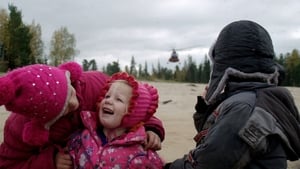
In the middle of the Siberian taiga, 450 miles from the nearest village, live two families : the Braguines and the Kilines. Not a single road leads there. A long trip on the Ienissei River, first by boat, then by helicopter, is the only way to reach Braguino. Self-sufficient, both families live there according to their own rules and principles. In the middle of the village: a barrier. The two families refuse to speak. In the river sits an island, where another community is being built : that of the children. Free, unpredictable, wild. Stemming from the fear of the other, that of wild beasts, and the joy procured by the immensity of the forest, unravels a cruel tale in which tensions and fear give shape to the geography of an ancestral conflict.
2017
Rasputin: Murder in the Tsar's Court
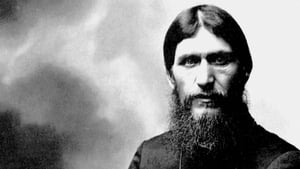
St. Petersburg, Russia, December 30th, 1916. Grigori Rasputin is assassinated. The story of the humble peasant who became the most influential adviser to czarina Alexandra Feodorovna, wife of the last czar, Nicholas II Romanov.
2016
I Don't Believe in Anarchy
The film details the early years of the legendary Siberian Punk/Rock group 'Гражданская Оборона' (Grazhdanskaya Oborona), and its frontman, Egor Letov.
2014
Titans of the Ice Age
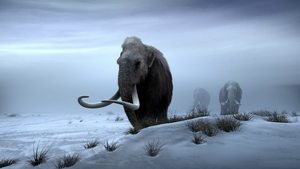
Titans of the Ice Age transports viewers to the beautiful and otherworldly frozen landscapes of North America, Europe and Asia ten thousand years before modern civilization. Dazzling computer-generated imagery brings this mysterious era to life - from saber-toothed cats and giant sloths to the iconic mammoths, giants both feared and hunted by prehistoric humans.
2013

Russia - In the Realm of Tigers, Bears and Volcanoes
A window into Russia, unknown to Western man, and even to many Russians. "Russia - the largest country in the world. In many of its parts, it remains unknown world full of wonders. Let the world and will continue for the generations that come after us".
2011

The Forgotten Soldier
Captured by the Red Army during World War II, Hungarian soldier András Toma was admitted to a Soviet psychiatric hospital. After disappearing from prisoner-of-war records, he was presumed dead in Hungary. Because his name was incorrectly recorded in medical documents and he spoke only Hungarian—mistaken by staff for incoherent speech—Toma spent decades misunderstood and isolated in the institution. Fifty-three years later, a visiting Slovak doctor recognised his language, triggering an investigation by Hungarian authorities. Toma was repatriated in 2000, believed to be the last prisoner of war from World War II to return home.
2010

Big Bang in Tunguska
At 7:14 am on 30 June 1908, the largest explosion recorded in human history to date reverberated throughout our planet. The force of the explosion was two thousand times that of the Hiroshima bomb. A woodland area the size of Luxembourg was eradicated in the Siberian taiga. This incident is recorded in history books as the Tunguska catastrophe. To this day, internationally renowned scientists of various disciplines argue about the causes of this disastrous explosion. The documentary discusses the latest and most controversial insights of these leading scientists. It identifies the reasons why Tunguska has evolved into a phenomenon and points out the curious results produced by this mythical event in culture and economy.
2008
Mastodon in your Backyard
A documentary about the 1999 discovery of a Mastodon skeleton in a Hyde Park backyard.
2001
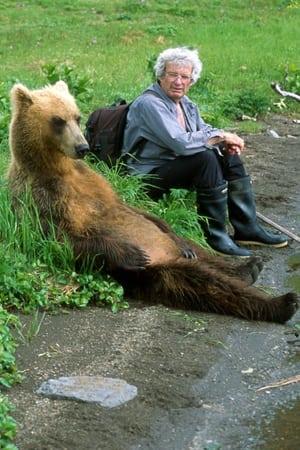
The Grizzlies of Siberia
Naturalists Charlie Russell and Maureen Enns film recently discovered grizzlies on Siberia's Kamchatka peninsula.
1999

Target... Earth?
Really strange documentary of Wheeler Dixon production quality on the Tunguska Event and the possibility of it happening again causing an apocalypse (basically a meteor scare film) sprinkled with UFO conspiracy kooks, and other 'professionals', riddled with stock footage of all kinds, freaky moog music and sound fx, a Dr. Who rip-off end theme, Victor Buono as Homer the Archivist, a philosophical history recorder in a space ship with a HAL 9000 type talking computer named Ino, there's also another space ship with Egyptian looking aliens girls with pasties and see-thru blouses.
1980
A Glorious Way to Die
This was made for National Geographic and shows how Russians made their own rafts out of scrounged parts and then ran unbelievable whitewater. Starring the famous Bublik!