Watch The Whale from Lorino (2019) Online Free
Chukotka is a place located on the edge of Siberia, where the cold winter lasts for ten months. It's a severe land, where only the strongest are able to survive. One of the oldest Siberian tribes lives there for centuries. Its traditions, culture and life in harmony with nature were brutally destroyed by the Soviet regime. Since the collapse of the USSR, they have been trying to survive, missing the wisdom of their ancestors and hope for the future. One of the last sources of life and tradition of Chukchi is whale hunting, but the fate of this old tradition is also threatened. For the Chukchi people, the whales give hope to survive the next winter. When the land of Lorino warms up from the sun, the hunting begins. It is a battle between two worlds, and each of them is on the edge of disappearing forever.
More Like This
Le retour des baleines à bosse
2025

The Boy of The Fish
"The Boy Of The Fish" follows Noon, a young boy living in a Syrian refugee camp, who finds solace and a sense of freedom in a whale-shaped doll he names "Bahr." Set against the challenging realities of camp life, Noon’s journey is both a story of resilience and a testament to the boundless imagination of childhood. Through vivid symbolism and a unique soundscape, the film explores themes of loss, hope, and the longing for freedom amidst confinement. Shot entirely on an iPhone due to restrictions in the conflict zone, the film combines raw authenticity with poetic depth to capture the emotional landscape of a young soul navigating adversity.
2024
Whale Wash
Delve into the world of modern whaling in Norwegian waters. Discover the shocking truth about the demand for whale meat, the associated health risks, and its unexpected use in pet food. Experience thrilling hunts firsthand as the crew confronts Norway's largest whaling operators.
2023
The Loneliest Whale: The Search for 52
THE LONELIEST WHALE is a cinematic quest to find the “52 Hertz Whale,” which scientists believe has spent its entire life in solitude calling out at a frequency that is different from any other whale. As the film embarks on this engrossing journey, audiences will explore what this whale’s lonely plight can teach us — not just about our changing relationship to the oceans, but to each other. Executive Produced with Leonardo DiCaprio and Adrian Grenier.
2021
Island Heroes: The Whale Rescuers of Campobello Island
2020

Rasputin: Murder in the Tsar's Court
St. Petersburg, Russia, December 30th, 1916. Grigori Rasputin is assassinated. The story of the humble peasant who became the most influential adviser to czarina Alexandra Feodorovna, wife of the last czar, Nicholas II Romanov.
2016
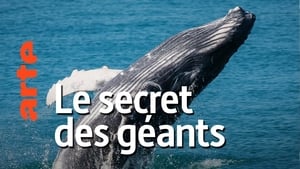
The Cradle of Whales
Thanks to sophisticated equipment, marine biologists have managed to capture unprecedented scenes of the intimate life of humpback whales off the Australian coast. A spectacular immersion in the intimate life of this mysterious species. Off the coast of the Kimberley in northwestern Australia is a major breeding ground for humpback whales. Thanks to sophisticated equipment, such as aerial cameras on board quadrotors or innovative night vision technologies, Curt and Micheline Jenner, whale researchers, capture unprecedented scenes revealing the behavior of cetaceans.
2015
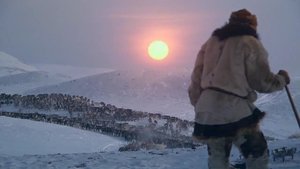
The Reindeer People
The Chukchi reindeer breeders are peculiar people. They are nomads. Reindeers are their welfare, the purport of life. The mother-reindeer is the main divine being; it protects the Chukchi from misfortune and troubles. Nature is not friendly towards people here. Only Chukchi can survive in Tundra. A rush period for the Chukchi reindeer breeders comes in winter, when the temperature rises up to 50 degrees Celsius at night and in the sunlight of the day it doesn't exceed 40 degrees Celsius in tundra: they should separate young deers from the rest of the herd, the weak from the strong. And this, considering that the herds of the Chukchi reindeer breeders number some thousand heads...
2014
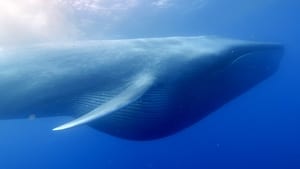
Ocean Giants
A 3-part documentary granting a unique and privileged access into the magical world of whales and dolphins, uncovering the secrets of their intimate lives as never before. Episode 1: Giant Lives / Episode 2: Deep Thinkers / Episode 3: Voices of the Sea
2011
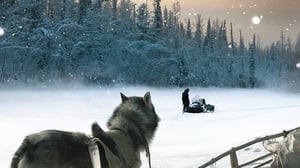
Happy People: A Year in the Taiga
In the center of the story is the life of the indigenous people of the village Bakhtia at the river Yenisei in the Siberian Taiga. The camera follows the protagonists in the village over a period of a year. The natives, whose daily routines have barely changed over the last centuries, keep living their lives according to their own cultural traditions.
2010

The Forgotten Soldier
Captured by the Red Army during World War II, Hungarian soldier András Toma was admitted to a Soviet psychiatric hospital. After disappearing from prisoner-of-war records, he was presumed dead in Hungary. Because his name was incorrectly recorded in medical documents and he spoke only Hungarian—mistaken by staff for incoherent speech—Toma spent decades misunderstood and isolated in the institution. Fifty-three years later, a visiting Slovak doctor recognised his language, triggering an investigation by Hungarian authorities. Toma was repatriated in 2000, believed to be the last prisoner of war from World War II to return home.
2010

OceanWorld 3D
A 3-D documentary chronicling a sea turtle's journey across the oceans.
2009
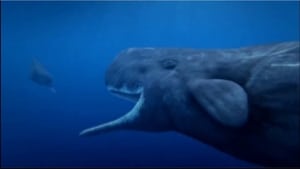
Ocean Odyssey
The largest predator on the planet, the sperm whale, is your host for an amazing exploration of the final frontier – the world at the bottom of the ocean. From the makers of the Walking With series comes this incredible marine tour, in which you'll witness a rarely seen world of hidden mountain ranges, majestic canyons, volcanoes and the beautiful and often deadly creatures that inhabit the deep sea.
2006
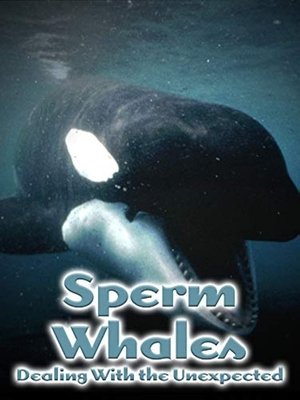
Sperm Whales: Dealing with the Unexpected
Around the Crozet Islands, here is the incredible odyssey of a family of Sperm Whales facing rapid changes in their environment. From the stormy surface to the eternal darkness of the abyss, several generations of these deep-sea divers encounter men and their "toys": harpoons of yesterday, and fishing lines of today. Once victim of whale hunting, now accused of stealing fish, a sperm whale shares its private life with us.
2005
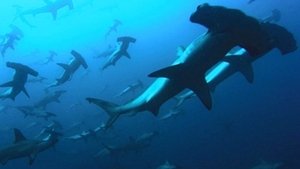
Deep Blue
Deep Blue is a major documentary feature film shot by the BBC Natural History Unit. An epic cinematic rollercoaster ride for all ages, Deep Blue uses amazing footage to tell us the story of our oceans and the life they support.
2003
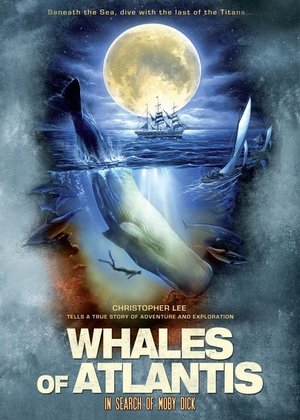
Whales of Atlantis: In Search of Moby Dick
Dive into the dark waves of the Atlantic to make contact with the Giants of the Sea.
2003
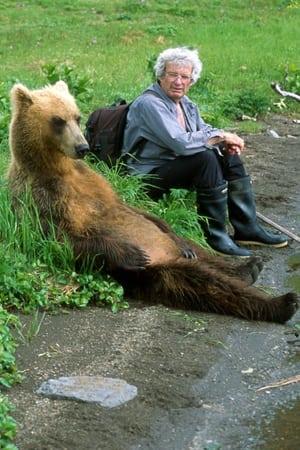
The Grizzlies of Siberia
Naturalists Charlie Russell and Maureen Enns film recently discovered grizzlies on Siberia's Kamchatka peninsula.
1999

Alaska: Spirit of the Wild
Alaska... Here, in this vast and spectacularly beautiful land teeming with abundant wildlife, discover the "Spirit of the Wild." Experience it in the explosive calving of glaciers, the celestial fires of the Aurora Borealis. Witness it in the thundering stampede of caribou, the beauty of the polar bear and the stealthful, deadly hunt of the wolf pack.
1998
Target... Earth?
Really strange documentary of Wheeler Dixon production quality on the Tunguska Event and the possibility of it happening again causing an apocalypse (basically a meteor scare film) sprinkled with UFO conspiracy kooks, and other 'professionals', riddled with stock footage of all kinds, freaky moog music and sound fx, a Dr. Who rip-off end theme, Victor Buono as Homer the Archivist, a philosophical history recorder in a space ship with a HAL 9000 type talking computer named Ino, there's also another space ship with Egyptian looking aliens girls with pasties and see-thru blouses.
1980

Three Cheers for the Whale
Co-directed by Chris Marker and Mario Ruspoli, Three Cheers for the Whale traces humanity’s complex relationship with whales—from reverence to exploitation—culminating in a stark depiction of industrial whaling. Combining archival imagery, commentary, and documentary footage, the film offers both a historical reflection and a call for ecological awareness.
1972