Watch Braguino (2017) Online Free
In the middle of the Siberian taiga, 450 miles from the nearest village, live two families : the Braguines and the Kilines. Not a single road leads there. A long trip on the Ienissei River, first by boat, then by helicopter, is the only way to reach Braguino. Self-sufficient, both families live there according to their own rules and principles. In the middle of the village: a barrier. The two families refuse to speak. In the river sits an island, where another community is being built : that of the children. Free, unpredictable, wild. Stemming from the fear of the other, that of wild beasts, and the joy procured by the immensity of the forest, unravels a cruel tale in which tensions and fear give shape to the geography of an ancestral conflict.
More Like This

Paradise
In 2021, an extreme heatwave gave rise to huge wildfires in the vast subarctic forests of Sakha, a northeastern republic in Siberia. The village of Shologon lies in this taiga landscape, shrouded in orange smoke and black ash. The forest is burning and the flames are approaching fast.
2023
The Strait Guys
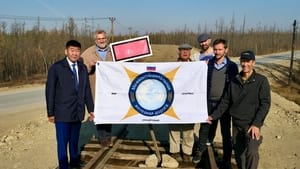
THE STRAIT GUYS follows Czech-born mining engineer, George, and his fast-talking protégé, Scott, along the proposed route of the InterContinental Railway through Alaska, to the Bering Strait and onward to Russia. The “Strait Guys” endeavor to convince international governments, corporations, and indigenous tribes to green-light their $100 billion railway project, which would provide ground-based infrastructure across the continents, relieve overcrowded Pacific ports, improve global supply chains, and ease tensions between the superpowers. The US and Russia have been successfully collaborating in space for decades. Now the Strait Guys are out to prove it is also possible down here on earth.
2022
The Bounty Hunter of Mongolia
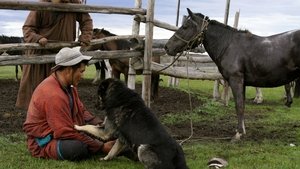
In the Darhat valley in northern Mongolia, the horses of nomadic tribes are stolen by bandits who then sell them to Russian slaughterhouses. Shukhert, a brave horseman, relentlessly pursues them through the Mongolian taiga, bordering Siberia.
2021
Panoramas
In 1829 the naturalist Alexander von Humboldt attempted a russian-siberian expedition. Humboldt travelled to obtain a clear view of nature, people and life in this immense country. 2019 naturalists and humanists attempted a transdisciplinary expedition on the trails of Humboldt. To capture the events various cameras were taken along. A non-chronological narration.
2019
The Whale from Lorino
Chukotka is a place located on the edge of Siberia, where the cold winter lasts for ten months. It's a severe land, where only the strongest are able to survive. One of the oldest Siberian tribes lives there for centuries. Its traditions, culture and life in harmony with nature were brutally destroyed by the Soviet regime. Since the collapse of the USSR, they have been trying to survive, missing the wisdom of their ancestors and hope for the future. One of the last sources of life and tradition of Chukchi is whale hunting, but the fate of this old tradition is also threatened. For the Chukchi people, the whales give hope to survive the next winter. When the land of Lorino warms up from the sun, the hunting begins. It is a battle between two worlds, and each of them is on the edge of disappearing forever.
2019
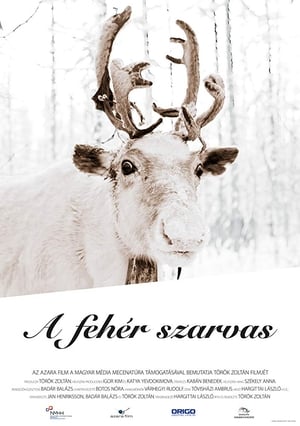
The White Reindeer
Imagine one of the most remote wildernesses in the world. Granddaughter Masha and Vladimir, the protagonists of this story from Central Siberia try the impossible to keep their nomadic traditions alive.
2019

Siberian Love
After 20 years of living in Berlin, the director Olga Delane goes back to her roots in a small Siberian village, where she is confronted with traditional views of relationships, life and love. The man is the master in the home; the woman’s task is to beget children and take care of the household (and everything else, too). Siberian Love provides unrivaled insights into the (love) life of a Siberian village and seeks the truth around the universal value of traditional relationships.
2017
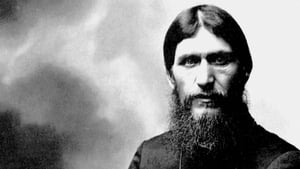
Rasputin: Murder in the Tsar's Court
St. Petersburg, Russia, December 30th, 1916. Grigori Rasputin is assassinated. The story of the humble peasant who became the most influential adviser to czarina Alexandra Feodorovna, wife of the last czar, Nicholas II Romanov.
2016
The Great Siberian Traverse
The Great Siberian Traverse documents a 6,000-mile ski journey through Russia, along the Trans-Siberian Railway. The documentary - created in collaboration with POWDER and Sherpas Cinema - showcases a fringe backcountry skiing community, deep Siberian powder, and skiing’s ancient origins. Team skiers Ingrid Backstrom, Callum Pettit, and Nick Martini share their insights along the adventure.
2015
I Don't Believe in Anarchy
The film details the early years of the legendary Siberian Punk/Rock group 'Гражданская Оборона' (Grazhdanskaya Oborona), and its frontman, Egor Letov.
2014
The Tale of the White Cranes
This story began in the seventies. Then the American ornithologist George Archibald turned to Soviet scientists led by Vladimir Flint with a proposal to cooperate in the protection of the white Siberian crane. This species was little studied and was considered endangered. Since then, we know much more about white cranes. Now on Earth there are two disparate populations of Siberian Cranes. One is East Siberian. These birds nest in the north of Yakutia and migrate to China. There are more than three thousand of them, and in the near future they are not threatened with extinction. A few thousand kilometers away, another population of Siberian Cranes lives. They nest in the lower reaches of the Ob, and fly to India or Iran for the winter. There are only twenty of them left. This film is about how people are trying to save this West Siberian branch of white cranes.
2013

Russia - In the Realm of Tigers, Bears and Volcanoes
A window into Russia, unknown to Western man, and even to many Russians. "Russia - the largest country in the world. In many of its parts, it remains unknown world full of wonders. Let the world and will continue for the generations that come after us".
2011
Happy People: A Year in the Taiga
In the center of the story is the life of the indigenous people of the village Bakhtia at the river Yenisei in the Siberian Taiga. The camera follows the protagonists in the village over a period of a year. The natives, whose daily routines have barely changed over the last centuries, keep living their lives according to their own cultural traditions.
2010

The Forgotten Soldier
Captured by the Red Army during World War II, Hungarian soldier András Toma was admitted to a Soviet psychiatric hospital. After disappearing from prisoner-of-war records, he was presumed dead in Hungary. Because his name was incorrectly recorded in medical documents and he spoke only Hungarian—mistaken by staff for incoherent speech—Toma spent decades misunderstood and isolated in the institution. Fifty-three years later, a visiting Slovak doctor recognised his language, triggering an investigation by Hungarian authorities. Toma was repatriated in 2000, believed to be the last prisoner of war from World War II to return home.
2010
Waking the Baby Mammoth
A unique story on the discovery of a 40-thousand-year-old, perfectly preserved baby woolly mammoth. Cutting edge science and Arctic adventure come alive in this story of a unique discovery: a perfectly preserved baby woolly mammoth that suddenly appears on a Siberian riverbank, triggering an extraordinary investigation into her life and death at the end of the Ice Age. Solving the mystery of her origins unites men whose lives are worlds apart except for their link to the woolly mammoth.
2009

Big Bang in Tunguska
At 7:14 am on 30 June 1908, the largest explosion recorded in human history to date reverberated throughout our planet. The force of the explosion was two thousand times that of the Hiroshima bomb. A woodland area the size of Luxembourg was eradicated in the Siberian taiga. This incident is recorded in history books as the Tunguska catastrophe. To this day, internationally renowned scientists of various disciplines argue about the causes of this disastrous explosion. The documentary discusses the latest and most controversial insights of these leading scientists. It identifies the reasons why Tunguska has evolved into a phenomenon and points out the curious results produced by this mythical event in culture and economy.
2008

East of Paradise
Filmmaker Lech Kowalski explores his belief that struggle is "the epitome of living" in this documentary which compares the wildly different life experiences of himself and his mother. Kowalski's mother came of age in Poland during the early stages of World War II, and after failed attempts to outrun both Nazi and Russian forces she and her family were sent to a Soviet concentration camp, where inmates were tortured, mistreated, and starved to the point where some ate their own lice in a desperate struggle to survive. Kowalski also depicts his own self-inflicted season in hell during his years on the New York City punk rock scene as he wallowed in the sordid underbelly of drug addiction, pornography, prostitution, and streetwise decadence. On both stories, Kowalski finds a message of hope and strength in the midst of almost certain peril.
2005
The Grizzlies of Siberia
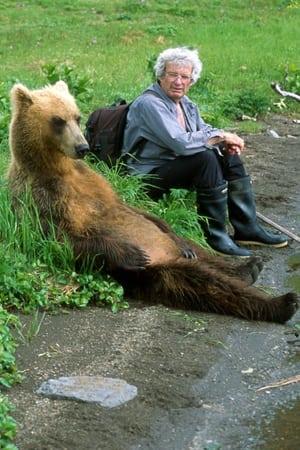
Naturalists Charlie Russell and Maureen Enns film recently discovered grizzlies on Siberia's Kamchatka peninsula.
1999
Target... Earth?
Really strange documentary of Wheeler Dixon production quality on the Tunguska Event and the possibility of it happening again causing an apocalypse (basically a meteor scare film) sprinkled with UFO conspiracy kooks, and other 'professionals', riddled with stock footage of all kinds, freaky moog music and sound fx, a Dr. Who rip-off end theme, Victor Buono as Homer the Archivist, a philosophical history recorder in a space ship with a HAL 9000 type talking computer named Ino, there's also another space ship with Egyptian looking aliens girls with pasties and see-thru blouses.
1980
The Alaska-Siberian Expedition
Captain Kleinschmidt leads an expedition sponsored by the Carnegie Museum to the arctic regions of Alaska and Siberia to study the natives and the animal life.
1912