Watch Palestine Will Win (1969) Online Free
“Palestine Vaincra (Palestine Will Win)" is regarded as the first French documentary film made in support of the Palestinian liberation movement. Shot in 1969 by Jean-Pierre OLIVIER de SARDAN in a student dorm, the film blends historical testimonies by Palestinians, photographs, stock footage, maps, and music. The documentary centers on the 1968 Battle of Karameh, while also tracing the complex story of the past five decades of Palestinian resistance against oppression and colonialism.
Cast
Jean-Pierre OLIVIER de SARDAN
More Like This
Who But When, How
An autobiographical work that traces the director’s return to Israel in the midst of its traumatic moment and horrific acts in Gaza. As his aging father suffers the onset of dementia, Sharim’s poetic meditations on loss are juxtaposed against the conflicted, agonizing histories of Palestine and Israel, and a destabilized future.
2025
The Last Doctor Standing
Following the extraordinary resilience of Dr Abu Safiya and his medical team, who endured over 16 months of relentless pressure, including repeated Israeli military attempts to evacuate and destroy the hospital.
2025

Parole de citoyens - Immersion en Israël
2024

Os Mortos Resistirão Para Sempre
Cinepoem about the current Palestinian tragedy, with Brazilian films from 1922 and 1932 (the indigenous catastrophe), documentaries from 2023/2024, essays by Jean-Luc Godard, Hani Jawharieh and Mustafa Abu Ali, statements by Edgar Morin and Noam Chomsky, and a poem by Mahmud Darwich.
2024
Vacances en Palestine
2024
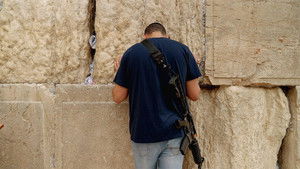
La bataille de Jérusalem
This documentary, filmed after October 7, places recent events in context and retraces the extraordinary history of this region to shed light on the present, interviewing actors and witnesses to this conflict: Islamists, Jewish nationalists, imams, rabbis, intellectuals, urban planners, soldiers, etc.
2023
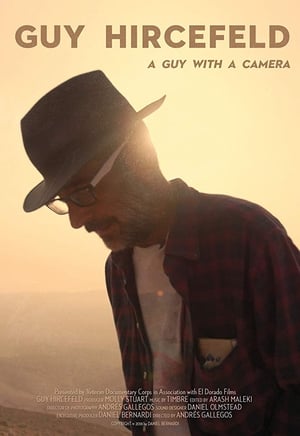
Guy Hircefeld: A Guy with a Camera
Guy Hircefeld, a veteran who served in the Israeli military at the start of its occupation of Palestine in the 1980s, now fights against the Israeli occupation. His only weapon is a camera.
2018

Gaza Dreams
With nearly two million people living in miserable conditions in Gaza, the Israeli blockade has taken its toll on mental health there. Against the backdrop of the border clashes earlier in 2018 this film goes deep inside the minds of the people of Gaza to explore the mental health issues affecting many there.
2018
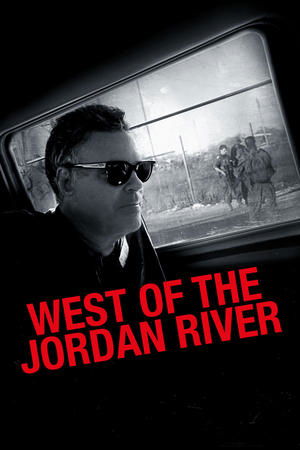
West of the Jordan River
Amos Gitai returns to the occupied territories for the first time since his 1982 documentary FIELD DIARY. WEST OF THE JORDAN RIVER describes the efforts of citizens, Israelis and Palestinians, who are trying to overcome the consequences of occupation. Gitai's film shows the human ties woven by the military, human rights activists, journalists, mourning mothers and even Jewish settlers. Faced with the failure of politics to solve the occupation issue, these men and women rise and act in the name of their civic consciousness. This human energy is a proposal for long overdue change.
2018
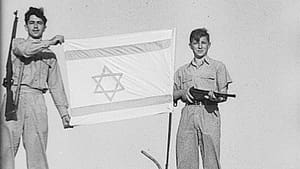
And There Was Israel
The film returns to the origins of the creation of the State of Israel (from 1896 to 1948) and highlights the responsibility of the Western World.
2018
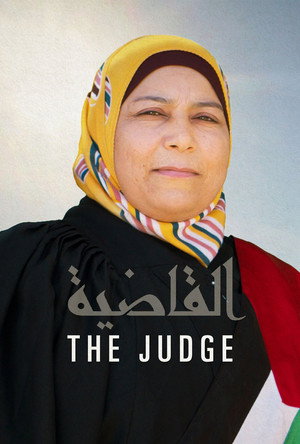
The Judge
A verité legal drama about Judge Kholoud Al-Faqih, the first woman appointed to a Shari'a court in the Middle East, whose career provides rare insights into both Islamic law and gendered justice.
2017

Take 3
A Palestinian refugee visiting his ruined village is documented in an Israeli film. Amazingly, out of pure coincidence the same person is filmed again returning to his village in a different film, thirty years later. Will it be possible to film the return scene for the third time?
2016
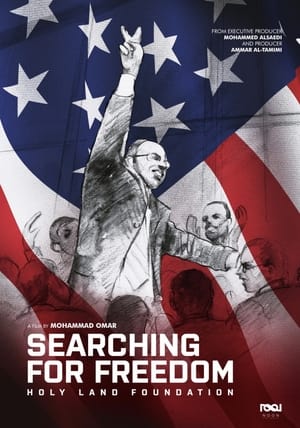
Searching for Freedom: The Holy Land Foundation
The film "Searching for Freedom: The Holy Land Foundation" is a two part documentary focussing on the story of the Holy Land Foundation, established in the late 80s by three Americans from Palestinian origin, Shukri Abu Baker, Ghassan Elashi and Mohammad El-Mezain. The foundation aimed to supply humanitarian aid to the Palestinians in Palestine and countries hosting Palestinian refugees, it later became the largest charity association in the US to distribute humanitarian aid to Palestinians. After 9/11, the former US President George W. Bush issued a decision to shut down the Holy Land Foundation and freeze its assets. In 2007 the Holy Land Foundation trials began, where five of its members were charged with funding terrorism and sending money to Hamas, a blacklisted political group in the US. A second trial for the Holy Land Foundation members took place in 2008, which issued the convictions of five members of the Foundation and their sentencing of 65 years imprisonment.
2016
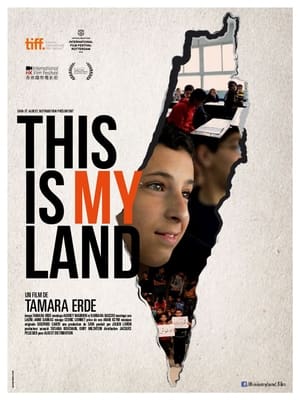
This Is My Land
Israeli-born director Tamara Erde visits six independently-run Israeli and Palestinian schools to investigate how history is taught in this contested region.
2014

Blessed Blessed Oblivion
BLESSED BLESSED OBLIVION weaves together a portrait of masculine performativity in East Jerusalem, as manifested in gyms, body shops and hair dressing parlors.
2011
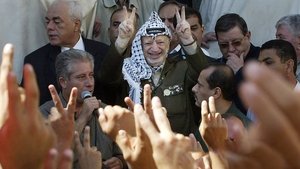
Persona Non Grata
2003 documentary film produced by Oliver Stone for the HBO series America Undercover about the conflict in occupied Palestine. He speaks with Ehud Barak and Benjamin Netanyahu, former prime ministers of Israel, Yasser Arafat, late president of the Palestinian National Authority, and various Palestinian activists resisting the oppression of the zionist regime.
2003
Lebanese, Hostages of Their City
Jocelyne Saab toured the city of Beirut devastated by Israeli bombings. She assesses the number of victims and the extent of the destruction.
1982
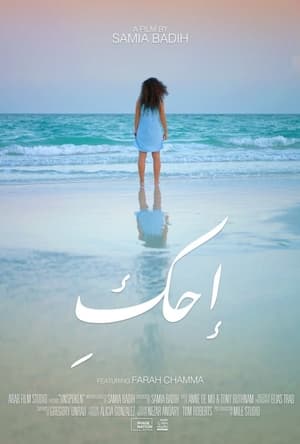
Unspoken
Unspoken or إحكِ is about Palestinian spoken word poet Farah Chamma who, at the age of 17, became an online sensation after her poems went viral. Today, Farah finds her poetry at odds with the world she lives in. The film shows her conflict as she struggles with self-censorship and keeping her poetry authentic and real.

An Oppressed People Is Always Right
In May 1974, the Israeli Air Force carried out an extermination operation against the Palestinian refugee camp Nabatiyeh. With this as a starting point, it is reviewed how the last 50 years of Zionist colonization of Palestine have partly led to the establishment of the state of Israel, partly to the expulsion of a people, the Palestinians, from their land. The film shows scenes of daily life in Palestinian refugee camps. We hear various of the inhabitants talk about their desire to return to their country, and we follow how the resistance movement works to free women from their traditional backward role. At the same time, the emergence of the armed resistance struggle is analysed, and the significance of the latest military technological developments for guerilla wars in the 3rd world is explained.
1976