Watch The Judge (2017) Online Free
A verité legal drama about Judge Kholoud Al-Faqih, the first woman appointed to a Shari'a court in the Middle East, whose career provides rare insights into both Islamic law and gendered justice.
More Like This
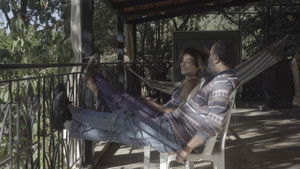
The cats, the sea, and everything in between.
In 2022, when the economic crisis in her native country was at its peak, she decided to visit her family there. She turned her short trip into a collage-like diary in which she reflects on her relationship with her homeland, which is in a state of protracted decay. The film is composed of spontaneous snapshots capturing the author's stay, interspersed with inserted captions serving as personal, often poetically formulated comments and observations. As a result, the film does not hide its strongly subjective perspective, but at the same time builds on it to make an important statement that shows the transformation of Lebanese society in everyday details such as the appearance of the city itself or in the intimate sphere of the author's family life.
2025
Care Home Undercover
Journalist Catriona MacPhee goes undercover as a cleaner at Castlehill Care Home in the Scottish Highlands, spending around seven weeks in the role. The documentary reveals deeply troubling conditions: neglect of basic care tasks, inattention to residents, inadequately followed care plans, staff shortages, unsanitary conditions, emotional distress among residents, and instances of intimidation or mistreatment. The film aims not only to expose failings at Castlehill but to raise broader questions about care home regulation, staffing, dignity, and accountability in the care sector.
2025
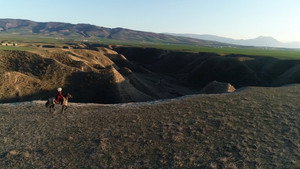
BASHLA
Bashla tells the story of Naeem, a Turkmen man who moves to Tehran but returns to his village. Struggling between tradition and modernity, he becomes an advocate for preserving his people’s heritage.
2024

Abo Jabal
It is May 8, 2024, and Israel is preparing to launch a destructive military operation in Rafah. Tahani, a Palestinian woman who has been internally displaced multiple times since the beginning of the attacks on Gaza, wonders where she and her children can find refuge once again. The film provides a glimpse into her family’s life before and after October 7, depicting the anguish of a mother who, marked by a painful loss, struggles to find peace.
2024
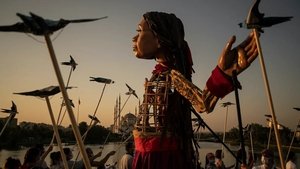
The Walk
Asil is a young Syrian refugee awaiting documents in Turkey while processing the trauma of losing her home and family. Her story gives voice to a charming gigantic puppet named Amal, who represents millions of migrant and displaced children in a walk from the Syrian border in Turkey all the way across Europe. Escorted and animated by a group of puppeteers who are themselves refugees, Amal’s epic journey is one of compassion and discovery.
2023
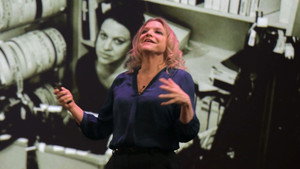
Brainwashed: Sex-Camera-Power
Investigates the politics of cinematic shot design, and how this meta-level of filmmaking intersects with the twin epidemics of sexual abuse/assault and employment discrimination against women, with over 80 movie clips from 1896 - 2020.
2022
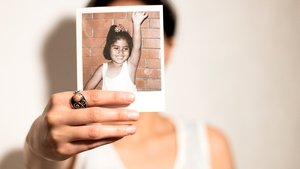
¿Qué le vas a pedir a los Reyes?
Cintia is currently 30 years old. On January 6, 2022, she decided to publish on her social networks, a story she lived in her childhood. When she was 6 or 7 years old, she wrote an unusual letter to the Three Wise Men.
2022

It's Yours: A Film on Hip-Hop and the Internet
By the dawn of the 21st century, hip-hop sales had reached an all-time high, but one thing has remained the same. The doors were still locked, and the music industry held the keys. Young artists began to self-market on the Internet, ultimately helping to collapse the music industry as we knew it. It’s Yours explores how it became possible to become a rap star through a Twitter account, YouTube site or Myspace page. It tells this story through the unique perspectives of numerous artists, producers, record industry insiders, and music and cultural critics.
2020
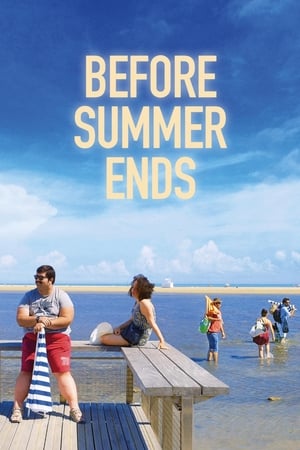
Before Summer Ends
After five years studying in Paris, Arash has not adjusted to life there and has decided to return to Iran to live. Hoping to change his mind, his two friends Hossein and Ashkan convince him to take a last trip through France.
2017
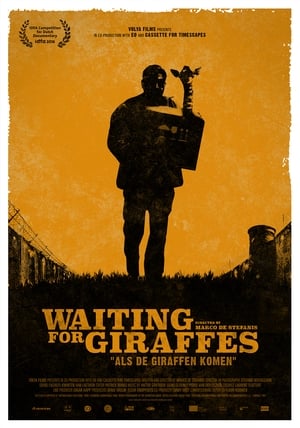
Waiting For Giraffes
After two intifadas and the construction of the Israeli wall, the only Palestinian zoo is still there and is now seeking for international recognition and to replace their lost giraffes.
2016

Restoring Hope
This often confronting documentary observes a Māori restorative justice model through the eyes of straight-talking Mike Hinton, manager of Restorative Justice at Manukau Urban Māori Authority. The bringing together of victims (including wider whānau) and offenders may offer an alternate way forward for "a criminal justice system failing too many and costing too much”. Restoring Hope kicked off Māori Television’s 2013 season of Sunday night documentaries. In a Herald On Sunday preview, Sarah Lang argued it was “enough to restore hope in local documentary-making.” I’m in an arena where people have high emotions, they get stressed and pressured. I’m reasonably confident that I can avoid situations where I’ll be unsafe. I don’t have any death wish — I’ve got a game of golf tomorrow. – Mike Hinton, on the dangers of the job
2012
La Meilleure Façon de tracer
2010
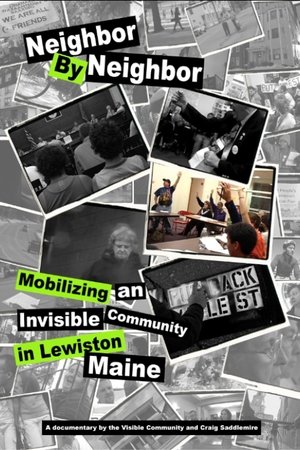
Neighbor by Neighbor: Mobilizing an Invisible Community in Lewiston, Maine
In the summer of 2004, the Mayor of Lewiston, Maine announced a plan to develop a four-lane boulevard across downtown's low-income neighborhood. This project was called "The Heritage Initiative." Contrary to its name, this plan was going to eliminate the downtown's heritage by displacing 850 people from their homes as well as destroy playgrounds, vegetable gardens, and historic buildings. Moving residents out of the city and improving traffic flow was at the heart of this proposal... It was 1960's Urban Renewal all over again. As tragic as the circumstances were, the threat of a road destroying the neighborhood required residents to rise to the challenge of becoming *community organizers. This movie documents 5 years of development and community organizing in Lewiston. It's an exceptional story about the people of Lewiston, but it's also a universal story about the challenges faced by many urban neighborhoods across the United States.
2009
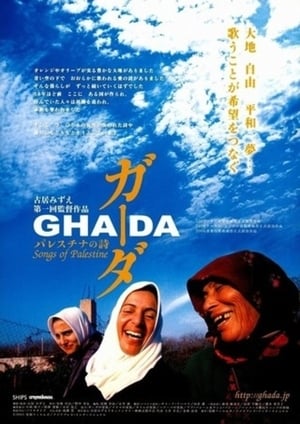
Ghada: Songs of Palestine
In July 1988, Mizue Furui was in the Gaza Strip and West Bank with her camera as a rookie freelance journalist. Covering the Palestinian condition, she became acquainted with Ghada Ageel, a 23-year-old teacher at an elementary school, in November 1993 and started shooting her life up to when she turned 35. The 12 years Furui spent shooting still and video images has borne fruit in a documentary titled "Ghada -- Songs of Palestine," which will be released in Uplink Theater in Shibuya Ward, Tokyo, in May as a rare report on women in the traditionally male-oriented Palestinian society.
2006
Visit Palestine
What drives a young, well-educated Westerner to volunteer as a “peace activist” in the Middle East? Caiomhe Butterly is one of a growing number of volunteers who risk their own safety to intervene in the long-running and bloody conflict between Israel and Palestine. Several internationals, including her, have now been injured. Some have died. In this film, she describes witnessing the aftermath of the attack on Jenin in April 2002. The film follows her work, the main emphasis being “the accompaniment of communities at risk”. Despite being threatened, shot in the leg and deported later that year, she is determined to go back.
2005
War Photographer
Documentary about war photographer James Nachtwey, considered by many the greatest war photographer ever.
2001
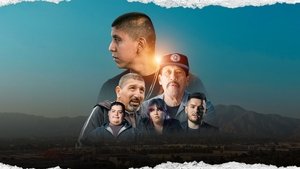
La Lucha: Getting Schooled in America
La Lucha follows five students navigating trauma, poverty, and broken systems as they fight to graduate. With expert voices and national stats, the film challenges us to rethink education from the ground up

Finding Carlos
Brayden Olson has spent his life wondering about the father he never knew. Armed with only a name, a faded photograph, and an improbable lead, he sets out across continents to uncover the mystery of Carlos. But as each revelation brings him closer to the truth, Brayden risks unraveling the life he’s always known — especially the bond with the mother who raised him alone. Raw, intimate, and deeply human, Finding Carlos explores identity, family, and the silent epidemic of fatherlessness.
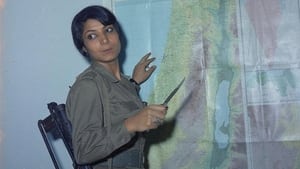
Tell Your Tale, Little Bird
Seven militant women (fedaiyat) of the revolutionary generation tell the story of the Palestinian resistance through accounts of their own lives. Cut from 35 hours of interviews with leaders of the armed struggle, the film presents an image of confident, unapologetic and proud feminine identity. Together, the memories of these women narrate the dream of a generation, yet unrealized.
1993
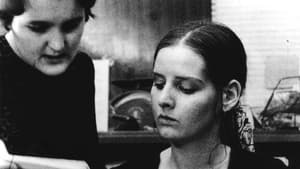
A Film for Discussion
A docu-drama shot in 1970, but not completed until 1973, the film sought to encapsulate in an experimental form issues that were under discussion within the Women’s Liberation Movement at this time and to thus contribute to action for change. In its numerous community screenings, active debate was encouraged as part of the viewing experience.
1973