Watch One Got Fat (1963) Online Free
This bicycle-safety film shows children what can happen when bicycles are driven carelessly and recklessly.
Cast
Edward Everett Horton
More Like This
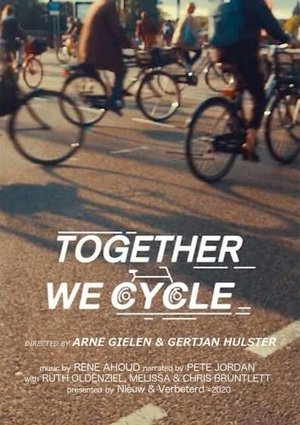
Together We Cycle
The film Together we cycle investigates the critical events that has led to the revival of the Dutch cycling culture. For most people, cycling in the Netherlands, seems a natural phenomenon. However, until the 1970s the development of mobility in the Netherlands followed trents across the globe. The bicycle had had its day, and the future belonged to the car. The only thing that had to be done was to adapt cities to the influx of cars. Then Dutch society took a different turn. Against all odds people kept on cycling. The question why this happened in the Netherlands, has not an easy answer. There are many factors, events and circumstances that worked together, both socially and policy-wise. In Together we cycle, key players tell the story of the bumpy road which led to the current state. Where cycling is an obvious choice for most citizens.
2022
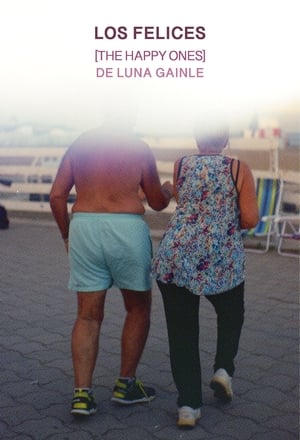
The Happy Ones
A love letter to Mar del Plata made of images, times and a road trip. "The Happy Ones" is an experimental short documentary composed of past and present family footage. It portrays a place in the summer, the city of Mar del Plata, with a span of 20 years between past and present images (January 2000 and 2020). Despite the time that passed by, it's beaches, essence and people remain, always willing to keep dancing.
2021
44 Pages
A portrait of Highlights Magazine following the creation of the cultural phenomenon's 70th Anniversary issue, from the first editorial meeting to its arrival in homes, and introducing the quirky people who passionately produce the monthly publication for "the world's most important people,"...children. Along the way, a rich and tragic history is revealed, the state of childhood, technology, and education is explored, and the future of print media is questioned.
2018
Two Letters for Ana
A medium-length film that takes the central place in the video installation "The Lady of Corinth". In both the medium-length film and the installation, Guerin delves into the relationship between cinema and painting based on Pliny the Elder's account of the invention of painting.
2011
Gula
2008

Albert Fish: In Sin He Found Salvation
Albert Fish, the horrific true story of elderly cannibal, sadomasochist, and serial killer, who lured children to their deaths in Depression-era New York City. Distorting biblical tales, Albert Fish takes the themes of pain, torture, atonement and suffering literally as he preys on victims to torture and sacrifice.
2007
Roving Mars
Join the Mars rovers Spirit and Opportunity for an awe-inspiring journey to the surface of the mysterious red planet.
2006
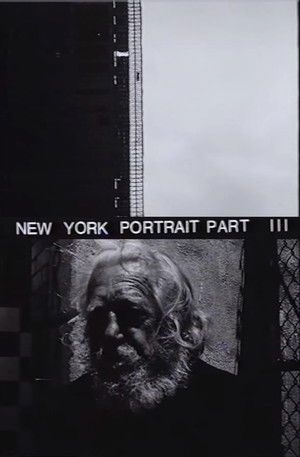
New York Portrait, Chapter III
"[Hutton’s] latest urban film, New York Portrait, Chapter III, takes on a unique tone in relation to Hutton’s ongoing exploration of rural landscape. The very fact that Hutton is dealing with older footage, with archives of memory more than immediacy, gives it a different texture than his earlier New York films. Hutton always found the presence of nature in the city, not only in his many shots of sky and vegetation, but also in the geometry and texture of the city itself, which seemed to project an independence from the human." (Tom Gunning)
1990
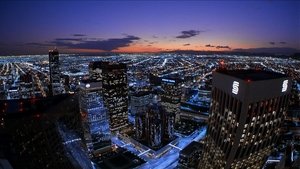
Chronos
Carefully picked scenes of nature and civilization are viewed at high speed using time-lapse cinematography in an effort to demonstrate the history of various regions.
1985
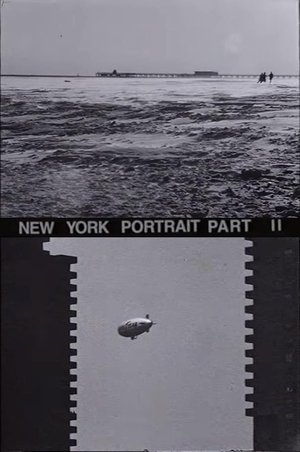
New York Portrait, Chapter II
Chapter Two represents a continuation of daily observations from the environment of Manhattan compiled over a period from 1980-1981. This is the second part of an extended life's portrait of New York.
1981
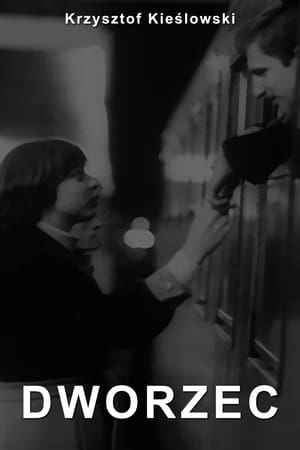
Railway Station
Warsaw's Central Railway Station. 'Someone has fallen asleep, someone's waiting for somebody else. Maybe they'll come, maybe they won't. The film is about people looking for something.
1980
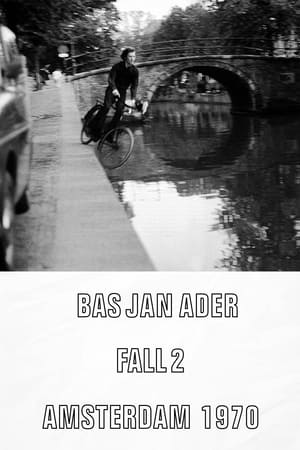
Fall 2
Bas Jan Ader rides his bike into a canal in Amsterdam.
1970
Clouds
Clouds 1969 by the British filmmaker Peter Gidal is a film comprised of ten minutes of looped footage of the sky, shot with a handheld camera using a zoom to achieve close-up images. Aside from the amorphous shapes of the clouds, the only forms to appear in the film are an aeroplane flying overhead and the side of a building, and these only as fleeting glimpses. The formless image of the sky and the repetition of the footage on a loop prevent any clear narrative development within the film. The minimal soundtrack consists of a sustained oscillating sine wave, consistently audible throughout the film without progression or climax. The work is shown as a projection and was not produced in an edition. The subject of the film can be said to be the material qualities of film itself: the grain, the light, the shadow and inconsistencies in the print.
1969
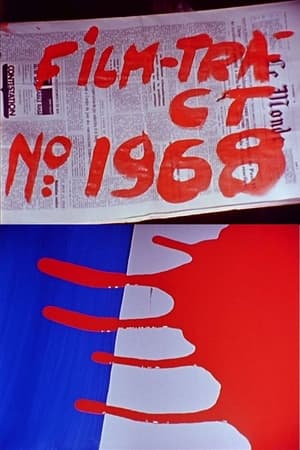
Film-Tract n° 1968
In the 1968 movement in Paris, Jean-Luc Godard made a 16mm, 3-minute long film, Film-tract No.1968, Le Rouge, in collaboration with French artist Gérard Fromanger. Starting with the shot identifying its title written in red paint on the Le Monde for 31 July 1968, the film shows the process of making Fromanger’s poster image, which is thick red paint flows over a tri-color French flag. —Hye Young Min
1968
1/57: Experiment with Synthetic Sound (Test)
Mostly dark, rejecting images which are repeated. A stone wall, the chamber of a revolver which is, at first not recognizable, a close-up of a cactus. The duration of the takes emphasises the photographic character of the pictures, simultaneously with a crackling, brutal sound. (Hans Scheugl)
1957
Don't Get Angry
This short film offers a children's guide to anger management.
1953
We Live in Prague
A 13-minute documentary film depicting life in Prague.
1934
How the Telephone Talks
"All sounds travel in waves much the same as ripples in water." Educational film produced by Bray Studios New York, which was the dominant animation studio based in the United States in the years surrounding World War I.
1919
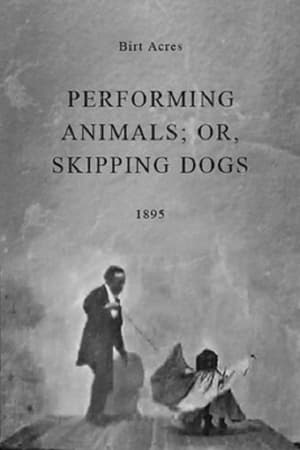
Performing Animals; or, Skipping Dogs
A short black-and-white silent documentary film featuring one dog jumping through hoops and another dancing in a costume, which was considered lost until footage from an 1896 Fairground Programme was identified as being from this film.
1895
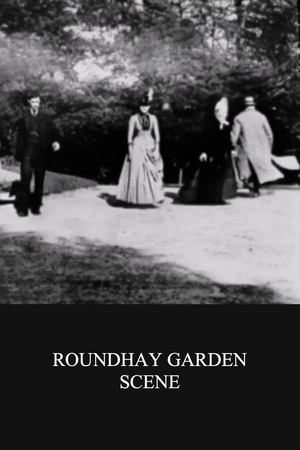
Roundhay Garden Scene
The earliest surviving motion-picture film, and believed to be one of the very first moving images ever created, was shot by Louis Aimé Augustin Le Prince using the LPCCP Type-1 MkII single-lens camera. It was taken on paper-based photographic film in the garden of Oakwood Grange, the Whitley family house in Roundhay, Leeds, West Riding of Yorkshire (UK), on 14 October 1888. The film shows Adolphe Le Prince (Le Prince’s son), Mrs. Sarah Whitley (Le Prince’s mother-in-law), Joseph Whitley, and Miss Harriet Hartley walking around in circles, laughing to themselves, and staying within the area framed by the camera. Roundhay Garden Scene is often associated with a recording speed of around 12 frames per second and runs for about 2 to 3 seconds.
1888