Watch Night and Fog (1956) Online Free
Filmmaker Alain Resnais documents the atrocities behind the walls of Hitler's concentration camps.
Cast
Michel Bouquet, Reinhard Heydrich, Heinrich Himmler, Adolf Hitler, Julius Streicher
More Like This
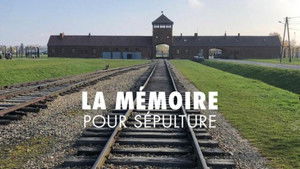
Memory For Burial
Surviving against all odds. In 1940, Benjamin Orenstein, just a teenager, was sent to his first concentration camp in Poland. It was the beginning of a journey that would mark him for life. After years of silence, he now bears witness to one of the darkest chapters in history.
2025
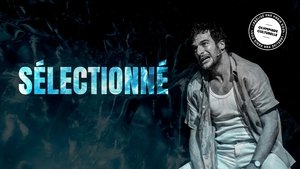
Sélectionné
The incredible story of swimmer Alfred Nakache, played by Amir Haddad. Alfred Nakache is one of those modern-day heroes whose story is little known. Born in Constantine and raised in Toulouse, he was France's best swimmer in the 1940s. Arrested by the Gestapo and then deported, he swam in the unsanitary pools of Auschwitz, from which his wife and daughter never returned. In their memory, this survivor of horror picked himself up and resumed competition until he regained his title as French Champion and once again represented his country at the Olympic Games. Filmed at Studio Marigny at the Théâtre Marigny in Paris's 8th arrondissement.
2023
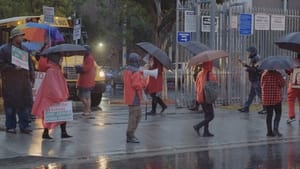
When We Fight
In the second largest school district in the United States, 98% of teachers vote to authorize a strike. Watch as one of the largest educator strikes in modern U.S. history unfolds in real-time, highlighting the stories and leadership of some of the women who led it, from union leaders to classroom teachers. From strike vote to contract vote, When We Fight goes behind the picket lines, documenting how and why teachers strike. "This powerful and beautifully crafted film is a must watch for anyone interested in the state of labor in America today." - Robert Reich, former Secretary of Labor and Professor of Public Policy, UC Berkeley
2023
Mi reino
An elderly hoarder seeks to overcome time and memory to find closure and redemption in the twilight of his life.
2022
I'm not funny
To confront his fear of making a fool of himself, a film student ventures into stand-up comedy and documents his process.
2020
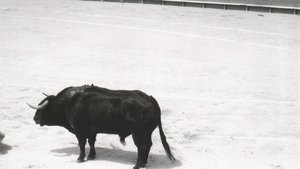
Artémis et la mort
During the Feria of Nîmes, a bullfight is filmed from the perspective of the animal, relegating the matador and public to off-screen spectators. A ritual at the frontiers of mysticism, carried by the sacrificial figure of the bull, revealer of our humanity.
2017
Ensemble
In Paris in full German occupation in 1942, a Jewish child Isaac escapes a raid organized by the SS. He then took refuge in the Great Mosque of Paris. The imam decides to protect him by passing him off as a Muslim, as well as the other Jewish children that he manages to free with the help of the resistance networks. The French militia and the Gestapo have suspicions... This fiction film is based on the true story of the rector of the Paris mosque, Si Kaddour Benghabrit, who saved several Jews from deportation during the Second World War.
2010
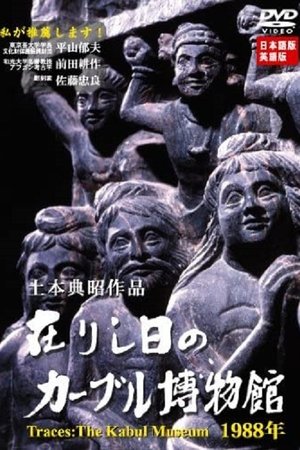
Traces: The Kabul Museum 1988
The Kabul National Museum, once known as the "face of Afghanistan," was destroyed in 1993. We filmed the most important cultural treasures of the still-intact museum in 1988: ancient Greco-Roman art and antiquitied of Hellenistic civilization, as well as Buddhist sculpture that was said to have mythology--the art of Gandhara, Bamiyan, and Shotorak among them. After the fall of the Democratic Republic of Afghanistan in 1992, some seventy percent of the contents of the museum was destroyed, stolen, or smuggled overseas to Japan and other countries. The movement to return these items is also touched upon. The footage in this video represents that only film documentation of the Kabul Museum ever made.
2003
Bloody Sunday
The dramatised story of the Irish civil rights protest march on January 30 1972 which ended in a massacre by British troops.
2002
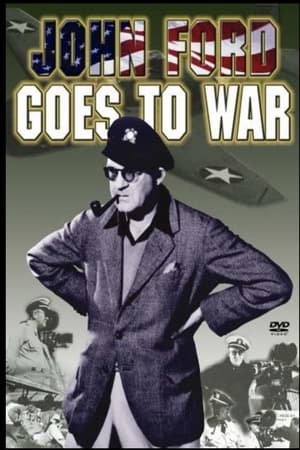
John Ford Goes to War
When World War II broke out, John Ford, in his forties, commissioned in the Naval Reserve, was put in charge of the Field Photographic Unit by Bill Donavan, director of the soon-to-be-OSS. During the war, Field Photo made at least 87 documentaries, many with Ford's signature attention to heroism and loss, and many from the point of view of the fighting soldier and sailor. Talking heads discuss Ford's life and personality, the ways that the war gave him fulfillment, and the ways that his war films embodied the same values and conflicts that his Hollywood films did. Among the films profiled are "Battle of Midway," "Torpedo Squadron," "Sexual Hygiene," and "December 7."
2002
Fort Saganne
In 1911, a willful and determined man from peasant stock named Charles Saganne enlists in the military and is assigned to the Sahara Desert under the aristocratic Colonel Dubreuilh.
1984
Witness
Experimental short film by Barbara Sykes
1982
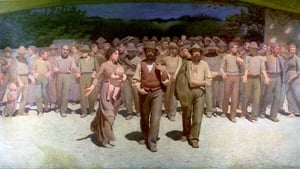
1900
The epic tale of a class struggle in twentieth century Italy, as seen through the eyes of two childhood friends on opposing sides.
1976
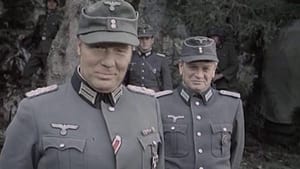
The Peaks of Zelengore
During the Battle of Sutjeska, partisan troops must endure 24 hours of big and heavy attacks on German units Ljubino grave, to the main Partisan units, with the wounded and the Supreme Headquarters, pulled out the ring that is tightened around them.
1976

The Middle Dog's Day
shows visual and metaphorical representation using rope as a motif through various rope images and meanings.
1974
Under a Bridge
In this tape, Ko Nakajima and Video Earth Tokyo interview a homeless man. The subject is initially angry and frustrated, but gradually opens up and shares stories about his life. Under A Bridge was later broadcast on cable television.
1974
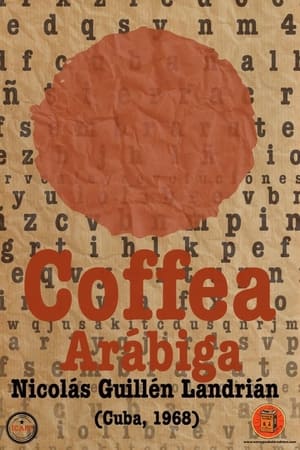
Arabian Coffee
'Coffea arábiga' was sponsored as a propaganda documentary to show how to sow coffee around Havana. In fact, Guillén Landrián made a film critical of Castro, exhibited but banned as soon as the coffee plan collapsed.
1968
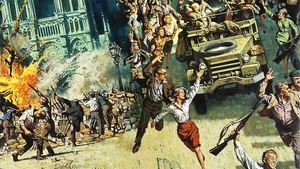
Is Paris Burning?
Near the end of World War II, General Dietrich von Choltitz receives orders to burn down Paris if it becomes clear the Allies are going to invade, or if he's unable to maintain control of the city. After much contemplation, Choltitz ignores orders, enraging the Germans and giving hope to various resistance factions that the city will be liberated. Choltitz, alongside Swedish diplomat Raoul Nordling, helps a leader organise his forces.
1966
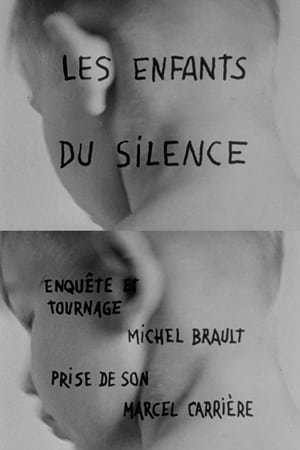
Children of Silence
This film looks at the world of children with hearing loss and the importance of early diagnosis. With its straightforward, rigorous cinematic style and intimate approach to the subject, the film focuses on the human rather than the technical side of the problem of hearing impairment.
1962
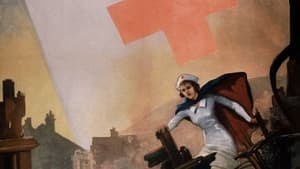
Flag of Mercy
The 1939 dramatic short "Angel of Mercy," about Red Cross founder Clara Barton, is reedited to relate the story to America's involvement in World War II. Edited from Angel of Mercy (1939)
1942