Watch Myriam's choice (2009) Online Free
The arrival in France of the first generation of Algerian immigrants. In the early sixties, Kader, soon joined by his wife Myriam, tries to build a new life on French soil. Like many other couples, they soon find themselves torn between the dream of returning to their homeland and that of prospering in a land that is not always welcoming.
Cast
Mehdi Nebbou, Leïla Bekhti, Anémone, Delphine Rollin, Carole Richert, Jackie Berroyer, Denis Sebbah, Nailia Harzoune, Pascal Demolon, Abdelhafid Metalsi, Samir Boitard, Nils Ohlund
More Like This
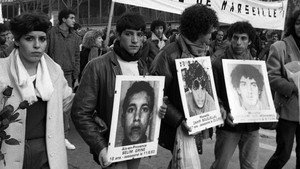
1983, The Marchers for Equality
In the 1980s, young people of North African descent born in France and a priest from the Lyon suburbs organized the "March of the Beurs." Launched on October 15, 1983, by seventeen people from the La Cayolle neighborhood in Marseille following a racist crime, the march concluded two months later—on December 3—on the streets of Paris, with 100,000 participants. This movement demanded equal rights. Was their cry heard?
2023

L'Énigme Jean-Jacques Goldman
2021
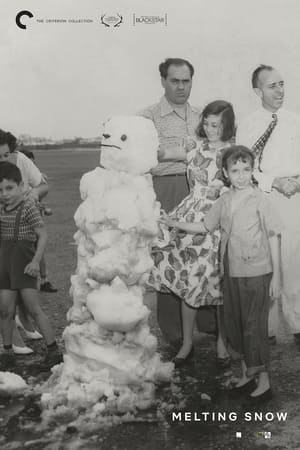
Melting Snow
Two tons of snow—flown from New Hampshire to Puerto Rico in 1952 in order to “gift” Puerto Ricans a “white Christmas”—become a metaphor for the colonialist paternalism of America’s relationship to Puerto Rico.
2021

Through the Mill
Long live the strike! Lucie Baud, one of the pioneers of the women's movement, went with creativity, fighting spirit and the power of singing against the weapons of male-dominated capitalist society in nineteenth-century France. The film, based on true events, describes the ambitious fight of a silk moth. She stood up for the rights of the female working class to end maltreatment and oppression once and for all. For the revolution in women's rights, she even put her family back and fought to the end for their beliefs.
2018
Un Chibani
An old North African man, sitting in an Algerian bar, remembers his life spent in France.
2016
Bepo
2016

A Girl at My Door
Sent from Seoul to serve in a remote coastal village, a policewoman gets involved in the life of a mysterious teenage girl who is abused by both her father and her grandmother.
2014

Le Silence Du Sphinx
As usual, Slim goes to the Point Ephémère bar in Paris to have a last drink. As is often the case, he finds Lily there, an eccentric and intriguing character, then Seiko, whom he knew as a child soldier, once in Sierra Leone. While he listens to Lily tell him a few stories, Slim watches the Seiko ride, tracked and soon arrested by two plainclothes police officers.
2010
Rome Rather Than You
"For more than ten years, Algeria has been living a slow war, a war without a front line but having caused more than 100,000 deaths. It is this desert that Zina and Kamel – two young Algerians sometimes hallucinated and joyful, sometimes dejected and serene – will want to travel one last time before leaving it for elsewhere. Road Movie on the territories of a city, Algiers whose construction sites are in decline. Roma wa la n'touma will show that fleeing abroad is not is not a refusal of combat, but an obscure struggle against assignment. Tariq Teguia
2006

Sociology Is a Martial Art
"I often say sociology is a martial art, a means of self-defence. Basically, you use it to defend yourself, without having the right to use it for unfair attacks." (Pierre Bourdieu) The world has witnesses who speak out loud what others keep to themselves. They are neither gurus, nor masters, but those who consider that the city and the world can be thought out. The sociologist, Pierre Bourdieu is one such witness." Over a three- year period, Pierre Carles' camera followed him through different situations: a short conversation with Günter Grass, a lively conference with the inhabitants of a working-class suburb, his relations with his students and colleagues and his plea that sociology be part of the life of the city. His thinking has a sort of familiarity, which means it is always within our reach. It is the thinking of a French intellectual who has chosen to think his times.
2001
La Promesse
Igor, aged 15, and his father Roger deal in housing and peddling illicit labor in the outlying districts of Liege, Belgium. Scams, lies and swindling rule their lives. When one of his father’s illegal workers gets injured on the job and asks Igor to promise to take care of his wife and baby, Igor finds himself at a crossroad. He wants to keep the promise, but the price would be to betray his father.
1996
Le Rescapé
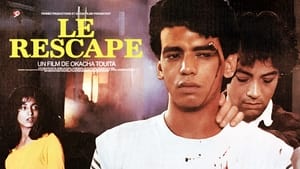
In a working-class immigrant neighborhood slated for demolition, Jo, the son of Ali, known as the Rescuer from the Algerian war, lives idle and delinquent, committing small assaults to pay for his drugs. One day, while attacking Slim's bar, he is arrested by Ben, a young beur cop torn between his roots and the imperatives of his mission to maintain public order. Giving in to the respect and friendship he feels for Ali, Ben agrees to release his son. But alas, far from calming down, Jo drifts deeper into violence, until the inevitable drama.
1986

Les Sacrifiés
In 1955, a year after the birth of the National Liberation Front (FLN), Mahmoud was expelled from Algeria by the colonial authorities who feared his revolutionary speeches. At the age of 27, he arrived in the Algerian slum of Nanterre. Roughly questioned by FLN activists, in disagreement with the Algerian Nationalist Movement (MNA) who wanted to recognize theirs, he was then accepted as the local hairdresser and shoemaker. Subsequently, he became a driver during anti-MNA expeditions. Accepting increasingly dangerous missions, he is imprisoned by the French police and once again undergoes interrogations and special treatment by the police which will definitively undermine his sanity. One day, he no longer recognized his companions, and when joy broke out among the FLN militants, at the announcement of the signing of the Evian Accords, Mahmoud remained alone, frozen in an attitude of refusal, walled in his madness. Algeria has just won its independence.
1983
The Refusal
In 1971, the Algerian government nationalized hydrocarbons. The consequences of this decision on the community of Algerians in France are numerous. The Galti family is prey to these economic problems. The father, Khaled, former member of the F.L.N. in France, does not escape the sentence. Sharazade, his wife and comrade in combat, finds herself torn between her role as wife, mother and nostalgia for a country and a bygone past. As for his son Karim, a victim of socio-cultural division, all he has left is refusal.
1982
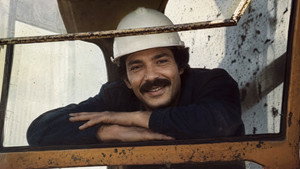
Ali in Wonderland
In the 1980s, barely 18 years after Algeria's independence, Algerian immigration to France massively fueled the construction industry, responding to a demand for hard, undervalued labor. Behind the idea of "selective immigration," these men were recruited primarily for their bras and their knock-kneed hands, shaped by construction sites. Invisible yet essential, they built roads, buildings, and infrastructure, often at the cost of precarious conditions. Ali, an Algerian crane operator in France, philosophically accepts the harassment faced by immigrants like himself on construction sites and in daily life. He hopes to escape his situation with the money he wins in the lottery, and from the top of his crane, he allows himself to dream, observing the world through binoculars. One day, the jackpot falls...
1980
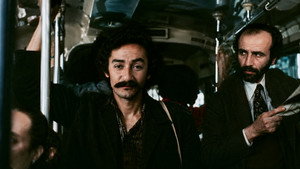
Le Bougnoul
A construction worker on a construction site in the Paris suburbs, Mehdi takes the bus to return home after work. Wishing to get off while the vehicle is stationary in a traffic jam, the driver refuses: while restarting, the bus hits the car in front of it. The bus driver attacks Mehdi whom he holds responsible for the incident, claiming that it is forbidden to “talk to the stagehand”. Mehdi is implicated in court and his lawyer tries to draw attention to the living conditions of immigrant workers.
1975
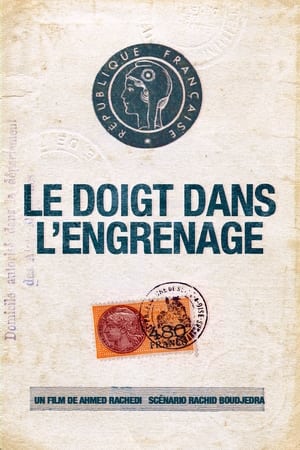
A Finger in the Works
The film mixes fiction, filmed documents and interviews which recounts the arrival in Paris of an Algerian immigrant lost in the metro. On December 27, 1968, France and Algeria signed an agreement which admitted each year 35,000 Algerian workers to French territory in the France of the Trente Glorieuses where the annual growth rate reached 5% and where factories lacked workers. Candidates obtain a residence permit valid for 5 years for themselves and their families. Paris is committed to improving professional training and housing conditions for immigrants, too often confined to the most thankless jobs and often housed in slums. A testimony on the living conditions of emigrant workers "economic cannon fodder" of neocolonialism which simultaneously develops its alter ego, institutionalized racism, as a tool of social stagnation and division of the proletarian class.
1974
Kung Fu: The Way of the Tiger, the Sign of the Dragon
After avenging the death of his teacher, a Shaolin monk flees China to the American West and helps people while being pursued by bounty hunters.
1972

Elise, or Real Life
In the middle of the Algerian war, Elise, from Bordeaux, “goes” to Paris to join her brother to earn her living in an automobile factory. There she meets Arezki, an Algerian nationalist activist with whom she falls in love. A chronicle of working life at the time and which highlights the extent of police repression against Algerians.
1970

Les Trois Cousins
The Three Cousins is a comedy-drama by René Vautier released in 1970 about the living conditions of three Algerian immigrant cousins looking for work in Paris. Housed in a narrow construction shed, the coal stove will cause them to suffocate. The Three Cousins won the Best Human Rights Film Award in Strasbourg in 1970.
1970