Watch 1983, The Marchers for Equality (2023) Online Free
In the 1980s, young people of North African descent born in France and a priest from the Lyon suburbs organized the "March of the Beurs." Launched on October 15, 1983, by seventeen people from the La Cayolle neighborhood in Marseille following a racist crime, the march concluded two months later—on December 3—on the streets of Paris, with 100,000 participants. This movement demanded equal rights. Was their cry heard?
More Like This

Black Crowns
The hairstyles of four Afro-descendant people from Mexican - Senegalese families, represent the starting point to reflect, through memories that emerge from their past and present, what it is like to live in México wearing a Black Crown and the consequences that implies.
2023

Black Ice
This incisive, urgent documentary examines the history of anti-Black racism in hockey, from the segregated leagues of the 19th century to today’s NHL, where Black athletes continue to struggle against bigotry.
2023

COMPLEXion
"COMPLEXion is a documentary that aims to unpack the hegemony of skin color globally and challenge the archaic notions that exist surrounding it. Our mission is to defy toxic beauty standards through raw human stories."
2023

Will.i.am: The Blackprint
The Blackprint explores what it means to be Black and British. will.i.am traveled the UK to meet civil rights heroes, schoolchildren and technology trailblazers while also exploring issues they face because of their race. A basic look at racial discrimination experienced by young Black men and women but also, where it began with the slave trade in the 1800s.
2021

Parallel Lives
Born June 8, 1964, Frank Matter films four "twins", born the same day as him, but in other latitudes. Interweaving their life stories with rich archival material, the filmmaker links these Parallel Lives with elements from his own biography, to compose a fascinating fresco where intimate trajectories are part of the advent of the global village.
2021
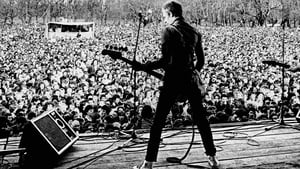
White Riot
Exploring how punk influenced politics in late-1970s Britain, when a group of artists united to take on the National Front, armed only with a fanzine and a love of music.
2020
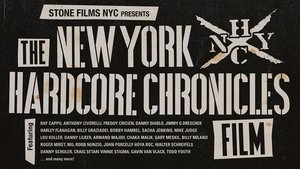
The New York Hardcore Chronicles Film
Director Drew Stone’s The New York Hardcore Chronicles Film is an incredible journey through the community and culture of the iconic New York hardcore scene. Not the typical history of a local music scene but so much more. Shot in an episodic format, the film contains over 60 interviews, never before seen footage, photos and a blazing soundtrack. With appearances by Roger Miret & Vinnie Stigma (Agnostic Front), Lou Koller, Craig Setari (Sick Of It All), Ray Cappo (Youth Of Today), Billy Graziadei (Biohazard), Billy Milano (S.O.D. / M.O.D.) and Mike Judge (Judge). The film addresses the community, culture, straight edge and DIY ethic of the hardcore scene in the greatest city in the world that is still vibrant, relevant and going strong to this day.
2017
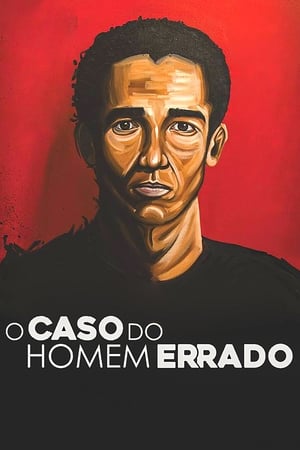
The Case of the Wrong Man
The documentary tells the story of Júlio César, a young Afro-Brazilian who was executed by the Police in the 1980s in Porto Alegre. The crime became notorious when the press published photos of Julius being put alive in the police car and arriving 37 minutes later shot and dead at the hospital.
2017

The Aryans
THE ARYANS is Mo Asumang's personal journey into the madness of racism during which she meets German neo-Nazis, the US leading racist, the notorious Tom Metzger and Ku Klux Klan members in the alarming twilight of the Midwest. In The ARYANS Mo questions the completely wrong interpretation of "Aryanism" - a phenomenon of the tall, blond and blue-eyed master race.
2014

Au bonheur des riches
2013
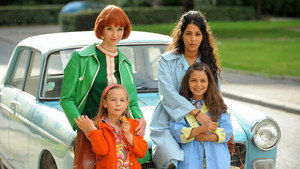
Myriam's choice
The arrival in France of the first generation of Algerian immigrants. In the early sixties, Kader, soon joined by his wife Myriam, tries to build a new life on French soil. Like many other couples, they soon find themselves torn between the dream of returning to their homeland and that of prospering in a land that is not always welcoming.
2009
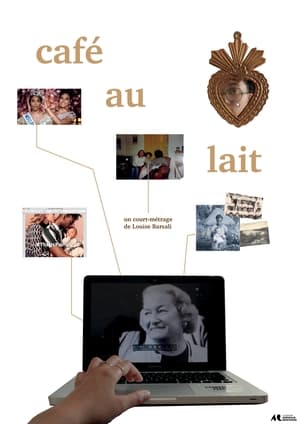
Café au Lait

Hafu
A journey into the intricacies of mixed-race Japanese and their multicultural experiences in modern day Japan. For some hafus, Japan is the only home they know, for some living in Japan is an entirely new experience, and the others are caught somewhere between two different worlds.
2013

The Perfumed Garden
THE PERFUMED GARDEN is an exploration of the myths and realities of sensuality and sexuality in Arab society, a world of taboos and of erotic literature. Through interviews with men and women of all ages, classes, and sexual orientation, the film lifts a corner of the veil that usually shrouds discussion of this subject in the Arab world. Made by an Algerian-French woman director, the film begins by looking at the record of a more permissive history, and ends with the experiences of contemporary lovers from mixed backgrounds. It examines the personal issues raised by the desire for pleasure, amidst societal pressures for chastity and virginity. The film discusses pre-marital sex, courtship and marriage, familial pressures, private vs. public spaces, social taboos (and the desire to break them), and issues of language.
2000

The Rat Pack
After a brief flash-forward to Frank Sinatra as an old man, saying "I miss my guys," the movie's main narrative begins during high points in the solo careers of the Rat Pack: Dean Martin has become a big success despite the breakup of his partnership with Jerry Lewis; Sinatra's career is at its peak; Sammy Davis, Jr., is making a comeback after a near fatal car crash, and standup comic Joey Bishop is gaining exposure as an opening act for the other three. The Pack becomes complete when Sinatra reconciles with actor Peter Lawford, who has been ostracized since being seen out publicly with Sinatra's ex-wife, Ava Gardner.
1998
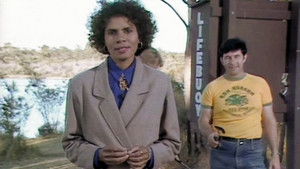
BabaKiueria
Imagine what it would be like if black settlers arrived to settle a continent inhabited by white natives? In 1788, the first white settlers arrived in Botany Bay to begin the process of white colonisation of Australia. But in Babakiueria, the roles are reversed in a delightful and light-hearted look at colonisation of a different kind. This satirical examination of black-white relations in Australia first screened on ABC TV in 1986 to widespread acclaim with both critics and audiences alike. This is the story of the fictitious land of Babakiueria, where white people are the minority and must obey black laws. Aboriginal actors Michelle Torres and Bob Maza (Heartland) and supported by a number of familiar faces from the time, including Cecily Polson (E-Street) and Tony Barry, who starred in major ABC-TV hits such as I Can Jump Puddles and his Penguin award-winning Scales of Justice. Babakiueria was awarded the United Nations Media Peace Prize in 1987.
1986
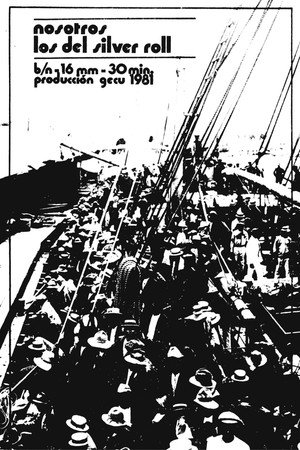
Nosotros los del Silver Roll
Afro-Antillean workers hired for the construction of the Panama Canal are brought from their homes to work in conditions that were not those promised. They, the descendants of African slaves and domesticated from England, manage to raise their voices against American injustices.
1981
Ahora ya no estamos solos
In March 1973, the United Nations Security Council met in Panama City to debate the Panamanian claim for a new treaty that would end the colonial presence of the United States in its territory. The majority of the participating states of the Council recognize the justice of Panama's cause and give it their support, but the United States vetoes the resolution.
1973

Canto a la patria que ahora nace
Based on a poem and archive images, the military aggression of the US army stationed in the Canal Zone against the Panamanian people who demand to raise their flag in the territory occupied since the beginning of the 20th century is reconstructed and denounced. The aggression that occurred between January 9 and 11, 1964 left a balance of 21 patriots.
1972
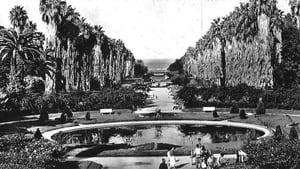
Alger Et Ses Environs
The film, shot in 1938, is part of a series entitled “The true face of Algeria”. The film highlights the proximity of Algiers to Paris and promotes air travel. The commentary supporting the images highlights the urban dynamism (“Every day, a new skyscraper replaces a wasteland”) and the comparison with Paris (“Algiers is often nicknamed the Paris of North Africa because of its elegance become proverbial). Contemporary architectural achievements are described as the sign of “grandiose modernism”: “we love the new, the bold”. But the point does not forget the buildings illustrating “the Moorish, classic and attractive style”. The description of the Casbah also attempts to understand the architectural organization but also the diversity and even the atmosphere.
1945