Watch Most 72 (2013) Online Free
Most 72 is the very first film essay directed and produced by The Markerists and the inaugural installment in the series 'Most'. The footage and the audio were recorded in a single day on June 17th, 2013 on location in Auschwitz-Birkenau with post-production being completed within 72 hours. Surbhi Goel, a professor of cultural studies from India on her first trip outside of her homeland, recorded extemporaneous impressions as she walked the grounds of the death camp with the filmmakers. These were later used as the voice-over narration. The project serves as the template in which future Markerists film essays will be produced--shot and recorded on location and completed immediately afterwards, staying relevant in this age of instant global communication.
Cast
Surbhi Goel
More Like This
Sweet Lorraine in Auschwitz
Amid the Holocaust’s unimaginable cruelty, a young boy finds hope in music. Eighty years later, Frank Grunwald shares his true story of survival and resilience, intertwined with American jazz, offering a powerful testament to the strength of the human spirit.
2025
The World Will Tremble
The incredible, untold true story of how a group of prisoners attempt a seemingly impossible escape from the first Nazi death camp in order to provide the first eyewitness account of the Holocaust.
2025
Bardejov
The story of Holocaust survivor Emil A. Fish, who was nine years old when he and his family in Bardejov, Slovakia were sent to a concentration camp.
2024
The Zone of Interest
The commandant of Auschwitz, Rudolf Höss, and his wife Hedwig, strive to build a dream life for their family in a house and garden next to the camp.
2023
Enemy Alien
A poetic retelling of the experiences of Joseph Murakami, a fourteen-year-old boy from Darwin, who is summarily rounded up and interned by his government on the basis of his ethnicity, leaving wounds unhealed to this day.
2022
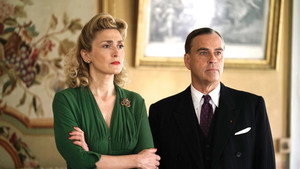
Story of Annette Zelman
1942 Paris. Annette is 20 years old, Jean is barely older, they love each other and the future is bright for them. But the deportation of the Jews of France will change their destiny. Upset at the idea of their only son marrying a Jewish woman, Jean Jausion's parents decide to keep young Annette Zelman away from them... and denounce her to the Gestapo. The machine was launched, but it was too late. Annette was deported to Auschwitz on June 22, 1942.
2022
Status and Terrain
Exploring the mechanisms of the Nazi seizure of power and focusing on forgotten sites in Saxony and Thuringia, the film investigates early "wild" concentration camps established after 1933 for the suppression of political opponents.
2019
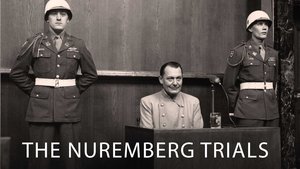
The Nuremberg Trials
One journalist described it as a chance "to see justice catch up with evil." On November 20, 1945, the twenty-two surviving representatives of the Nazi elite stood before an international military tribunal at the Palace of Justice in Nuremberg, Germany; they were charged with the systematic murder of millions of people. The ensuing trial pitted U.S. chief prosecutor and Supreme Court judge Robert Jackson against Hermann Göring, the former head of the Nazi air force, whom Adolf Hitler had once named to be his successor. Jackson hoped that the trial would make a statement that crimes against humanity would never again go unpunished. Proving the guilt of the defendants, however, was more difficult than Jackson anticipated. This American Experience production draws upon rare archival material and eyewitness accounts to recreate the dramatic tribunal that defines trial procedure for state criminals to this day.
2006
Damn Ruskies
2000
Francisco Boix: A Photographer in Hell
In 1939, just finished the Spanish Civil War, Spanish republican photographer Francesc Boix escapes from Spain; but is captured by the Nazis in 1940 and imprisoned in the Mauthausen concentration camp, in Austria, a year later. There, he works as a prisoner in the SS Photographic Service, hiding, between 1943 and 1945, around 20,000 negatives that later will be presented as evidence during several trials conducted against Nazi war criminals after World War II.
2000
Germans
A story about a German family during World War II with every family member having a different approach to Jews, raging from hatred to compassion.
1997
The Truce
After the liberation of Auschwitz, an Italian prisoner of War begins a torturous voyage home to Turin, through a Europe caught between war and peace.
1997
Schindler's List
The true story of how businessman Oskar Schindler saved over a thousand Jewish lives from the Nazis while they worked as slaves in his factory during World War II.
1993
Look to the Sky
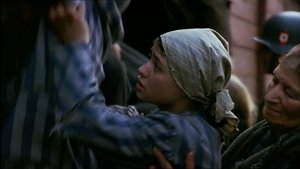
A Jewish boy living in Amsterdam at the onset of World War II is taken to a concentration camp with his parents. Based on the memoir of Holocaust survivor Jona Oberski.
1993

Triumph of the Spirit
During World War II, Salamo Arouch, a passionate boxer, is arrested and sent to a concentration camp. Soon, he is forced to box against his fellow prisoners for the sake of entertainment.
1989
The Liberation of Auschwitz
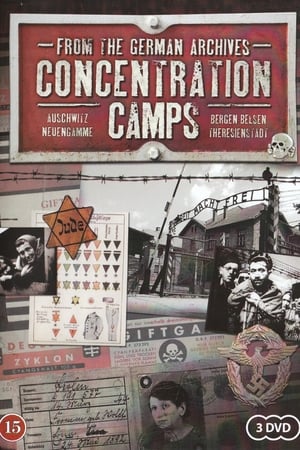
This chilling, vitally important documentary was produced to mark the 40th anniversary of the liberation of Auschwitz Concentration Camp. The film contains unedited, previously unavailable film footage of Auschwitz shot by the Soviet military forces between January 27 and February 28, 1945 and includes an interview with Alexander Voronsov, the cameraman who shot the footage. The horrifying images include: survivors; camp visit by Soviet investigation commission; criminal experiments; forced laborers; evacuation of ill and weak prisoners with the aid of Russian and Polish volunteers; aerial photos of the IG Farben Works in Monowitz; and pictures of local people cleaning up the camp under Soviet supervision. - Written by National Center for Jewish Film
1986
Memory of the Camps
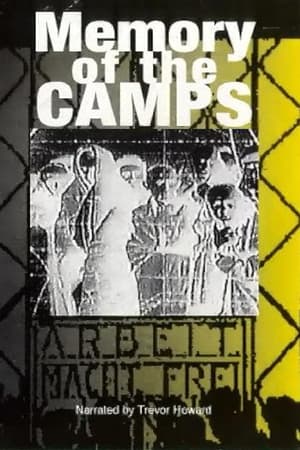
In 1945, Allied troops invaded Germany and liberated Nazi death camps. They found unspeakable horrors which still haunt the world’s conscience. A film was made by British and American film crews who were with the troops liberating the camps. It was directed in part by Alfred Hitchcock and was broadcast for the first time in its entirety on PBS FRONTLINE in 1985.
1985
Army of Shadows
Betrayed by an informant, Philippe Gerbier finds himself trapped in a torturous Nazi prison camp. Though Gerbier escapes to rejoin the Resistance in occupied Marseilles, France, and exacts his revenge on the informant, he must continue a quiet, seemingly endless battle against the Nazis in an atmosphere of tension, paranoia and distrust.
1969
Judgment at Nuremberg
In 1947, four German judges who served on the bench during the Nazi regime face a military tribunal to answer charges of crimes against humanity. Chief Justice Haywood hears evidence and testimony not only from lead defendant Ernst Janning and his defense attorney Hans Rolfe, but also from the widow of a Nazi general, an idealistic U.S. Army captain and reluctant witness Irene Wallner.
1961
British Paramount News No. 1532
Britain welcomes children liberated from the notorious Bergen-Belsen concentration camp.
1945