Watch Sweet Lorraine in Auschwitz (2025) Online Free
Amid the Holocaust’s unimaginable cruelty, a young boy finds hope in music. Eighty years later, Frank Grunwald shares his true story of survival and resilience, intertwined with American jazz, offering a powerful testament to the strength of the human spirit.
Cast
Frank Grunwald
More Like This
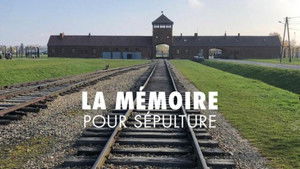
Memory For Burial
Surviving against all odds. In 1940, Benjamin Orenstein, just a teenager, was sent to his first concentration camp in Poland. It was the beginning of a journey that would mark him for life. After years of silence, he now bears witness to one of the darkest chapters in history.
2025
Inside a Nazi Mind: The Kindly Ones by Jonathan Littell
An analysis of The Kindly Ones, Jonathan Littell's controversial novel, published in 2006, which dissects the ruthless mechanisms of the Shoah from the detached point of view of Maximilian Aue, a high-ranking Nazi officer.
2023
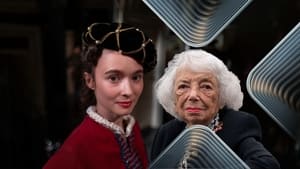
Ich bin! Margot Friedländer
The documentary tells the life story of Margot Friedländer, a 101-year-old Berlin native who survived the Holocaust and was awarded the Federal Cross of Merit, First Class, in January of this year.
2023
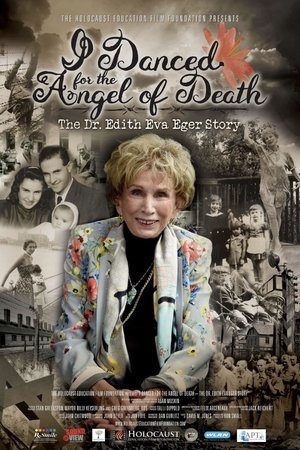
I Danced for the Angel of Death - The Dr. Edith Eva Eger Story
Dr. Edith Eva Eger recounts her story of survival as a prisoner at Auschwitz concentration camp, her struggle with survivor's guilt and how her work as a psychologist has helped her grow and heal.
2021

A World Without Beethoven?
"What would the world be like without Beethoven?" That’s the provocative question posed by this music documentary from Deutsche Welle. To answer it, the film explores how Ludwig van Beethoven's innovations continue to have an impact far beyond the boundaries of classical music, 250 years after his birth.
2020
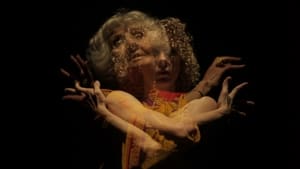
The Euphoria of Being
Alone, Eva Fahidi returned home to Hungary after WWII. At 20 years of age, she had survived Auschwitz Birkenau, while 49 members of her family were murdered, including her mother, father, and little sister. Today, at age 90, Eva is asked to participate in a dance theatre performance about her life's journey. This would be her first experience performing on a stage. Reka, the director, imagines a duet between Eva and a young, internationally acclaimed dancer, Emese. Reka wants to see these two women, young and old, interact on stage, to see how their bodies, and stories, can intertwine. Eva agrees immediately. Three women - three months - a story of crossing boundaries. Whilst the extraordinary moments of Eva's life are distilled into theater scenes, a truly wonderful and powerful relationship forms among the three women.
2019
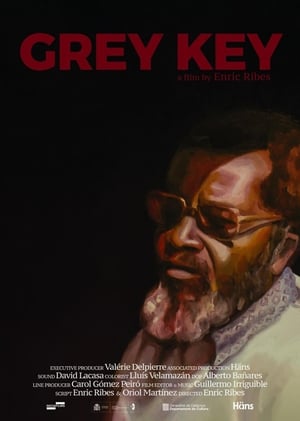
GreyKey
Fear and fascination arise in Muriel Grey when she remembers the figure of her father, who passed away when she was still very young. Thirty years after his death, Muriel will tell us the story of José Carlos Grey, a Black Holocaust survivor, freedom fighter in the Spanish Civil War and the French Resistance, and one of the only Black men known to have been imprisoned at the Mauthausen concentration camp in Austria.
2019
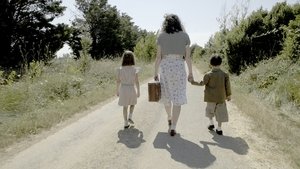
The Smuggler and Her Charges
A captivating and personal detective story that uncovers the truth behind the childhood of Michaël Prazan's father, who escaped from Nazi-occupied France in 1942 thanks to the efforts of a female smuggler with mysterious motivations.
2016
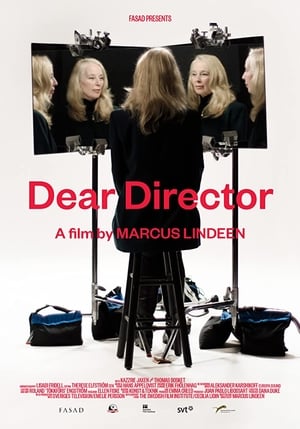
Dear Director
During the summer of 1980, the American jazz concert pianist Kazzrie Jaxen writes a 16 pages long letter to director Ingmar Bergman. His film 'From the Life of the Marionettes' have sent her on a dramatic inner journey, making her realize that she is not alone in her own body.
2015
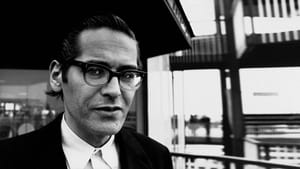
Bill Evans Time Remembered
A biographical film featuring the music and times of Bill Evans with interviews from Tony Bennett, Jack Dejohnette, Billy Taylor, Paul Motian, Jon Hendricks, Orin Keepnews, Bobby Brookmeyer, Pat Evans and more, including family and friends who knew Bill Evans well.
2015
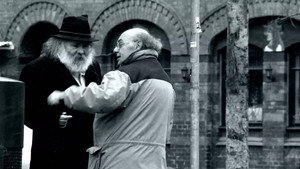
Four Years of Night
For four years (1977-1981) Esaias Baitel documented a violent Parisian neo-Nazi gang. Having gained their trust, he was able to get close to them. Living among the gang members, he witnessed horrific events, and while hiding his real identity, he photographed a one-of-a-kind collection of gripping stills. Over thirty years have passed. Esaias Baitel has laid his camera down. He returns to the dark nights he spent in the City of Lights, the city where he lived a double life, going back and forth from the gang to the young family he had just started.
2013

A Film About Kids and Music. Sant Andreu Jazz Band
A Film About Kids and Music is a project arising from a music class. Conducted by Joan Chamorro, the big band brings together children between 6 and 18 years old, around a classic jazz repertoire with lots of swing, which gained the public’s attention and sold-out some of the most important music auditoriums in Spain.
2013
My Good Fortune in Auschwitz
A film about friendship in difficult times, Auschwitz.
2012
The Easiest Targets
Five women – Palestinian, American, Muslim, Christian, and Jewish – tell stories of humiliation and harassment by Israeli border guards and airport security officials.
2007
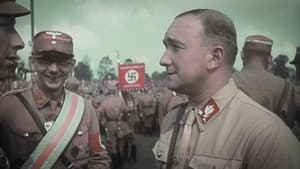
2 or 3 Things I Know About Him
What would your family reminiscences about dad sound like if he had been an early supporter of Hitler’s, a leader of the notorious SA and the Third Reich’s minister in charge of Slovakia, including its Final Solution? Executed as a war criminal in 1947, Hanns Ludin left behind a grieving widow and six young children, the youngest of whom became a filmmaker. It's a fascinating, maddening, sometimes even humorous look at what the director calls "a typical German story." (Film Forum)
2005
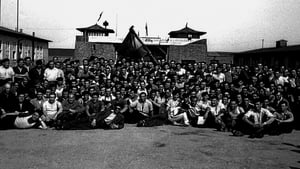
Francisco Boix: A Photographer in Hell
In 1939, just finished the Spanish Civil War, Spanish republican photographer Francesc Boix escapes from Spain; but is captured by the Nazis in 1940 and imprisoned in the Mauthausen concentration camp, in Austria, a year later. There, he works as a prisoner in the SS Photographic Service, hiding, between 1943 and 1945, around 20,000 negatives that later will be presented as evidence during several trials conducted against Nazi war criminals after World War II.
2000
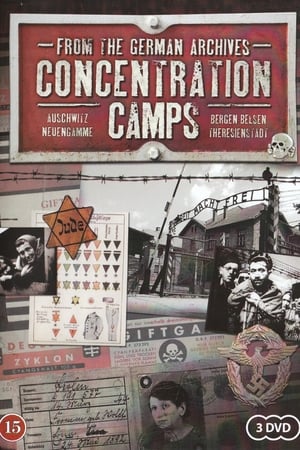
The Liberation of Auschwitz
This chilling, vitally important documentary was produced to mark the 40th anniversary of the liberation of Auschwitz Concentration Camp. The film contains unedited, previously unavailable film footage of Auschwitz shot by the Soviet military forces between January 27 and February 28, 1945 and includes an interview with Alexander Voronsov, the cameraman who shot the footage. The horrifying images include: survivors; camp visit by Soviet investigation commission; criminal experiments; forced laborers; evacuation of ill and weak prisoners with the aid of Russian and Polish volunteers; aerial photos of the IG Farben Works in Monowitz; and pictures of local people cleaning up the camp under Soviet supervision. - Written by National Center for Jewish Film
1986

In His Father's Footsteps
An American family visits a concentration camp in Germany. At the museum, the father makes the acquaintance of an older man who questions his prejudices.
1982

Stop for Bud
Stop for Bud is Jørgen Leth's first film and the first in his long collaboration with Ole John. […] they wanted to "blow up cinematic conventions and invent cinematic language from scratch". The jazz pianist Bud Powell moves around Copenhagen -- through King's Garden, along the quay at Kalkbrænderihavnen, across a waste dump. […] Bud is alone, accompanied only by his music. […] Image and sound are two different things -- that's Leth's and John's principle. Dexter Gordon, the narrator, tells stories about Powell's famous left hand. In an obituary for Powell, dated 3 August 1966, Leth wrote: "He quite willingly, or better still, unresistingly, mechanically, let himself be directed. The film attempts to depict his strange duality about his surroundings. His touch on the keys was like he was burning his fingers -- that's what it looked like, and that's how it sounded. But outside his playing, and often right in the middle of it, too, he was simply gone, not there."
1963
After Hours
Documentary short showcasing the genius of jazz greats Coleman Hawkins, Roy Eldridge, Cozy Cole, and Milt Hinton, among others.
1961