Watch The Nuremberg Trials (2006) Online Free
One journalist described it as a chance "to see justice catch up with evil." On November 20, 1945, the twenty-two surviving representatives of the Nazi elite stood before an international military tribunal at the Palace of Justice in Nuremberg, Germany; they were charged with the systematic murder of millions of people. The ensuing trial pitted U.S. chief prosecutor and Supreme Court judge Robert Jackson against Hermann Göring, the former head of the Nazi air force, whom Adolf Hitler had once named to be his successor. Jackson hoped that the trial would make a statement that crimes against humanity would never again go unpunished. Proving the guilt of the defendants, however, was more difficult than Jackson anticipated. This American Experience production draws upon rare archival material and eyewitness accounts to recreate the dramatic tribunal that defines trial procedure for state criminals to this day.
Cast
Joe Morton, Walter Cronkite, Hermann Göring, William Jackson, Chris Dodd
More Like This
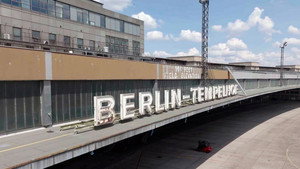
Berlin Tempelhof Airport - Gateway to Freedom
Located in former West Berlin, Tempelhof Airport reflects the dramatic history of the 20th century. Once a Nazi showpiece, it later became a symbol of freedom during the Berlin Airlift and the Cold War. In 1978, East German citizen Constanze Glien unexpectedly arrived here after her flight was hijacked, changing the course of her life.
2024

Turning Point Up Close - A Year with Soldiers
The film focuses on three male and one female soldier. They represent the challenges that the German army is currently facing: the Bundeswehr has too few personnel, too little equipment and for many years was not prepared for the type of war that it must now prepare for in the future. The film reflects the dramatic change from the perspective of those who have to shoulder the task of "national and alliance defense" in a very concrete and personal way in their everyday lives, at their location, in their unit.
2024

Liturgy of Anti-Tank Obstacles
Reality in Ukraine was divided into two periods - before the war and after. Every citizen tries to be useful in this national resistance. Ukrainians change their professions and adapt to the needs of wartime. In art workshops, sculptors make anti-tank obstacles. Silent figures of Ukrainian figures, angels, Cossacks and multiple copies of Jesus Christ, like a terracotta army, froze in anticipation of new creations. Masters weld metal defenses for the Armed Forces of Ukraine.
2022
Putin's Obsession: The Fight For Ukraine
A profile of Putin, exploring his complicated relationship with Ukraine. Why does this neighbouring nation threaten his power and identity?
2022
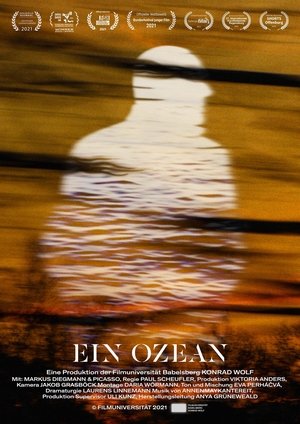
AN OCEAN
The trembling starts in his neck when Markus gets closer to the images that have chased him for 49 years. Now he steers his motor home south, as far away from his past as possible.
2021

Entire Days Together
A young girl is cured of her epilepsy just as summer vacation is about to begin. During her last days with her classmates, she’ll come to experience life in a new way. Arranged as a series of elliptical tableaux, this haunting narrative from Luise Donschen (Casanova Gene) captures a simultaneous sense of discovery and disorientation as it proceeds from the confines of the classroom to a wider world of adolescent anxieties.
2019
Five Came Back
The extraordinary story of how Hollywood changed World War II – and how World War II changed Hollywood, through the interwoven experiences of five legendary filmmakers who went to war to serve their country and bring the truth to the American people: John Ford, William Wyler, John Huston, Frank Capra, and George Stevens. Based on Mark Harris’ best-selling book, “Five Came Back: A Story of Hollywood and the Second World War.”
2017
The Great Raid
As World War II rages, the elite Sixth Ranger Battalion is given a mission of heroic proportions: push 30 miles behind enemy lines and liberate over 500 American prisoners of war.
2005
Why We Fight
Is American foreign policy dominated by the idea of military supremacy? Has the military become too important in American life? Jarecki's shrewd and intelligent polemic would seem to give an affirmative answer to each of these questions.
2005

Mona Lisa Smile
Katherine Watson is a recent UCLA graduate hired to teach art history at the prestigious all-female Wellesley College, in 1953. Determined to confront the outdated mores of society and the institution that embraces them, Katherine inspires her traditional students, including Betty and Joan, to challenge the lives they are expected to lead.
2003
Hart's War
When Col. William McNamara is stripped of his freedom in a German POW camp, he's determined to keep on fighting even from behind enemy lines. Enlisting the help of a young lieutenant in a brilliant plot against his captors, McNamara risks everything on a mission to free his men and change the outcome of the war.
2002
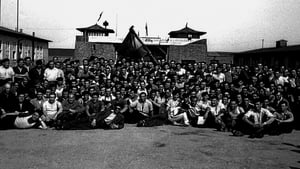
Francisco Boix: A Photographer in Hell
In 1939, just finished the Spanish Civil War, Spanish republican photographer Francesc Boix escapes from Spain; but is captured by the Nazis in 1940 and imprisoned in the Mauthausen concentration camp, in Austria, a year later. There, he works as a prisoner in the SS Photographic Service, hiding, between 1943 and 1945, around 20,000 negatives that later will be presented as evidence during several trials conducted against Nazi war criminals after World War II.
2000
Zdivočelá země
After World War II, fighter pilot Antonín Maděra returns from England to his native village in the Ore Mountains to forget the hardships and horrors of war and to "live, work, and love his neighbors," as he himself says. But Svatý Štěpán, which his family had to leave in 1939, is no longer the same place it used to be. However, even in his wildest dreams, he could not have imagined what really awaited him there.
1997
Mother Night
An American spy behind the lines during WWII serves as a Nazi propagandist, a role he cannot escape in his future life as he can never reveal his real role in the war.
1996
Merry Christmas, Mr. Lawrence
Island of Java, 1942, during World War II. British Major Jack Celliers arrives at a Japanese prison camp, run by the strict Captain Yonoi. Colonel John Lawrence, who has a profound knowledge of Japanese culture, and Sergeant Hara, brutal and simpleton, will witness the struggle of wills between two men from very different backgrounds who are tragically destined to clash.
1983
Breaker Morant
During the Boer War, three Australian lieutenants are on trial for shooting Boer prisoners. Though they acted under orders, they are being used as scapegoats by the General Staff, who hopes to distance themselves from the irregular practices of the war. The trial does not progress as smoothly as expected by the General Staff, as the defence puts up a strong fight in the courtroom.
1980
Germany in Autumn
Nine fictitious documentaries and films reflect the mood of late 1970s Germany, particularly the two-month period in 1977 when a businessman was kidnapped by the RAF (Red Army Faction). The kidnap had been made to orchestrate the release of the original leaders of the RAF, aka the Baader-Meinhof.
1978
Morituri
As the end of the Second World War approaches and the Soviet Red Army is advancing, a group of concentration camp inmates is helped to escape by a Polish doctor. They hide in a wood where they meet other fugitives, who have been there for months, constantly in fear of being discovered. Out of fear of the German army patrols, they do not dare to leave the forest, even as the food supplies run low.
1948
Potsdam Builds Up
Documenting the rebuilding of Potsdam one year after the war under Soviet supervision.
1946
Invisible Agent
The Invisible Man's grandson uses his secret formula to spy on Nazi Germany.
1942