Watch Message of Greetings: Prix suisse / My Thanks / Dead or Alive (2015) Online Free
Jean-Luc Godard's acceptance video for the 2015 'Prix d’honneur'.
Cast
Jean-Luc Godard
More Like This
Covidwood
A French documentary on how Covid-19 affected Hollywood and the cinema industry in the United States.
2021
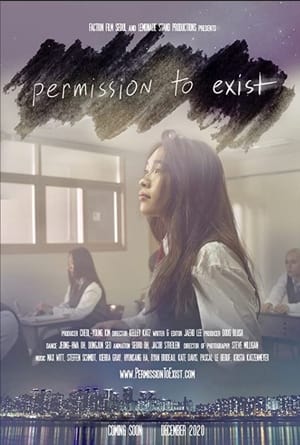
Permission to Exist
In just sixty years, South Korea went from being one of the poorest countries on the Asian continent to having the 12th largest economy in the entire world. Every year, it is measured that Korean students have some of the highest test scores and a higher rate of acceptance into Ivy League schools compared to all other nations. But on the flip side, South Korea also has one of the highest suicide rates in the developed world, the highest gender pay gap of all developed countries, and the highest plastic surgery rate per capita. Always expected to receive top scores and constantly bombarded by media and messages that seem to demand nothing short of visual “perfection,” how do these individuals come to accept and learn to love themselves as they are?
2020
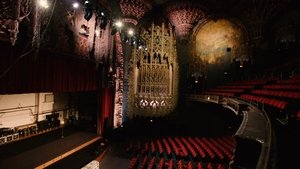
Going Attractions: The Definitive Story of the Movie Palace
Celebrating the splendor and grandeur of the great cinemas of the United States, built when movies were the acme of entertainment and the stories were larger than life, as were the venues designed to show them. The film also tracks the eventual decline of the palaces, through to today’s current preservation efforts. A tribute to America’s great art form and the great monuments created for audiences to enjoy them in.
2019
Islands of Forgotten Cinemas
A poetic documentary about the lost film culture in the small villages on the Croatian islands during the SFR of Yugoslavia.
2016
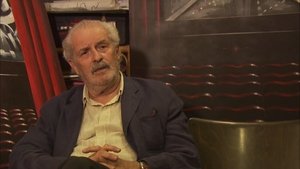
Red Chairs - Parma and the Cinema
The relations between Parma and cinema were so strong for almost the whole of the twentieth century that this city became an early laboratory of ideas and theories on cinema and a set chosen by some of the greatest Italian authors and beyond. Furthermore, a considerable number of directors, actors, screenwriters and set designers were born in Parma who have made their way internationally, testifying to the fact that in this small city in Northern Italy there was a decidedly cinematic air. Red armchairs takes up the thread of this story, wondering why, unique among the Italian provincial cities, Parma has given so much to the cinema, accompanying the viewer on a journey backwards that from the first projections of the Lumière cinema reaches the ultramodern experience of new multiplexes. During this journey we will meet the characters who created the conditions for this diffusion of cinematographic culture in Parma.
2014
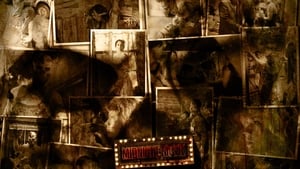
Midnight Movies: From the Margin to the Mainstream
From 1970-1977, six low budget films shown at midnight transformed the way we make and watch films.
2006
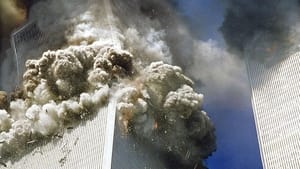
Loose Change
2nd Edition of Loose Change documentary. What if...September 11th was not a surprise attack on America, but rather, a cold and calculated genocide by our own government?We were told that the twin towers were hit by commercial jetliners and subsequently brought down by jet fuel. We were told that the Pentagon was hit by a Boeing 757. We were told that flight 93 crashed in Shanksville, Pennsylvania. We were told that nineteen Arabs from halfway across the globe, acting under orders from Osama Bin Laden, were responsible. What you will see here will prove without a shadow of a doubt that everything you know about 9/11 is a complete fabrication. Conspiracy theory? It's not a theory if you can prove it.Written and narrated by Dylan Avery, this film presents a rebuttal to the official version of the September 11, 2001 terrorist attacks and the 9/11 Commission Report.
2005
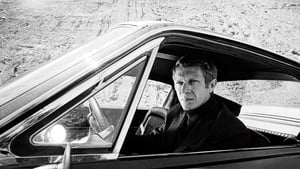
Steve McQueen: The Essence of Cool
Friends, family, co-stars and admirers of actor Steve McQueen talk about his life and his movie career.
2005
Captain Blood: A Swashbuckler Is Born
This documentary is featured on the DVD for Captain Blood (1935), released in 2005.
2005
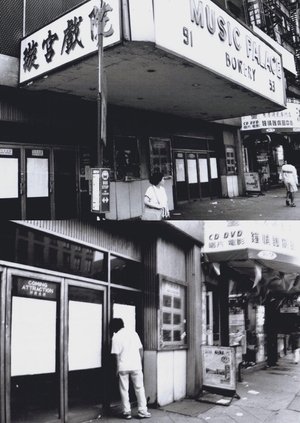
Music Palace
Previously a central part of communal life, the movie palaces of New York’s Chinatown are now extinct. This documentary short takes us inside the title theater located on the Bowery, as it’s about to close its doors, with its caretakers ruefully looking back at the life that once was. Eric Lin’s poignant first film serves as a glimpse into the usually private—and, according to the Music Palace’s projectionist, “lonely”—operations of a theater, and mourns the loss of a once-vital movie-going locale.
2005
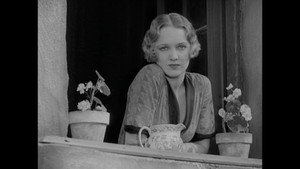
Chaplin Today: City Lights
In 1928, as the talkies threw the film industry and film language into turmoil, Chaplin decided that his Tramp character would not be heard. City Lights would not be a talking picture, but it would have a soundtrack. Chaplin personally composed a musical score and sound effects for the picture. With Peter Lord, the famous co-creator of Chicken Run and Wallace & Gromit, we see how Chaplin became the king of slapstick comedy and the superstar of the movies.
2003
Salò: Fade to Black
A short documentary exploring the ongoing relevance and power of 'Salò o le 120 giornate di Sodoma'.
2001
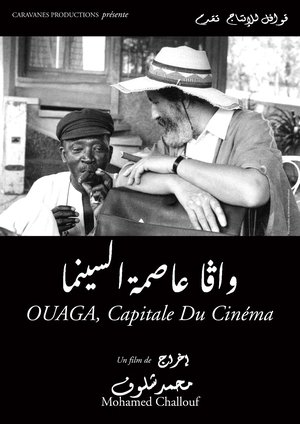
Ouaga, the Capital of Cinema
Between 1983 and 1987, Ouagadougou, the capital of Burkina Faso and the home city of FESPACO, one of the most important Pan-African film festivals in the world, was the scene of an exciting cinema utopia. With the support of the young president Thomas Sankara, the festival became a symbol of the cultural renaissance of a whole continent. The assassination of Sankara stifled the hopes of millions of young Africans, but the dynamism of FESPACO and African cinema did not stop.
2000
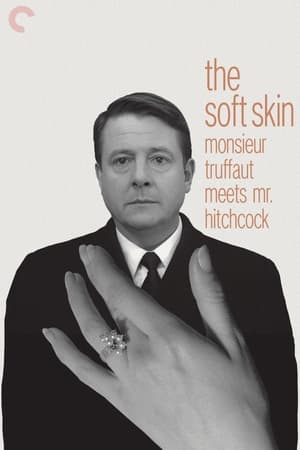
Monsieur Truffaut Meets Mr. Hitchcock
When Francois Truffaut approached Alfred Hitchcock in 1962 with the idea of having a long conversation with him about his work and publishing this in book form, he didn't imagine that more than four years would pass before Le Cinéma selon Hitchcock finally appeared in 1966. Not only in France but all over the world, Truffaut's Hitchcock interview developed over the years into a standard bible of film literature. In 1983, three years after Hitchcock's death, Truffaut decided to expand his by now legendary book to include a concluding chapter and have it published as the "Edition définitive". This film describes the genesis of the "Hitchbook" and throws light on the strange friendship between two completely different men. The centrepieces are the extracts from the original sound recordings of the interview with the voices of Alfred Hitchcock, Francois Truffaut, and Helen Scott – recordings which have never been heard in public before.
1999
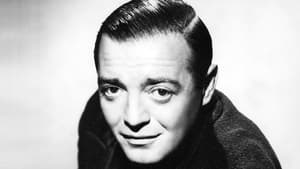
Peter Lorre: The Master of Menace
Documentary overview of Peter Lorre's ascension to fame as a master purveyor of silky but disquieting peril.
1996
Don't - Der Österreichfilm
Found footage sequences from various obscure campy Austrian films assembled together with a very dark disturbing soundtrack.
1996
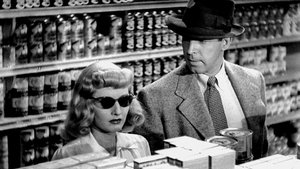
Barbara Stanwyck: Fire and Desire
Actress Sally Field looks at the dramatic life and successful career of the superb actress Barbara Stanwyck (1907-90), a Hollywood legend.
1991
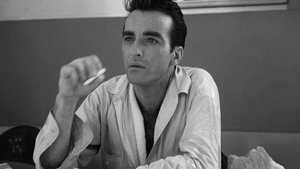
Montgomery Clift
A documentary incorporating footage of Montgomery Clift’s most memorable films; interviews with family and friends, and rare archival material stretching back to his childhood. What develops is the story of an intense young boy who yearned for stardom, achieved notable success in such classic films as From Here to Eternity and I Confess, only to be ruined by alcohol addiction and his inability to face his own fears and homosexual desires. Montgomery Clift, as this film portrays him, may not have been a happy man but he never compromised his acting talents for Hollywood.
1983
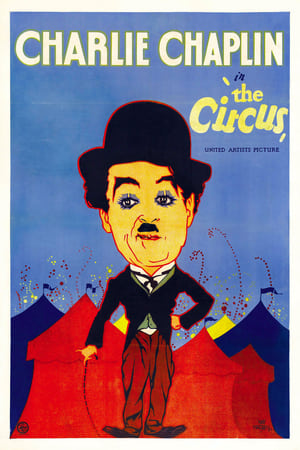
The Circus: Premiere
Footage from the premiere of Charlie Chaplin's 1928 film 'The Circus'.
1928
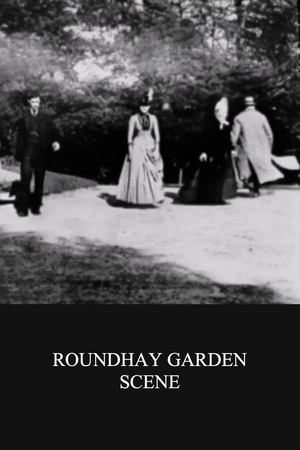
Roundhay Garden Scene
The earliest surviving motion-picture film, and believed to be one of the very first moving images ever created, was shot by Louis Aimé Augustin Le Prince using the LPCCP Type-1 MkII single-lens camera. It was taken on paper-based photographic film in the garden of Oakwood Grange, the Whitley family house in Roundhay, Leeds, West Riding of Yorkshire (UK), on 14 October 1888. The film shows Adolphe Le Prince (Le Prince’s son), Mrs. Sarah Whitley (Le Prince’s mother-in-law), Joseph Whitley, and Miss Harriet Hartley walking around in circles, laughing to themselves, and staying within the area framed by the camera. Roundhay Garden Scene is often associated with a recording speed of around 12 frames per second and runs for about 2 to 3 seconds.
1888