Watch Manicouagan (2025) Online Free
Driven by an intimate quest, this choral film reveals the meeting of individuals who inhabit the territory of Manicouagan and who together contribute to defining its geomorphological and socio-cultural imprints through time in a dreamlike manner.
More Like This
When the Water Stops Flowing
Jonathan Stavleu explores, in a stream-of-consciousness video essay, the relationship people have with water and what happens when access to it is taken away. For this work, he examines anecdotal histories he has heard from Estonians, as well as stories from his own family history in the Netherlands, weaving them together into a journal-like narrative.
2026
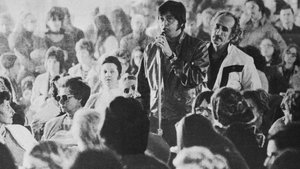
Pouvoir Oublier
Pouvoir Oublier is a political documentary first constructed from the words of the speakers whose lives changed on the tragic day of May 10, 1972 in Sept-Îles. Their word will be juxtaposed with archival material from the events, some of which are unpublished, which will reflect the collective euphoria in which Sept-Îles and all of Quebec were then bathed.
2025

Uapishka
North of the 51st parallel, where the dense boreal forest opens onto an arctic islet, the snow-capped peaks of the Uapishka Mountains watch over the Nitassinan of Pessamit. In the heart of winter, a group of Innu and non-Innu adventurers attempt to cross this vast mountain range on snowshoes, completely independently. Faced with the vastness of the territory, the rigors of the northern climate and the impetuous breath of the tundra, they discover each other in a different way, form friendships and unite to better chart their course. Over the kilometres, the adventure reveals a space for meeting, sharing and reconciliation.
2023
Milikᵘ tshishutshelimunuau
The journey of a young candidate running in the Pessamit community band council elections.
2022

My Pride
Spontaneous portrait of an endearing and cheerful teenager living in balance between traditionalism and modernity. She presents her regalia to us and we share her pride in being Innu.
2020
Miam a? (Comment va?)
Never Anywhere
Behind closed doors in a car, three friends from the small town of Sept-Îles discuss their desire to reconnect with the North Shore, the region where they grew up. As the hours lenghten on the road 138, the young women reflect on the quest for identity that accompanies the regional exodus and reveals a social landscape decentralized from the metropolises.
2025
Ensayos y errores
2024

Interwoven
Five female artisans from the Innu, Franco-Quebecois, and Zapotec peoples discuss their work. Their techniques, objects, and textile traditions give rise to stories that overlap. Their clothing reflects on identity and otherness.
2022
Nin E Tepueian: My Cry
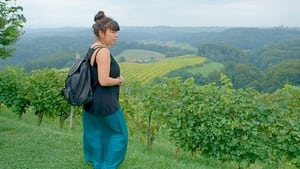
NIN E TEPUEIAN - MY CRY is a documentary tracks the journey of Innu poet, actress and activist, Natasha Kanapé Fontaine, at a pivotal time in her career as a committed artist. Santiago Bertolino's camera follows a young Innu poet over the course of a year. A voice rises, inspiration builds; another star finds its place amongst the constellation of contemporary Indigenous literature. A voice of prominent magnitude illuminates the road towards healing and renewal: Natasha Kanapé Fontaine.
2020
Those Who Come, Will Hear
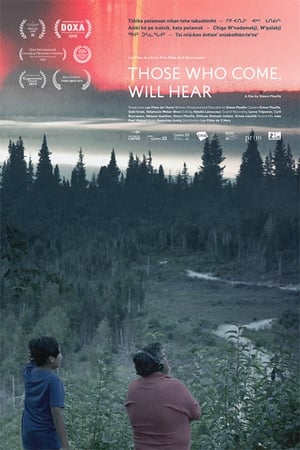
The documentary proposes a unique meeting with the speakers of several indigenous and inuit languages of Quebec – all threatened with extinction. The film starts with the discovery of these unsung tongues through listening to the daily life of those who still speak them today. Buttressed by an exploration and creation of archives, the film allows us to better understand the musicality of these languages and reveals the cultural and human importance of these venerable oral traditions by nourishing a collective reflection on the consequences of their disappearance.
2018
J'aime toute
At the age of eight, José shows us his village, Nutashkuan, and everything he loves there.
2017

Tshiuetin
Take a breathtaking train a ride through Nothern Quebec and Labrador on Canada’s first First Nations-owned railway. Come for the celebration of the power of independence, the crucial importance of aboriginal owned businesses and stay for the beauty of the northern landscape.
2016
L’histoire de la Côte-Nord: une histoire commune
2012
Médecine traditionnelle
2011
Tricksters
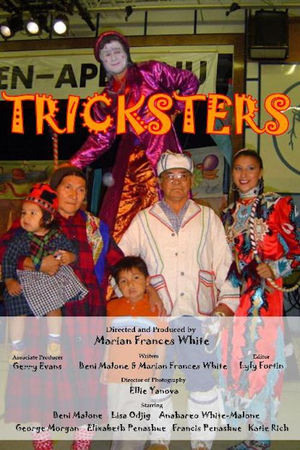
Shot during the first ever Innu circus festival in Labrador, Canada, Tricksters gives the viewing audience a positive glimpse into these troubled native communities. The artistry of international performers is combined with the native tradition of drumming and dancing offering a wider appreciation for the Innu way of life. Tricksters features Beni Malone's Wonderbolt Circus, as well as two time world champion hoop dancer Lisa Odjig who interacts with Innu Elders and children in workshops. Interviews with Innu elders inspire a greater appreciation for the Innu way of life. Tricksters offers an emergence of art and native culture, rarely seen on the screen.
2007
Le temps de la Manic
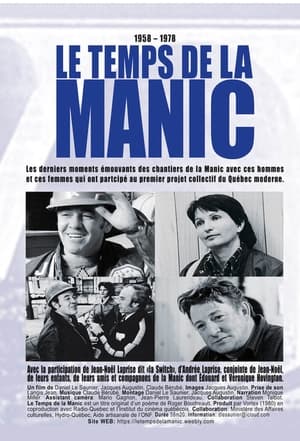
Documentary filmed at the end of the Manic-Outardes hydroelectric projects on the North Shore of the St. Lawrence (1978) to pay tribute to the men and women who participated, for 20 years, in the first collective project in modern Quebec. Le Temps de la Manic allows us to follow live the moving end of this era in the company of Jean-Noël Laprise nicknamed “the Switch”, Andrée Laprise (Grenier) his partner, their 4 children Carole, Serge, Yvan and Hélène, by Édouard Hovington and Véronique Hovington, by Camille Brisson, Léo Boisclair, Denis Ouellet, Gérard Debigaré and Fernande Buissière. Everyone has experienced the time of the Manic adventure from the inside. The Prime Minister, Mr. René Lévesque, also appears in the film.
1980
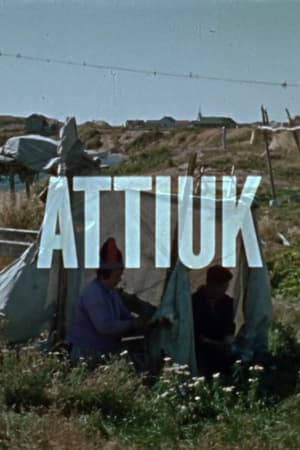
Attiuk
The people of Unamenshipu (La Romaine), an Innu community in the Côte-Nord region of Quebec, are seen but not heard in this richly detailed documentary about the rituals surrounding an Innu caribou hunt. Released in 1960, it’s one of 13 titles in Au Pays de Neufve-France, a series of poetic documentary shorts about life along the St. Lawrence River. Off-camera narration, written by Pierre Perrault, frames the Innu participants through an ethnographic lens. Co-directed by René Bonnière and Perrault, a founding figure of Quebec’s direct cinema movement.
1963
Ka Ke Ki Ku
This early work from Pierre Perrault, made in collaboration with René Bonnière, chronicles summer activities in the Innu communities of Unamenshipu (La Romaine) and Pakuashipi. Shot by noted cinematographer Michel Thomas-d’Hoste, it documents the construction of a traditional canoe, fishing along the Coucouchou River, a procession marking the Christian feast of the Assumption, and the departure of children for residential schools—an event presented here in an uncritical light. Perrault’s narration, delivered by an anonymous male voice, underscores the film’s outsider gaze on its Indigenous subjects. The film is from Au Pays de Neufve-France (1960), a series produced by Crawley Films, an important early Canadian producer of documentary films.
1960
Resilience
Resilience is dedicated to those whose lives have been fragmented by intergenerational trauma, but who wish to break the cycle.