Watch Uapishka (2023) Online Free
North of the 51st parallel, where the dense boreal forest opens onto an arctic islet, the snow-capped peaks of the Uapishka Mountains watch over the Nitassinan of Pessamit. In the heart of winter, a group of Innu and non-Innu adventurers attempt to cross this vast mountain range on snowshoes, completely independently. Faced with the vastness of the territory, the rigors of the northern climate and the impetuous breath of the tundra, they discover each other in a different way, form friendships and unite to better chart their course. Over the kilometres, the adventure reveals a space for meeting, sharing and reconciliation.
Cast
Samuel Ostiguy, Simon Nadeau, Alix Paiement-Courtois, Benoit Kanapé
More Like This
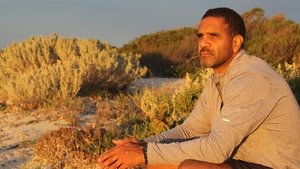
Warriors on the Field
Through the lens of sport, AFL legend Michael O'Loughlin shines a light on the history and experience of the Indigenous Australian people. Current AFL players, Michael Walters and Tarryn Thomas, join O'Loughlin to unpack racism, discrimination and the unbreakable bond they each share with their indigenous communities.
2022

SAQ : 100 ans d’histoire
To mark the 100th anniversary of the Société des alcools du Québec, Francis Reddy tells the exhilarating story of alcohol in Quebec from prohibition to promotion. With the help of historian Laurent Turcot and local producers, Reddy explores the unique relationship Quebecers have with alcohol and its place in their lifestyles over the years.
2021
La grande bataille : un an de mobilisation au CHUM
In 2020, with the COVID-19 pandemic raging at historic proportions in the background, the Centre hospitalier de l’Université de Montréal (CHUM) decided it was its duty to posterity to document the crisis. The communications team took out the mics and cameras to capture what went on inside the hospital walls for one full year.
2021
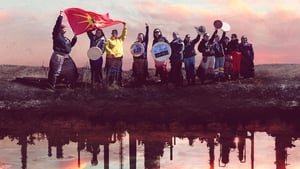
There's Something in the Water
Elliot Page brings attention to the injustices and injuries caused by environmental racism in his home province, in this urgent documentary on Indigenous and African Nova Scotian women fighting to protect their communities, their land, and their futures.
2019
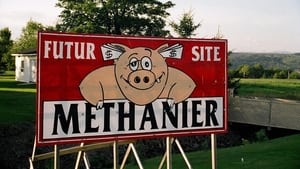
La bataille de Rabaska
2018

Living with Giants
Living with Giants delves into the imaginative world of Paulusie Kasudluak, a young Inuk facing responsibilities as he transitions into adulthood. The film portrays his thoughts, his dreams, and his beliefs, and allows for an intimate immersion into his life. Paulusie is a caring son to his ailing father and a good boyfriend. But what begins as the story of an innocent teenager quickly becomes the struggle of a young man coping with the guilt of having made a huge mistake. Tragically, Paulusie takes the most dramatic decision and takes his own life. Living with Giants remains a poetic journey of resilience that echoes issues that are far greater than Paulusie's personal story.
2016
O Retorno da Terra Tupinambá
2015
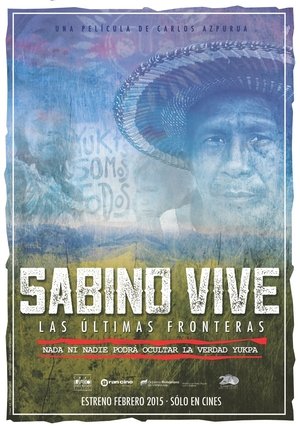
Sabino vive: las últimas fronteras
The documentary recreates the facts in the life of the Yukpa Chief, Sabino Romero, an indigenous fighter killed on March 3, 2013, in the Chaktapa community of the Sierra de Perija in Zulia state, Venezuela. The film reflects the infinite struggle of Sabino and his people, accompanied by the social groups, in this story of truly libertarian images made with blood and fire, revealing the skein of interests that forged and carried out Sabino's murder, and the attitude Inhuman and murderous of those who made it another victim of history.
2015
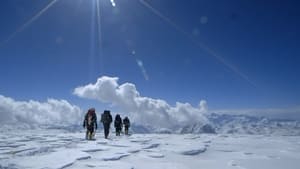
Killerslope
Mountain climbers achieve fame, despite the many deadly accidents. The image is partly created by the climbers themselves. But because of the difficult circumstances at these great heights, it is practically impossible to find out if all these incredible stories are actually true. In April 2014, Dutch climbers start an expedition the sixth highest mountain in the world. Investigative journalist Geertjan Lassche closely follows the group. How ruthless do you need to be? And are these mountain climbers really as arrogant as they seem to be? The closer the group gets to the top, the more we learn about all kinds of universal dilemmas. And then, even the mountain itself turns against the climbers.
2014
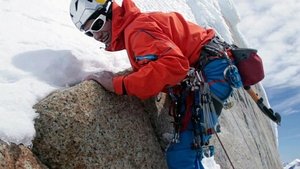
Cerro Torre: A Snowball's Chance in Hell
Movie about David Lama climbing the Patagonian mountain Cerro Torre for the first time free, a mountain that has been dubbed the most difficult to climb in the world.
2013
Vertical Sailing Greenland
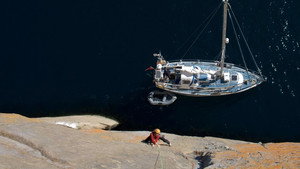
A "team of savages," as their boat captain Bob Shepton calls them, comprised of Sean Villanueva O'Driscoll, Olivier Favresse, Nicolas Favresse, and Ben Ditto, set off for Greenland to attempt a first big wall climb. Arriving in Asia by plane, they prepare the sailboat for two months of self-sufficiency. Accompanied by whales, seagulls, and icebergs, they train on various rock faces before beginning their ascent of the seemingly impossible wall. It takes them 11 days to complete the climb, braving bad weather, the rock itself, the wilderness, and three different bivouac sites—all accompanied by music, of course! The return journey is not without its challenges, as they must avoid a cyclone and cross the Atlantic to reach Oben in Scotland.
2011

Roc'n Wall 97
1997
Plan-Séquence
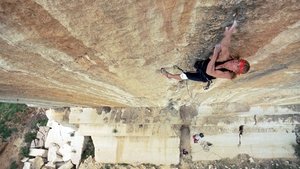
In a vertiginous sequence, Claude Lelouch's camera follows Patrick Edlinger climbing with his bare hands one of the routes of the spectacular Cimaï cliff. The action takes place in the Consensus voice (7c+/8a+) at the Cimaï quarry. In a place large enough where Claude Lelouch had been able to take out his crane to make a vertical trip. Later, in 2013, the foot of the Consensus route will experience landslides, the climbing sector has since been prohibited by municipal decree, huge blocks threatening to fall.
1992
Passion Extrême
1989
Foster Child
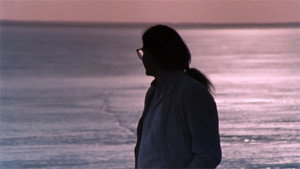
Gil Cardinal searches for his natural family and an understanding of the circumstances that led to his becoming a foster child. An important figure in the history of Canadian Indigenous filmmaking, Gil Cardinal was born to a Métis mother but raised by a non-Indigenous foster family, and with this auto-biographical documentary he charts his efforts to find his biological mother and to understand why he was removed from her. Considered a milestone in documentary cinema, it addressed the country’s internal colonialism in a profoundly personal manner, winning a Special Jury Prize at Banff and multiple international awards.
1987
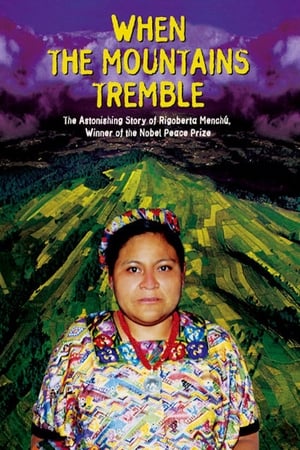
When the Mountains Tremble
A documentary on the war between the Guatemalan military and the Mayan population, with first hand accounts by Nobel Peace Prize winner Rigoberta Menchú.
1983
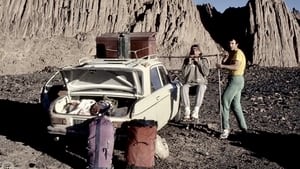
Oversand
Oversand is one of the first films about free climbing, the third film in a series of three with "Overdon" and "Over-Ice". Directed by Jean-Paul Janssen, the film was shot in 35mm in Algeria, in the Sahara Desert, in the Tamanrasset region, on the walls of the majestic peaks of the Atakor massif, central sub-region of Hoggar, mountainous heart of Hoggar, a volcanic plateau of almost circular shape, whose average altitude is 2000 meters, and which culminates at Mount Tahat (2918m), the highest point in Algeria. The Atakor is distinguished by its spectacular volcanic peaks, its needles, and its rugged landscapes, resulting from the erosion of ancient volcanic chimneys, which make it the most emblematic summits of the Hoggar, such as the Assekrem, the Ilamane, or the Tizouyag, where climbers Patrick Edlinger, Patrick Bérhault, Bernard Gorgeon, Hugues Jaillet, Jacques Perrier, Stéphane Troussier and Odette Schoënleb evolve under the watchful eye of the Tuareg caravans.
1981

Overdon
First film in a series of three with Over-Ice and Oversand and one of the first films on free climbing shot in the cliffs of the Gorges du Verdon in several parishes. We meet a certain Patrick Edlinger, Patrick Bérhault, but also Jean-Marc Troussier, Jacques Perrier, Stéphane Troussier, Hugues Jaillet, Gilbert Thomann, Odette Schoënleb, Bernard Gorgeon, Christian Guyomar. Thanks to the program Les Carnets de l'aventure, then broadcast on Antenne 2, and its producer Pierre-François Degeorges, this film was made. The chain gave its production agreement during the day, while the climbing was very confidential, no one knew Patrick Edlinger and the project itself contained only a few lines on a sheet
1980
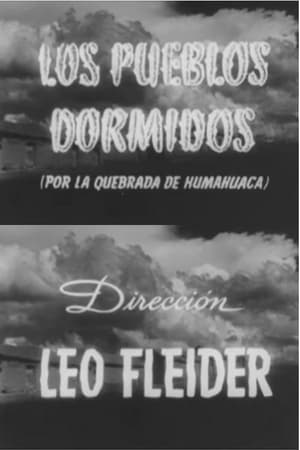
Los pueblos dormidos (por la Quebrada de Humahuaca)
Documentary about the kolla people living in North Western Argentina.
1947
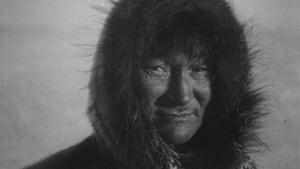
Nanook of the North
This pioneering documentary film depicts the lives of the indigenous Inuit people of Canada's northern Quebec region. Although the production contains some fictional elements, it vividly shows how its resourceful subjects survive in such a harsh climate, revealing how they construct their igloo homes and find food by hunting and fishing. The film also captures the beautiful, if unforgiving, frozen landscape of the Great White North, far removed from conventional civilization.
1922