Watch Life Goes On (2003) Online Free
The absurd and often surrealistic story of the last propaganda film of the Third Reich.
Cast
Max Moor, Julia Klawonn, Jean Denis Römer, Stuart James Austen
More Like This

Mr. Nobody Against Putin
As Russia launches its full-scale invasion of Ukraine, primary schools across Russia’s hinterlands are transformed into recruitment stages for the war. Facing the ethical dilemma of working in a system defined by propaganda and violence, a brave teacher goes undercover to film what’s really happening in his own school.
2025
Vichy in the Colonies
After the defeat of 1940, and faced with the unexpected collapse of French power, all eyes turned to a horizon of both hope and uncertainty: the colonies. France had suddenly become an empire without a metropolis, reduced to two-thirds of its former size. Pétain saw the colonies as a "consoling myth" after the defeat, while de Gaulle considered them essential strategic locations for the Resistance. The two clashed in a propaganda war.
2023

The Occupation of the American Mind
Over the past few years, Israel's ongoing military occupation of Palestinian territory and repeated invasions of the Gaza strip have triggered a fierce backlash against Israeli policies virtually everywhere in the world—except the United States. This documentary takes an eye-opening look at this critical exception, zeroing in on pro-Israel public relations efforts within the U.S.
2016
Reichsbahn unterm Hakenkreuz
The German railroad has been in operation since 1835, but the darkest chapter in German railroad history is often forgotten. Extensive original film material from the Nazi era shows the dubious role played by the Deutsche Reichsbahn during the Second World War and how little resistance there was among the railroad workers.
2010
WMD: Weapons of Mass Deception
There were two wars in Iraq--a military assault and a media war. The former was well-covered; the latter was not. Until now... Independent filmmaker, Emmy-award winningTV journalist, author and media critic, Danny Schechter turns the cameras on the role of the media. His new film, WMD, is an outspoken assessment of how Pentagon propaganda and media complicity misled the American people...
2004
A Hero's Death
It was the biggest escape in the history of the Berlin Wall: in one historic night of October 1964, 57 East-Berliners try their luck through a tunnel into West Berlin. Just before the last few reach the other side, the East German border guards notice the escape and open fire. Remarkably, all the refugees and their escape agents make it out of the tunnel unscathed, but one border guard is dead: 21-year-old officer Egon Schultz.
2001
Die Reichsautobahn - Strassen des Führers
They were not only the largest construction project of the Nazi era, but above all the most popular: 80 years ago, work began on the Reichsautobahnen, whose myth still resonates today.
2000
Left Behind
Leading biblical scholars and religious experts discuss the implications of the Rapture, when prophecies predict that Jesus Christ will return to Earth and his true believers will be transported to meet him.
1994
Überleben im Terror - Ernst Federns Geschichte
In 1938, the Jew and political activist Ernst Federn was arrested by the Nazis in Vienna, taken to Dachau concentration camp and later to Buchenwald. He was imprisoned there for seven years - and survived. In the documentary, Ernst Federn, who emigrated to the USA after the war, talks about the terror he experienced.
1992
Vernichtung durch Arbeit - KZ-Häftlinge: Sklaven für die deutsche Industrie
1986
The Atomic Cafe
A disturbing collection of 1940s and 1950s United States government-issued propaganda films designed to reassure Americans that the atomic bomb was not a threat to their safety.
1982
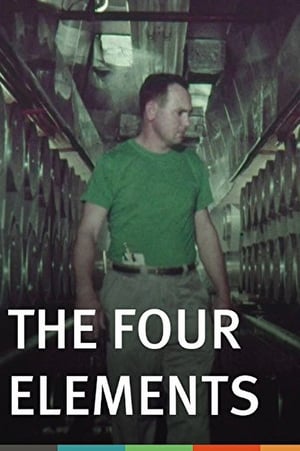
The Four Elements
An educational film about power sources that’s rendered as a lyrical meditation on heat and vapor, The Four Elements is a poetic and avant-garde documentary Curtis Harrington made for the United States Information Agency.
1966
The Lost Apple
An anti-Communist propaganda film produced by the United States Information Agency for the indoctrination of the children separated by Operation Peter Pan into the United States. The short film follows the life of Roberto and two other young children inside the Florida City Camp that was one of the main offloading sites for children.
1962

Mein Kampf
Using exclusively archival footage, Erwin Leiser traces the rise and collapse of the Third Reich, from Adolf Hitler’s early years to the devastation of Europe and his suicide in 1945. The film draws heavily on material produced and preserved by the Nazi propaganda apparatus to confront the mechanisms, imagery, and consequences of totalitarian power.
1960
Hitler an der Macht
Short film about Hitler's rise to power in 1933
1960

We Settle the Borderlands
Propaganda film aimed at repopulating the Sudety, which fell into ruin after the Second World War and the subsequent expulsion of Germans from Czechoslovakia. The narrator describes the rebuilt infrastructure and is optimistic about the potential offered by the area to families from all over Czechoslovakia and the world.
1946
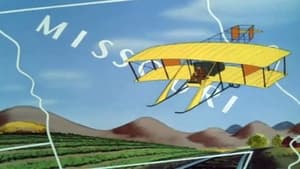
Victory Through Air Power
Based on the book by Major Alexander de Seversky's about his theories of the practical uses of long range strategic bombing. Using a combination of animation humorously telling about the development of air warfare, the film shows de Seversky illustrating his ideas of how air power could win World War II for the Allies.
1943

Victory in the West
A Nazi propaganda film about the lead up to World War II and Germany's success on the Western Front. Utilizes newsreel footage of battles and fell into disfavour with propaganda minister Goebbels because of it's lack of emphasis on Adolf Hitler.
1941

An Bord eines Panzerschiffes
A warship is displayed
1939
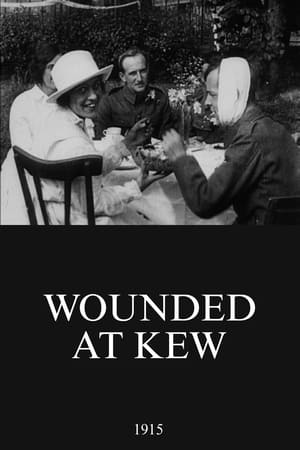
Wounded at Kew
Battered, bandaged and playing croquet on crutches, wounded First World War soldiers get a break from the Western Front.
1915