Watch Le bled (Buildings in a Field) (2009) Online Free
A collaboration between Jem Cohen with writer Luc Sante made in Tangier, Morocco, a city where neither of us had ever been. En route from the airport to the city center, we found ourselves amazed by the landscape outside of the car windows; a massive construction project under way in all directions. While not in itself unusual, we were by struck dumb by the epic scale and seemingly incomprehensible plan of the development and were drawn to return together to this puzzling zone. This project was commissioned by TAMAAS, a small foundation based in Paris, as part of their Tangier project, The 8.
More Like This
Nothing Remains Nothing Disappears
A Berlin street corner is slowly changing: an aging supermarket turns into a construction site and finally a new building. People restock shelves, demolish walls, take breaks and count money. Those who work here participate in the making and unmaking of the place. How does it shape the conditions of their labor? Between supermarket aisles, construction scaffolding and exposed concrete, different versions begin to overlap. Repetitions appear like echoes between worlds, both playful and eerie.
2026

LA. LA. End
The Californian sun, which lights up the city, lights up again every evening in cinemas all over the world". Guided by these words from Blaise Cendrars, L.A. L.A. END is a stroll through Los Angeles, among the remnants of Hollywood's Golden Age. Following in the footsteps of a Marilyn Monroe lookalike, we meet a gallery of characters who paint a sensitive portrait of a bygone era that gradually becomes a portrait of a woman.
2024
Reservoir (Seven Fragments)
Set at an artificial reservoir in North Carolina, RESERVOIR (SEVEN FRAGMENTS) is a meditation on the unnatural histories of the American environment. The film approaches both the cinematic image and the landscape it captures as damaged, estranged things—things adrift in a world of irreparable discord.
2022
Across the Rails
2021 was a turning point for Belarus and 6 Belarusian students - as well as for the city of Łódź, Poland, in which they found themselves. Across the rails of change and transformation, documenting a time that has not been before and will not repeat again. Heroes of the film have very different fates and experiences, but they are all connected by the place they found themselves in - the post-industrial and post-apocalyptic city, which becomes a part of their story and a hero of its own. Students, transport, quaters, youth, revolution, local apocalypse, changes and turns - they all mix in a documentary kaleidoscope 'Across the Rails'.
2022
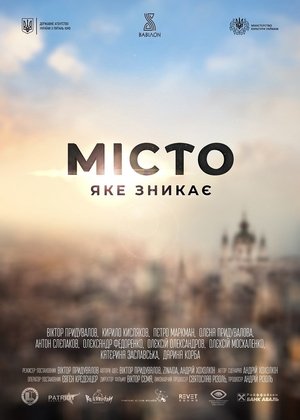
Fading City
A docu-art film about Kyiv and the contemporary problems of the capital. The film raises the issue of the dilapidated state of Kyiv's old buildings and the search for effective mechanisms to preserve the city's architectural heritage.
2020
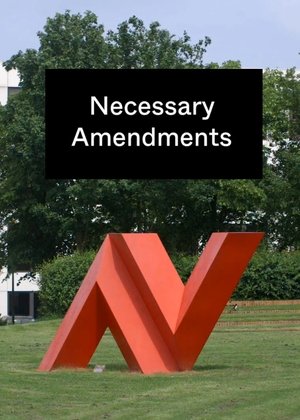
Necessary Amendments
Commissioned by MK Gallery, this film combines contemporary footage of public artworks in Milton Keynes with archive footage from the Open University, cartoons from the Milton Keynes Development Corporation's internal newspaper and accounts from early residents, juxtaposing several perspectives on England's most ambitious 'new town'.
2019

Sur les traces de Louis Braille
2018
Inner Revolution
Life is a great mystery, much larger than what would have us believe. By listening desires of their discoveries and their inner doubts, three young decided to start a trip on the surface of the Earth.
2015
Between the Holy and the Profane
Documentary film that takes a visual and anthropological journey through man's spirit across the thin line dividing excessive faith in religious believes and the passion with which he devotes himself to worldly pleasures in a city that coexists in harmony with its double standards. Religion, faith, politics, violence and death are intimately bound in this social portrait.
2014
Viagens - 20 Years
A behind-the-scenes look at "Viagens", one of the greatest portuguese records of the 1990s, in the year of its 20th anniversary.
2014

Planet Food: Lebanon
For centuries, the ports of Lebanon dominated the trade routes between Europe, the Middle East, China and India. In this documentary, our intrepid gastronaut Merrilees Parker finds a world of heavily spiced lamb, cooling salads, deliciously strong wines from and sweet pastries filled with pistachios and honey.
2014

Planet Food: Spice Trails
In this remarkable journey, Planet Food travels the world to see how control of the spice trails, over the last five millennia, has made great cities and destroyed ancient civilizations. Our guides travel from the Molucca Islands of Indonesia, the original home of cloves and nutmeg, to the Indian province of Kerala, with its native pepper and cardamom. Additional stops include Venice, Beirut, Cairo and other significant places in the spice trade that created and toppled empires.
2012
Five Ways to Darío
Since more than 10 years the director Darío Aguirre lives between two totally different worlds, Germany and Ecuador. He decides to make an extraordinary journey, visiting five unknown men called Darío Aguirre as well: One in Mexico and four in Argentina. Meeting each other develops into a reconcilement with their own past lives and permits a brief glance into the protagonists’ present time. For two months Darío shares five different lives, adapting himself to situations and activities he has never done before.
2010
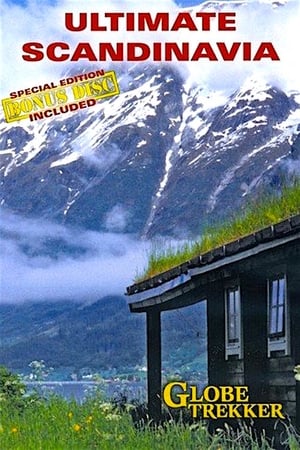
Ultimate Scandinavia
In this ultimate guide to Scandinavia travelers Megan McCormick, Ian Wright and Neil Gibson explore Denmark, Sweden, Norway, Lapland, Finland and the Baltic States. From enjoying a traditional Viking festival to crossing the Arctic Circle into Lapland for dinner with reindeer herders to a visit to the capital of Lithuania, Vilinus, and the Midsummer Night Festival in Kernave, these hosts will introduce the viewer to a variety of sites and attractions during their Scandinavian tour.
2007
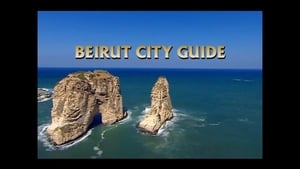
Beirut City Guide
Beirut, Lebanon's capital has a long history of political and social unrest that still makes headlines today. Globe Trekker's Beirut City Guide captures the city in more optimistic days, two weeks before the latest outbreak of hostilities in Lebanon between Israeli and Hezbollah forces in July 2006. Globe Trekker Megan McCormick explores the neighborhoods of Basta, Solidere, Gemayze and the Hezbollah District and finds a city in the midst of regeneration. She gets a glimpse at Beirut's future when meeting up with a group of young Arabic hip hop artists, who are eager to live in peace and put the country's political troubles in the past.
2007
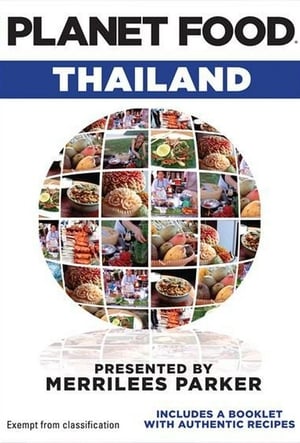
Planet Food: Thailand
The Golden Kingdom of Thailand is home to some of the most pungent and spicy fresh ingredients in the world. Regarded as the world's fourth most popular cuisine, Thailand is valued for its low fat content and health enhancing properties. Join Merrilees as she visits paddy fields and aircraft-hangar sized rice barges, shops in the floating markets of Bangkok and the night market in Chiang Mai and discovers beautiful fresh fruit and the notoriously smelly durian fruit.
2006
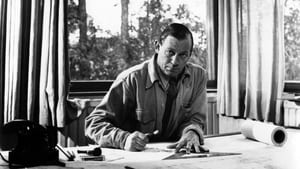
Alvar Aalto: Technology and Nature
The Finnish architect Alvar Aalto (1898–1976) is one of the great figures of modern architecture, ranked alongside Gropius, Le Corbusier and Mies van der Rohe. This film analyses Aalto’s uniquely successful resolution of the demands and possibilities created by new technology and construction materials with the need to make his buildings sympathetic both to their users and to their natural surroundings. His inventive use of timber in particular represents both a reference to the forest landscape of Finland and a building material that is ‘warm’ and extremely adaptable. Filmed in Finland, Italy, Germany and the USA, this documentary shows how the Finnish natural environment and art traditions were essential elements in Aalto’s pioneering harmonization of technology and nature.
1987

Brasilia, Contradictions of a New City
In 1967, de Andrade was invited by the Italian company Olivetti to produce a documentary on the new Brazilian capital city of Brasília. Constructed during the latter half of the 1950s and founded in 1960, the city was part of an effort to populate Brazil’s vast interior region and was to be the embodiment of democratic urban planning, free from the class divisions and inequalities that characterize so many metropolises. Unsurprisingly, Brasília, Contradições de uma Cidade Nova (Brasília, Contradictions of a New City, 1968) revealed Brasília to be utopic only for the wealthy, replicating the same social problems present in every Brazilian city. (Senses of Cinema)
1968
Hello London
Hello London is a 1958 documentary film starring Sonja Henie and Michael Wilding.
1960
Gaudi, Catalunya
In 1959 Hiroshi Teshigahara shot the following 16 mm footage of he and his father’s first trip to Barcelona and the outlying Catalonian countryside, including a visit to the home of Salvador Dali in Port Lligat. The footage was recorded without sound.
1959