Watch Lagun and the Resistance Against ETA (2020) Online Free
The turbulent story of the Lagun bookstore — located in San Sebastián, in the Basque Country, Spain — is a powerful tale of courage, resistance and struggle; first against the Franco dictatorship, then against the terrorist gang ETA and its numerous and sinister acolytes.
Cast
Ignacio Latierro, Luis Castells, Ramón Saizarbitoria, Fernando Savater, Carlos Totorica, Cristina Cuesta, Andrés Rekalde, Fernando Aramburu
More Like This
Vendredi noir
2025

13 novembre, nos vies en éclats
On November 13, 2015, the attacks in Paris and Saint-Denis, carried out by three Islamist commandos and claimed by ISIS, were the deadliest in France since the end of World War II. In the months that followed, the November 13 Program was launched by the CNRS and Inserm to study the construction of individual and collective memory around an event that profoundly marked French society. Today, the testimonies of 27 volunteers—among some 1,000 people—who participated in the study form a mosaic of experiences that shows how trauma extends beyond the immediate circle to permeate the national collective memory.
2025
L’Irak sous emprise
In 2014, when Mosul, Iraq's second largest city, fell to the Islamic State, the creation of dozens of factions was seen as the solution to organize the Shiite youth who had risen up en masse to fight Daesh and protect Baghdad, which was under threat. These factions were supposed to be a temporary force. In reality, they have never been demobilized, leading the Iraqi state into ever greater instability. How did they become so strategically important in post-Daesh Iraq?
2025
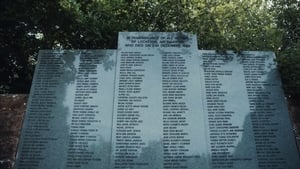
Return to Lockerbie with Lorraine Kelly
Lorraine Kelly returns to the small Scottish border town of Lockerbie to find out how the residents coped with the aftermath of Europe's deadliest terror attack. Lorraine was one of the first TV reporters to arrive at the scene after Pan Am Flight 103 exploded mid-air, killing all 259 people aboard and 11 on the ground. Before the police cordoned off the area, she saw first-hand the shocking aftermath of the disaster.
2023

Face to Face with ETA: Conversations with a Terrorist
An in-depth interview with José Antonio Urrutikoetxea, known as Josu Ternera, one of the most relevant leaders of the terrorist gang ETA.
2023
El abogado
2020

Wild Session
A walk through the golden age of Spanish exploitation cinema, from the sixties to the eighties; a low-budget cinema and great popular acceptance that exploited cinematographic fashions: westerns, horror movies, erotic comedies and thrillers about petty criminals.
2019
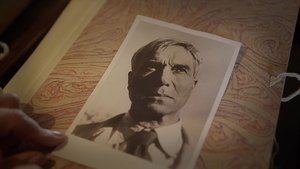
I Invite You to My Execution
As Russian writer Boris Pasternak (1890-1960) thinks it is impossible that his novel Doctor Zhivago is published in the Soviet Union, because it supposedly shows a critical view of the October Revolution, he decides to smuggle several copies of the manuscript out of the country. It is first published in 1957 in Italia and the author receives the Nobel Prize in Literature in 1958, which has consequences.
2019

Watching the Detectives
Immediately after the Boston Marathon bombing in April 2013, amateur detectives took the Internet chat rooms to try to find the culprits, looking for details in photographs uploaded to the sites that could point to the guilt of potential suspects.
2017

Històries de Bruguera
The history of Bruguera, the most important comic publisher in Spain between the 1940s and the 1980s. How the characters created by great writers and pencilers became Spanish archetypes and how their strips persist nowadays as a portrait of Spain and its people. The daily life of the creators and the founding family, the Brugueras. The world in which hundreds of vivid colorful paper beings lived and still live, in the memory of millions, in the smile of everyone.
2012
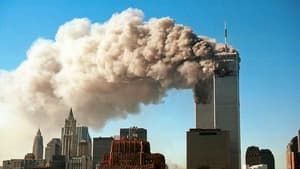
Der 11. September - Ein Tag verändert die Welt
The authors have meticulously traced the prehistory of September 11, the tragic fate of agent John O'Neill and the day of the attacks - with the help of contemporary witnesses, scenic reconstructions and numerous original recordings.
2011

The Baader Meinhof Complex
When German police viciously quell a protest against the shah of Iran, popular journalist Ulrike Meinhof rebels against her dishonest marriage, walks away from her children and joins radical anarchist Andreas Baader. Together with Baader's girlfriend, Gudrun Ensslin, they form the violent Red Faction Army, and together perpetrate a slew of terrorist attacks as a way of disrupting the fabric of what they see as an increasingly fascist state.
2008
Shoot Down
Documentary describing events leading up to the February 1996 shoot down by Cuban Air Force Migs of 2 U.S. registered Cessna 337 aircraft operated by the Cuban exile organization Brothers To The Rescue based in Miami, USA.
2007

Munich
During the 1972 Olympic Games in Munich, eleven Israeli athletes are taken hostage and murdered by a Palestinian terrorist group known as Black September. In retaliation, the Israeli government recruits a group of Mossad agents to track down and execute those responsible for the attack.
2005
Into These Hills: The Hunt for Eric Rudolph
At age 29, Eric Rudolph was the perpetrator of the Centennial Olympic Park bombing in Atlanta, which occurred on July 27, 1996, during the 1996 Summer Olympics. He called the police, warning about the bomb before it detonated. The blast killed spectator Alice Hawthorne and wounded 111 others. Law enforcement officials implement one of the largest manhunts in US history in their search for bomber Eric Rudolph. Host WRAL News anchor Jim Payne and the WRAL Documentary unit travel to western NC for a look inside the investigation, the impact of the search on the local community and the various fringe groups that might sympathize with the fugitive. “Into These Hills” originally aired April 24, 1999.
1999

Freedom of Inês Etienne Romeu
August 29, 1979, Talavera Bruce Penal Institute, Bangu, Rio de Janeiro. After serving eight years in prison, Inês Etienne Romeu, the only survivor of the "House of Death" in Petrópolis and the first political prisoner sentenced to life in prison in Brazil, left prison benefiting from Amnesty. Norma Bengell filmed this moment: from the prison door to her home with her family, Inês was welcomed by family, friends and members of the Brazilian Amnesty Committee, in what marked the first act of the historic denunciation that Inês would carry out against her tormentors and the Military Regime.
1979

Raid on Entebbe
Based on a true operation by Israeli commandos. An Air France flight is hijacked by the Popular Front for the Liberation of Palestine. The airplane landed in Uganda. The terrorists released some passengers, keeping 94 Jews and 12 air crew hostage. The Israeli government would not negotiate. A rescue plan was devised, and less than 100 commandos were flown across Africa to rescue the passengers in surprisingly successful operation.
1976
Documents on Giuseppe Pinelli
The film examines the death of the anarchist Giuseppe Pinelli, who fell from the fourth floor of the police headquarters in Milan December 15, 1969, after being stopped following the Piazza Fontana bombing.
1970
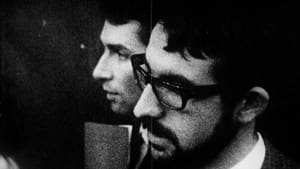
Spain '68
Spain, 1968. An analysis of the political and social situation of the country, suffocated by the boot of General Franco's tyrannical regime. (Filmed clandestinely in Madrid and Barcelona during the spring of 1968.)
1968
Violettes impériales
This historical melodrama (later remade by Henry Roussel himself in 1932 and Richard Pottier in 1952) set during the reign of Napoleon III of France. Here, Raquel Meller plays a Spanish flower girl who saves the life of the French empress Eugenie de Montijo (played by Suzanne Blanchetti), by taking her place in her carriage. When the carriage is overthrown by the anarchist's bomb, the girl survives because of the masses of violets in the imperial carriage, the empress' favorite flowers.
1923