Watch Watching the Detectives (2017) Online Free
Immediately after the Boston Marathon bombing in April 2013, amateur detectives took the Internet chat rooms to try to find the culprits, looking for details in photographs uploaded to the sites that could point to the guilt of potential suspects.
More Like This
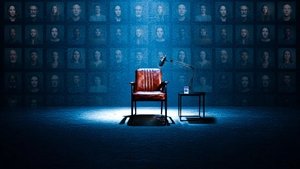
13 novembre, nos vies en éclats
On November 13, 2015, the attacks in Paris and Saint-Denis, carried out by three Islamist commandos and claimed by ISIS, were the deadliest in France since the end of World War II. In the months that followed, the November 13 Program was launched by the CNRS and Inserm to study the construction of individual and collective memory around an event that profoundly marked French society. Today, the testimonies of 27 volunteers—among some 1,000 people—who participated in the study form a mosaic of experiences that shows how trauma extends beyond the immediate circle to permeate the national collective memory.
2025
L’Irak sous emprise
In 2014, when Mosul, Iraq's second largest city, fell to the Islamic State, the creation of dozens of factions was seen as the solution to organize the Shiite youth who had risen up en masse to fight Daesh and protect Baghdad, which was under threat. These factions were supposed to be a temporary force. In reality, they have never been demobilized, leading the Iraqi state into ever greater instability. How did they become so strategically important in post-Daesh Iraq?
2025
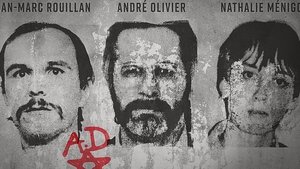
Action directe, nos années de plomb
Between 1979 and 1987, a far-left group wreaked havoc across France. Robberies, bombings, assassinations. They struck hard and disappeared in a cloud of explosives, leaflets scattered in the wind, and relentless ideological demands. Their name? Action Directe. More than 80 attacks, 26 wounded, and 12 dead in less than ten years. Stunned French citizens discovered posters plastered everywhere showing portraits of these young women and men who looked like everyone else and whom nothing seemed to be able to stop. A long and intense manhunt began, culminating in the arrest of the group's leadership.
2024

Face to Face with ETA: Conversations with a Terrorist
An in-depth interview with José Antonio Urrutikoetxea, known as Josu Ternera, one of the most relevant leaders of the terrorist gang ETA.
2023

Nothing is Forgiven
The story of Zineb El Rhazoui, a young Moroccan woman who, in the wake of the Charlie Hebdo attack, finds her life radically transformed : from a censored journalist in Morocco she becomes the most protected woman of France.
2019
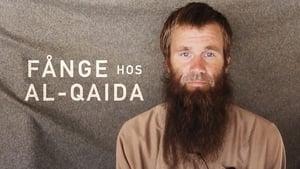
Fånge hos al-Qaida
2019
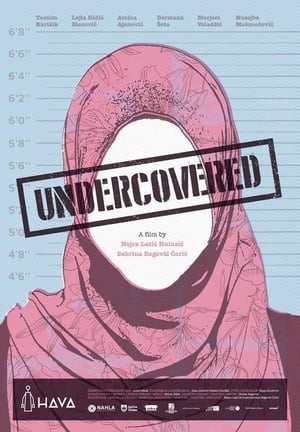
Undercovered
Following the 2001 terrorist attacks on New York City, one item of clothing has gained a scandalous global reputation: the headscarf. All over the world, a major debate is going on about whether Muslim women should be allowed to wear the headscarf in public.
2017
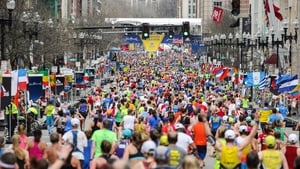
Boston
The history of the Boston Marathon from its humble origins starting with only 15 runners, to the first female runners, through the tragedy in 2013, and ultimately the triumph of 2014.
2017
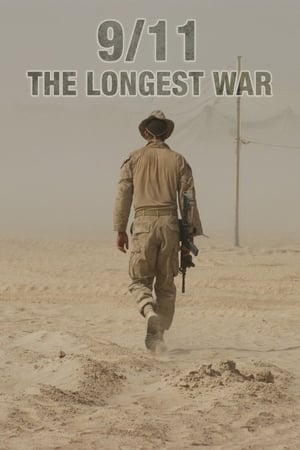
9/11: The Longest War
In honour of the 15th Anniversary of 9/11, National Geographic Channel is looking back at the very best reporting we have done since this world-changing tragedy first happened using extended excerpts from past specials that relate directly to events leading up to and following the attacks on New York City and Washington DC.
2016
The Newburgh Sting
Just 60 miles north of New York City sits the poverty-stricken town of Newburgh, where, in 2009, four men were arrested for a plan to bomb two Jewish centers in the Bronx. But their leader, a suspicious Pakistani businessman planted by the government as an informant, led these men straight into the hands of the authorities. With endless footage gathered from hidden cameras, directors David Heilbroner and Kate Davis investigate just what homegrown terrorism truly means in this shocking and galvanizing exposé.
2014
Inside the Hunt for the Boston Bombers
In April 2013, chaos erupted in Boston near the finish line of one of the world's oldest and most prestigious marathons. It was the worst terrorist attack on the United States since 9/11 and led to one of the most extensive and public manhunts in American history. Now, as the one-year anniversary approaches, National Geographic Channel presents a special two-hour event, Inside the Hunt for the Boston Bombers.
2014
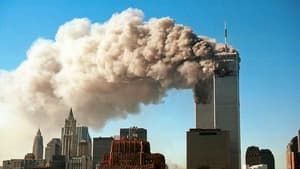
Der 11. September - Ein Tag verändert die Welt
The authors have meticulously traced the prehistory of September 11, the tragic fate of agent John O'Neill and the day of the attacks - with the help of contemporary witnesses, scenic reconstructions and numerous original recordings.
2011
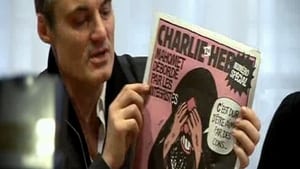
It's Hard Being Loved by Jerks
The murder of Dutch filmmaker Theo van Gogh by an Islamic extremist in 2004, followed by the publishing of twelve satirical cartoons depicting the prophet Mohammed that was commissioned for the Danish newspaper Jyllands-Posten, provides the incendiary framework for Daniel Leconte's provocative documentary, It's Hard Being Loved by Jerks.
2008
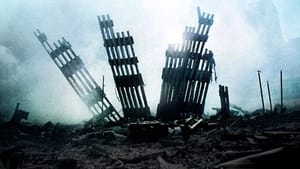
102 Minutes That Changed America
The morning of September 11, 2001 is shown through multiple video cameras in and around New York City, from the moment the first WTC tower is hit until after both towers collapse.
2008
Loose Change
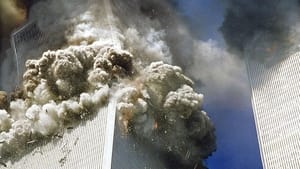
2nd Edition of Loose Change documentary. What if...September 11th was not a surprise attack on America, but rather, a cold and calculated genocide by our own government?We were told that the twin towers were hit by commercial jetliners and subsequently brought down by jet fuel. We were told that the Pentagon was hit by a Boeing 757. We were told that flight 93 crashed in Shanksville, Pennsylvania. We were told that nineteen Arabs from halfway across the globe, acting under orders from Osama Bin Laden, were responsible. What you will see here will prove without a shadow of a doubt that everything you know about 9/11 is a complete fabrication. Conspiracy theory? It's not a theory if you can prove it.Written and narrated by Dylan Avery, this film presents a rebuttal to the official version of the September 11, 2001 terrorist attacks and the 9/11 Commission Report.
2005

The Basque Ball: Skin Against Stone
An attempt to create a bridge between the different political positions that coexist, sometimes violently, in the Basque Country, in northern Spain.
2003
No Safe Place: Six Lives Forever Changed
This gripping documentary tells the powerful story of men, women and children who happened to be in the wrong place at the wrong time. In Israel it's not a matter of if, but when another terror strike will happen. This is the reality that Israelis face every day as they go to work, send their children to school on buses, or sit in a cafe and wonder if they are safe, if their lives are in danger.
2003
Into These Hills: The Hunt for Eric Rudolph
At age 29, Eric Rudolph was the perpetrator of the Centennial Olympic Park bombing in Atlanta, which occurred on July 27, 1996, during the 1996 Summer Olympics. He called the police, warning about the bomb before it detonated. The blast killed spectator Alice Hawthorne and wounded 111 others. Law enforcement officials implement one of the largest manhunts in US history in their search for bomber Eric Rudolph. Host WRAL News anchor Jim Payne and the WRAL Documentary unit travel to western NC for a look inside the investigation, the impact of the search on the local community and the various fringe groups that might sympathize with the fugitive. “Into These Hills” originally aired April 24, 1999.
1999

Freedom of Inês Etienne Romeu
August 29, 1979, Talavera Bruce Penal Institute, Bangu, Rio de Janeiro. After serving eight years in prison, Inês Etienne Romeu, the only survivor of the "House of Death" in Petrópolis and the first political prisoner sentenced to life in prison in Brazil, left prison benefiting from Amnesty. Norma Bengell filmed this moment: from the prison door to her home with her family, Inês was welcomed by family, friends and members of the Brazilian Amnesty Committee, in what marked the first act of the historic denunciation that Inês would carry out against her tormentors and the Military Regime.
1979
Documents on Giuseppe Pinelli
The film examines the death of the anarchist Giuseppe Pinelli, who fell from the fourth floor of the police headquarters in Milan December 15, 1969, after being stopped following the Piazza Fontana bombing.
1970