Watch Kiss the Brother (2009) Online Free
Documentary about the massacre of Bosniak army committed over soldiers of Republika Srpska during 1990s Bosnian wars.
More Like This
Sarajevo Safari
Among the many dramatic episodes of the siege of Sarajevo in the years 1992 to 1996, the story of a human safari has remained concealed from the public eye. Few people knew that those fighting the war on the Serbian side were not only the Bosnian Serb Army, volunteers and mercenaries but also a small, clandestine group: wealthy foreigners who paid high fees for the chance to shoot at the residents of the city under siege.
2022
Brotherhood
Jabir, Usama and Uzeir are three young brothers in a Sunni family of shepherds. Since childhood, their father Ibrahim has rigidly trained them in the principles of the Quran and has filled their minds with stories of the Bosnian War.
2022
You are Not a Soldier
As filmmaker Maria Carolina Telles comes to terms with the death of her father, a man who regretted never making it to the frontlines of World War II, she focuses her lens on the life of another man who had his own unique experience as a civilian in the midst of combat: award-winning war photographer André Liohn.
2021
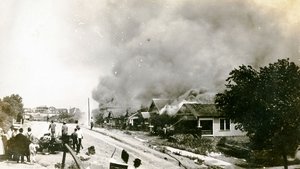
Dreamland: The Burning of Black Wall Street
This documentary celebrates the Black cultural renaissance that existed in the Greenwood district of Tulsa, OK, and investigates the 100-year-old race massacre that left an indelible, though hidden stain on American history.
2021
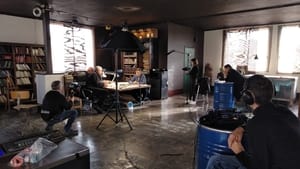
Postwar Album
Winter 2019. Spanish war photographer Gervasio Sánchez, who documented with his camera the long and tragic siege of Sarajevo during the Bosnian War (1992-95), returns to the city in search of the children he met among the ruins, those who survived to grow up, live and remember.
2021
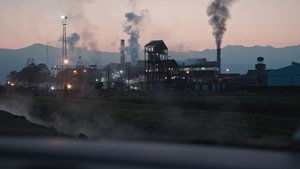
Corporate Accountability
Images of Argentinian companies and factories in the first light of day, seen from the inside of a car, while the director reads out documents in voiceover that reveals the collusion of the same concerns in the military dictatorship’s terror.
2020

The Ornament of the World
Filmed in Cordoba, Granada, Seville, and Toledo, this documentary retraces the 800-year period in medieval Spain when Muslims, Christians, and Jews forged a common cultural identity that frequently transcended their religious differences, revealing what made this rare and fruitful collaboration possible, and what ultimately tore it apart.
2019
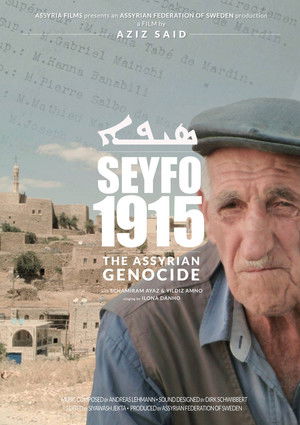
Seyfo 1915 - The Assyrian Genocide
In the shadow of the First World War, the genocide of the Christian Assyrians took place almost unnoticed by the world public. This first systematic genocide of the 20th century was committed by the Young Turks (Ottoman Empire) and would not have been possible without the support of some Kurdish local rulers and their family clans. The Assyrians are the indigenous people of Mesopotamia and have lived in Mesopotamia for thousands of years. The film includes testimony from several European, Turkish and Assyrian historians, as well as genocide researchers, including Professor Taner Akcam, Dr. Gabriele Yonan and Professor David Gaunt. The film includes testimony from survivors of the genocide. Various journalists and publicists also have their say with well-researched information in this documentary. The Assyrians refer to the Genocide as "Seyfo" (ܣܝܦܐ), which translates as "sword".
2015

The Cove
The Cove tells the amazing true story of how an elite team of individuals, films makers and free divers embarked on a covert mission to penetrate the hidden cove in Japan, shining light on a dark and deadly secret. The shocking discoveries were only the tip of the iceberg.
2009

Hidden Scars: The Great Kanto Earthquake Korean Massacre, A Documentary
In the wake of the Great Kanto Earthquake (1923), which killed nearly 100,000 people, more than 6,500 Koreans were murdered by the military, the police and civilians. This film uses evidence and testimony to examine the history behind this massacre.
2005
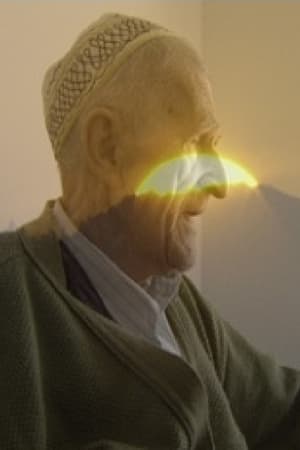
Song Remains the Same
Hamdija Šahinpašić (1914-2003) was one of those rare individuals able to memorize songs in their authentic traditional form. Šahinpašić belonged to a family known for its songs. In the early 1950's, Miodrag A. Vasiljević recorded Šahinpašić singing dozen of songs at the Serbian Academy of Arts and Sciences in Belgrade. A 1967 publication finally included 300 of his songs, published bilingually in Bosnian and Russian. Šahinpašić himself become the focus of attention of numerous ethnomusicologists and folklorists and his repertoire was preserved on recording of good quality.
2004
Discovering Dominga: A Survivor's Story
Denese Joy Becker, a manicurist living in Iowa, discovers she is indeed Dominga Sic Ruiz, a survivor from a 1982 Guatemalan massacre, when more than 200 people were killed in the small village of Rio Negro, after opposing the construction of a dam, sponsored by World Bank. She then tries to unveil the truth.
2003
Mladí muži poznávají svět
The docu-drama takes place during the war in the former Yugoslavia. A young journalist arrives in destroyed Sarajevo and finds out how people live in the middle of war. He encounters everyday problems that an individual, especially young people, has to deal with.
1996
Suzana from the Cellar
A cellar-dwelling woman talks about her life to a camera during the devastating war in Bosnia.
1995
Bosnia!
The carnage in Sarajevo provides the focus of this French documentary which seeks to call attention to the terrible conflict in the hopes of finally ending it. The film is divided into five parts. Each part covers a time frame ranging from April 4, 1992, the beginning of the war, to the present. The major issues that occur are three-fold. It depicts the systematic genocide of Bosnians, the silence of Western countries, and the determination of the Bosnians to resist. They refuse to be seen as victims, even though the filmmakers portray them so. Also included are the origins and political aspects of the war. It offers interviews with participants. It also reveals how the U.S. State Department censored reports about Serbian death camps.
1994
The Decline of the Century: Testament L.Z.
An epic documentary of rise and fall of Ustasha regime in Croatia.
1994
Bums and Dogs
A hotel in the centre of town is a war-time home and refuge for many of Sarajevo's homeless people. Every morning they leave the hotel and wander around the destroyed city gathering again at the defunct hotel in the afternoon. This film follows their separate fates through the bitter comparing of images of the bums with those of dogs abandoned by their owners and now left et the mercy of the war ravaged streets of Sarajevo.
1993
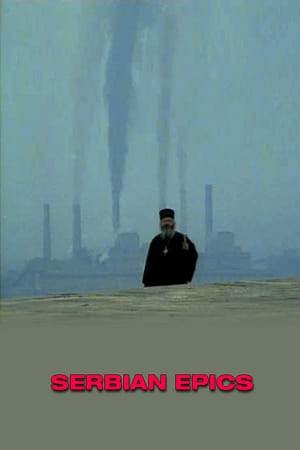
Serbian Epics
Paul Pawlikowski's award-winning documentary on life behind Serbian lines in Bosnia. The film observes the roots of the extreme nationalism which has torn apart a country and provides a chilling examination of the dangerous power of ancient nationalist myths.
1992
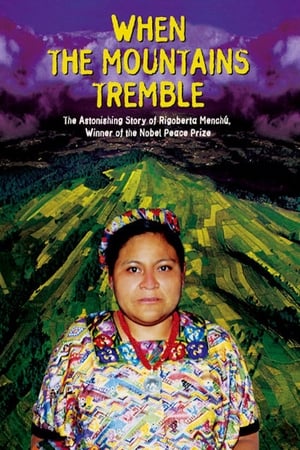
When the Mountains Tremble
A documentary on the war between the Guatemalan military and the Mayan population, with first hand accounts by Nobel Peace Prize winner Rigoberta Menchú.
1983
Kafr Kassem
On the eve of the Israeli attack on Egypt in 1956, Israel declares martial law in all the occupied Arab territories without any previous notice. When the villagers of Kafr Kassem returned home from the fields, they were butchered and killed in what is known today as the massacre of “Kafr Kassem”.
1974