Watch KAPU: Sacred Hawaiian Burials (2022) Online Free
Loading Cinehub...
Death is an intimate experience, and how we lay our loved ones to rest, varies between cultures. KAPU: Sacred Hawaiian Burials sheds light on the ongoing battle by Native Hawaiians to protect burial sites across the state and the iwi, or sacred bones, that are within them.
More Like This

Oceanbone
A short film detailing the journey and prospects of returning the skeletons of indigenous peoples' ancestors back to their homeland.
2025

Mamus
A stunning and intimate portrait of the Arhuaco indigenous community in Colombia. In 1990, in a celebrated BBC documentary, the Arhuaco made contact with the outside world to warn industrialized societies of the potentially catastrophic future facing the planet if we don’t change our ways. Now, three decades later, with the advances of audio/visual technology, we go back to the Snowy Peaks of Sierra Nevada de Santa Maria to illuminate their ethos against the backdrop of an increasingly fragile world.
2024
Iniskim - Return of the Buffalo
A cinematic wonder & incredible opportunity to learn about Indigenous ways of knowing. A group of puppeteers are transformed by their experience of "being buffalo" at night under the stars. Amethyst First Rider tells the puppeteers, "You are the buffalo. With each movement of your hands, each connection, you're creating energy & they become a part of you." In 2017 history was made when bison were reintroduced to Banff National Park where they continue to roam free today. The project was part of the historic Buffalo Treaty, with over 40 First Nation signatories, who are part of the movement to bring buffalo back to their ancestral lands. Leroy Little Bear & Amethyst First Rider lead this movement, & since Amethyst is first & foremost an artist, she wanted to celebrate the return of the buffalo through art. She met master puppeteer, Pete Balkwill, who was working with sculptural lantern puppets with his collaborators that lent themselves to night time performances on the land
2024
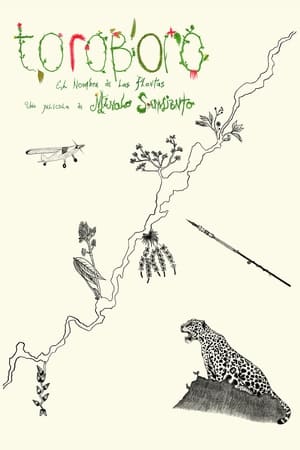
Toroboro: The Name of the Plants
A botanical expedition in Ecuador's Amazon becomes a medium for an indigenous Huaorani community to remember the genocidal colonization it suffered in the 1960s. Meanwhile, a group of ecologists from the capital tries to stop oil exploitation in the last remaining forests where the isolated Huaoranis still live, who to this day refuse to come into contact with civilization.
2024
Bancoco
A New Yorker journeys to the jungle in the Darien Gap of Panama to reconnect with an indigenous tribe he met and photographed 20 years ago. Their reunion highlights the profound power of photos and the human connection that transcends cultural barriers.
2023

For Love
In this searing documentary, Indigenous people share heartbreaking stories that reveal the injustices inflicted by the Canadian child welfare system.
2022
Mother River
In a remote Peruvian city, lives Honorata Vilca, an illiterate woman of Quechua descent who sells candies more than 20 years ago, with the rain will cry to the sky itself.
2020

Now Is the Time
When internationally renowned Haida carver Robert Davidson was only 22 years old, he carved the first new totem pole on British Columbia’s Haida Gwaii in almost a century. On the 50th anniversary of the pole’s raising, Haida filmmaker Christopher Auchter steps easily through history to revisit that day in August 1969, when the entire village of Old Massett gathered to celebrate the event that would signal the rebirth of the Haida spirit.
2019

Moananuiākea: One Ocean, One People, One Canoe
From 2019 Maui Film Festival This powerful documentary celebrates the historic Malama Honua Worldwide Voyage that connected countless individuals and communities from around the globe. A voyage that also represented the fulfillment of the vision of Nainoa Thompson and his contemporaries, the passing of the mantle to the next generation of kanaka maoli who will retain the skills of their ancestors and perpetuate this tradition for generations to come so the legacy of Hokulea can last for 1,000 generations.
2018
Tawai: A Voice from the Forest
Explorer Bruce Parry visits nomadic tribes in Borneo and the Amazon in hope to better understand humanity's changing relationship with the world around us.
2017
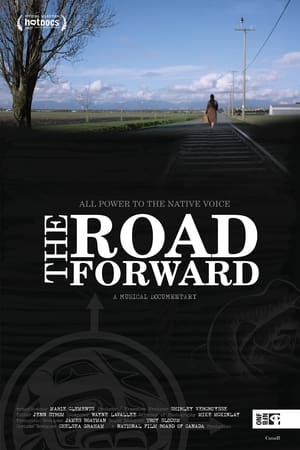
The Road Forward
The Road Forward is an electrifying musical documentary that connects a pivotal moment in Canada’s civil rights history—the beginnings of Indian Nationalism in the 1930s—with the powerful momentum of First Nations activism today. Interviews and musical sequences describe how a tiny movement, the Native Brotherhood and Sisterhood, grew to become a successful voice for change across the country. Visually stunning, The Road Forward seamlessly connects past and present through superbly produced story-songs with soaring vocals, blues, rock, and traditional beats.
2017
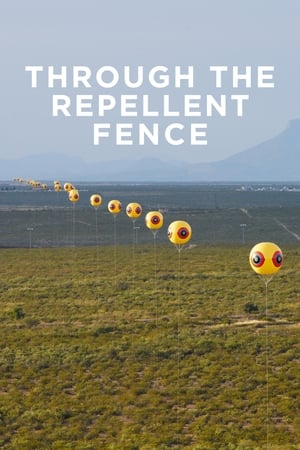
Through the Repellent Fence: A Land Art Film
The film follows Postcommodity, an interdisciplinary arts collective comprised of Raven Chacon, Cristóbal Martinez and Kade L. Twist, who put land art in a tribal context. The group bring together a community to construct the Repellent Fence, a two-mile long ephemeral monument “stitching” together the US and Mexico.
2017
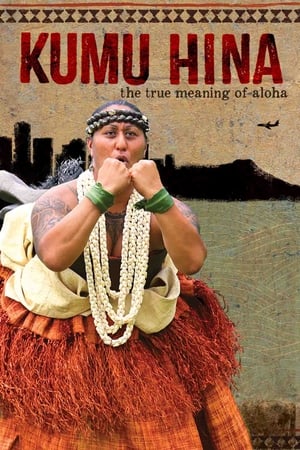
Kumu Hina
A transgender Native Hawaiian teacher inspires a young girl to fulfill her destiny of leading the school's male hula troupe, even as she struggles to find love and a committed relationship in her own life.
2014
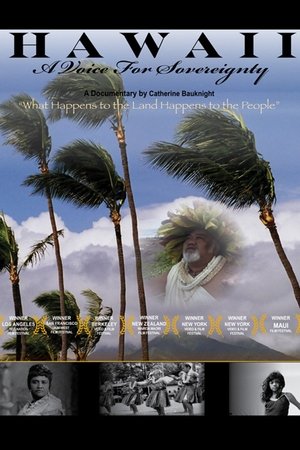
Hawaii: A Voice for Sovereignty
The goal of Hawaii, a Voice for Sovereignty is to raise awareness of the issues that threaten the Hawaiians ancient and once-environmentally-sustainable culture. It is an epic documentary about Hawaiian spirituality and the peoples close connection to the land. It focuses on the complicated social, economic and ecological issues that have arisen in Hawaii since the overthrow of Queen Liliuokalani by the United States in 1893. For Hawaiians, sovereignty is the legal, political and moral right to live on and care for the land; build and grow a sustainable economy; protect natural resources; practice spiritual and cultural traditions; honor their ancestral past; and care for family and community. The film is in the voice of native Hawaiian people who address the issues they continue to face in their long struggle to regain sovereignty over their rights and the native lands lost after the U.S. businessmen and military overthrew the Kingdom of Hawaii.
2009
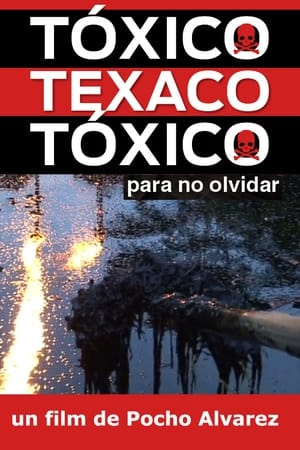
Tóxico, Texaco, Tóxico
The imagination of history in Ecuador never thought that oil, “its redeeming hope”, discovered in the Lago Agrio No. 1 well, was going to mean the beginning of the worst environmental catastrophe on the planet. Thirty years of operation and exploitation of the Texaco company, forever transformed the rivers and estuaries, the forests and the life of the indigenous communities in the northern Amazon of Ecuador.
2007
Woven Songs of the Amazon
The Shipibo-Konibo people of Peruvian Amazon decorate their pottery, jewelry, textiles, and body art with complex geometric patterns called kené. These patterns also have corresponding songs, called icaros, which are integral to the Shipibo way of life. This documentary explores these unique art forms, and one Shipibo family's efforts to safeguard the tradition.
2007

Nihi
Nihi is a film biography of Titus Kinimaka, one of the last remaining professional big-wave riders of pure Hawaiian descent. As a boy, he won surf contests against those twice his age; by his teens, he was recognized as one of the best surfers to have ever hit the waves. In 1996 at age 41, Titus was named Waterman of the Year by the Hawaiian Lifeguard Association for outstanding rescues as a lifeguard. He has spent over twenty years spreading aloha spirit, traveling the world as an ambassador for surfing and Hawaiian culture
2003

American Aloha: Hula Beyond Hawai'i
American Aloha: Hula Beyond Hawai’i shows the survival of the hula as a renaissance continues to grow beyond the islands. With the cost of living in Hawai'i estimated at 27 percent higher than the continental United States, large numbers of Hawaiians have left the islands to pursue professional and educational opportunities. Today, with more Native Hawaiians living on the mainland than in the state of Hawai'i, the hula has traveled with them. From the suburbs of Los Angeles to the San Francisco Bay Area, the largest Hawaiian communities have settled in California, and the hula continues to connect communities to their heritage on distant shores.
2003
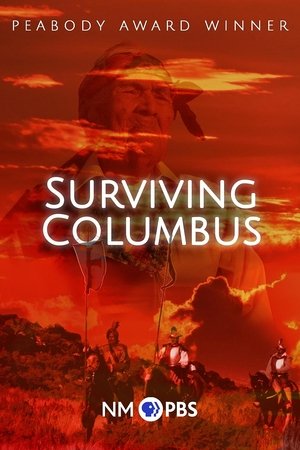
Surviving Columbus
This Peabody Award-winning documentary from New Mexico PBS looks at the European arrival in the Americas from the perspective of the Pueblo Peoples.
1992